
Science
WSU Nuclear Program Expands Research and Training Opportunities

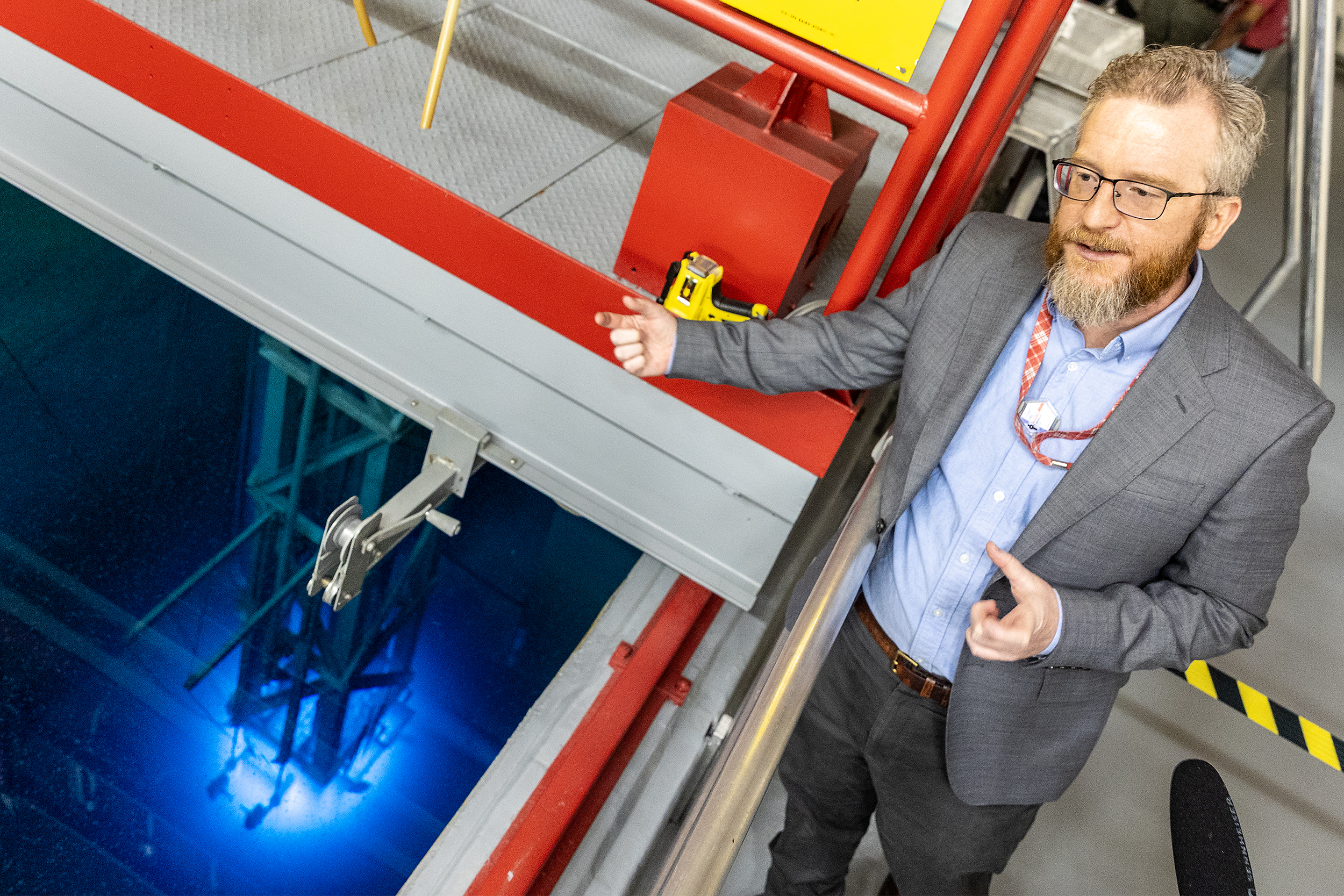
Washington State University (WSU) is taking significant steps to enhance its nuclear program, focusing on expanding education and research capabilities at its Nuclear Science Center. Approximately 65 years after the center’s reactor became operational, university officials are ramping up efforts to meet growing demands in the nuclear workforce.
The Nuclear Science Center has long provided critical services, including the production of radioisotopes for various research facilities and national laboratories. In collaboration with the Idaho National Laboratory, WSU has also been the exclusive supplier of radioisotopes used in training for first responders. According to the International Atomic Energy Agency, radioisotopes are unstable elements that emit radiation as they transition into more stable forms.
Corey Hines, the center’s director, highlighted the unique training opportunities available at WSU. Unlike many institutions where students typically enter the nuclear workforce at the graduate level, WSU allows undergraduates to earn their reactor operator licenses. “What we’re hearing from the industry is we need people, way earlier on, to get interested in this,” Hines stated. Last year, eight students successfully obtained their reactor operator licenses, and Hines anticipates that number will exceed ten this year.
The need for trained professionals in the nuclear sector is pressing. Industry estimates indicate that around 300,000 individuals will be required to fulfill nuclear workforce needs by 2050. In response, WSU plans to broaden its course offerings, as noted by Kim Christen, vice president for research. “We’re developing a series of degrees, certificates, and micro-credentials,” she explained. These new educational initiatives will cater to both traditional four-year degree students and those already in the workforce, with options for hybrid learning available statewide.
The university’s expansion plans include the construction of a hot cell facility, which is currently underway. Hot cells are specialized containment chambers that allow researchers to safely work with highly radioactive materials. The introduction of these facilities is expected to enhance the center’s research and training capabilities significantly, enabling the production of medical isotopes used in the detection and treatment of cardiovascular diseases and cancer.
At present, WSU sends irradiated materials generated from its reactor to external facilities for research. The addition of hot cells will allow for a more streamlined process. “Irradiated material can come out of the reactor pool, it can go into the hot cell, the researcher can do their research,” Christen noted. “We can get those results out the door that day to the customer, which could be the US government, a power electricity company, or a fusion company.”
Construction of the first phase of the hot cell facility began last summer, funded by a $7.6 million earmark from Congress. Christen described the facility as more than just a “concrete box,” emphasizing its importance in advancing nuclear science research. The second phase will involve the construction and assembly of the hot cells themselves, which Christen compared to “Lego sets.”
While funding for the second phase has yet to be secured, Christen mentioned that public-private partnerships and federal funding options are being considered. This phase could take over two years to complete and is estimated to cost between $23 million and $43 million. The ongoing initiatives at WSU reflect a commitment to nurturing the next generation of nuclear professionals and addressing the critical workforce needs of the future.










Revolutionary Photonic Ski-Jump Could Miniaturize LiDAR Systems

Couples Detox from Plastics in New Netflix Doc: Can It Boost Fertility?

Aventon Launches Affordable Full-Suspension Electric Mountain Bike

Discover Eight Must-Try Restaurants This Spring Season

UC Irvine Team Unveils Innovative Ion Pump for Water Treatment

One-Third of Americans Trim Daily Expenses for Healthcare Needs

Apple Secures First Oscar in Three Years with F1: The Movie

Fourth Graders Celebrate St. Patrick’s Day with Creative Weather Drawings

Kim Kardashian Dazzles at Vanity Fair Oscars Party 2026

Nostradamus’ 2026 Predictions: Star Death and Dark Events Loom

Breakthroughs and Challenges Await Science in 2026

Electric Moto Influencer Surronster Arrested in Tijuana

OpenAI to Implement Age Verification for ChatGPT by December 2025

Discover the Top 10 Calorie Counting Apps of 2025

Recovering a Suspended TikTok Account: A Step-by-Step Guide

Bella Hadid Shares Health Update After Treatment for Lyme Disease

Backpack Drives Equip Students with Supplies for New School Year

Analysts Project Stronger Growth for Apple’s iPhone 17 Lineup
-
 Science8 months ago
Nostradamus’ 2026 Predictions: Star Death and Dark Events Loom
-
 Science8 months ago
Breakthroughs and Challenges Await Science in 2026
-
 Technology11 months ago
Electric Moto Influencer Surronster Arrested in Tijuana
-
 Technology9 months ago
OpenAI to Implement Age Verification for ChatGPT by December 2025
-
 Technology1 year ago
Discover the Top 10 Calorie Counting Apps of 2025
-
 Technology1 year ago
Recovering a Suspended TikTok Account: A Step-by-Step Guide
-
 Health11 months ago
Bella Hadid Shares Health Update After Treatment for Lyme Disease
-
 Education1 year ago
Backpack Drives Equip Students with Supplies for New School Year
-
 Health12 months ago
Analysts Project Stronger Growth for Apple’s iPhone 17 Lineup
-

 Health12 months ago
Japanese Study Finds Rose Oil Can Increase Brain Gray Matter
-

 Technology8 months ago
Top 10 Penny Stocks to Watch in 2026 for Strong Returns
-

 Science10 months ago
Starship V3 Set for 2026 Launch After Successful Final Test of Version 2