
Science
Korean Researchers Unveil Groundbreaking 4D Printing Technology

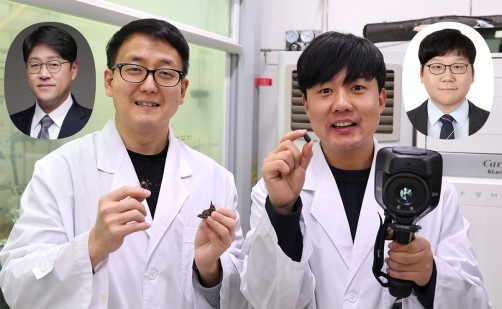
A research team from South Korea has pioneered a closed-loop 4D printing technology that utilizes waste sulfur from petroleum refining to create self-actuating and recyclable structures. Led by Dr. Dong-Gyun Kim of the Korea Research Institute of Chemical Technology (KRICT), along with Professor Jeong Jae Wie from Hanyang University and Professor Yong Seok Kim from Sejong University, this innovative approach represents a significant advancement in sustainable materials technology.
The team’s research highlights the potential of “sulfur plastics,” which are increasingly recognized as a valuable resource. According to the United States Geological Survey (USGS), global sulfur production reached approximately 85 million tons in 2024. Transforming this abundant industrial by-product into useful materials is crucial for environmental sustainability. Sulfur plastics not only possess unique properties, such as the ability to transmit infrared light, but they also have applications in water purification by capturing heavy metals.
Despite their advantages, the application of sulfur plastics in traditional 3D printing has faced challenges. Their densely cross-linked structures limited their flowability, making it difficult to create complex designs. To address this problem, the research team engineered a loosely cross-linked sulfur polymer network, enabling the material to be extruded and printed into intricate shapes.
Innovative Applications and Features
The newly developed technology allows for 4D printing, meaning the printed structures can change shape in response to external stimuli such as heat, light, or magnetic fields. For instance, a near-infrared (NIR) laser applied for just eight seconds triggers a chemical welding process, allowing components to bond without adhesives—a method reminiscent of assembling LEGO blocks.
In a further demonstration of the technology’s versatility, the researchers incorporated 20% magnetic particles into the sulfur polymer. This innovation led to the creation of soft robots measuring less than 1 cm that operate autonomously without external power sources. These robots can perform complex movements by responding to external magnetic fields, showcasing the potential of this technology in the field of soft robotics.
Another significant aspect of this development is its closed-loop manufacturing capability. Once a printed 4D structure has served its purpose, it can be melted down and reused as printing feedstock, ensuring 100% recyclability and establishing a comprehensive resource-circulating manufacturing system.
Dr. Dong-Gyun Kim emphasized the importance of this research, stating, “This study represents the first example of upcycling industrial sulfur waste into advanced robotic materials. Smart materials that can move autonomously and be recycled are expected to become key drivers of future soft robotics and automation technologies.”
Future Implications and Support
The implications of this research extend beyond mere technological advancement. By converting waste into high-value resources, this work aligns with global efforts to promote sustainability and environmental protection. The study was published in the journal Advanced Materials, reflecting its relevance in contemporary scientific discourse.
Funding for the research was provided by the KRICT core research program, the Ministry of Science and ICT of Korea, and the U.S. Army International Technology Center. Since its establishment in 1976, KRICT has played a pivotal role in advancing chemical technologies in South Korea and is committed to addressing pressing challenges in chemistry and engineering on a global scale.
For more information about KRICT and its initiatives, visit their official website at www.krict.re.kr/eng/. This groundbreaking research not only enhances the capabilities of soft robotics but also showcases the potential of recycling industrial waste into innovative technological solutions.







Revolutionary Photonic Ski-Jump Could Miniaturize LiDAR Systems

Couples Detox from Plastics in New Netflix Doc: Can It Boost Fertility?

Aventon Launches Affordable Full-Suspension Electric Mountain Bike

Discover Eight Must-Try Restaurants This Spring Season

UC Irvine Team Unveils Innovative Ion Pump for Water Treatment

One-Third of Americans Trim Daily Expenses for Healthcare Needs

Apple Secures First Oscar in Three Years with F1: The Movie

Fourth Graders Celebrate St. Patrick’s Day with Creative Weather Drawings

Kim Kardashian Dazzles at Vanity Fair Oscars Party 2026

Nostradamus’ 2026 Predictions: Star Death and Dark Events Loom

Breakthroughs and Challenges Await Science in 2026

Electric Moto Influencer Surronster Arrested in Tijuana

OpenAI to Implement Age Verification for ChatGPT by December 2025

Discover the Top 10 Calorie Counting Apps of 2025

Recovering a Suspended TikTok Account: A Step-by-Step Guide

Bella Hadid Shares Health Update After Treatment for Lyme Disease

Backpack Drives Equip Students with Supplies for New School Year

Analysts Project Stronger Growth for Apple’s iPhone 17 Lineup
-
 Science7 months ago
Nostradamus’ 2026 Predictions: Star Death and Dark Events Loom
-
 Science7 months ago
Breakthroughs and Challenges Await Science in 2026
-
 Technology10 months ago
Electric Moto Influencer Surronster Arrested in Tijuana
-
 Technology8 months ago
OpenAI to Implement Age Verification for ChatGPT by December 2025
-
 Technology1 year ago
Discover the Top 10 Calorie Counting Apps of 2025
-
 Technology1 year ago
Recovering a Suspended TikTok Account: A Step-by-Step Guide
-
 Health10 months ago
Bella Hadid Shares Health Update After Treatment for Lyme Disease
-
 Education1 year ago
Backpack Drives Equip Students with Supplies for New School Year
-
 Health11 months ago
Analysts Project Stronger Growth for Apple’s iPhone 17 Lineup
-

 Technology7 months ago
Top 10 Penny Stocks to Watch in 2026 for Strong Returns
-

 Health11 months ago
Japanese Study Finds Rose Oil Can Increase Brain Gray Matter
-

 Science9 months ago
Starship V3 Set for 2026 Launch After Successful Final Test of Version 2