
Science
Webb Telescope Unveils Rich Organic Chemistry in Nearby Galaxy

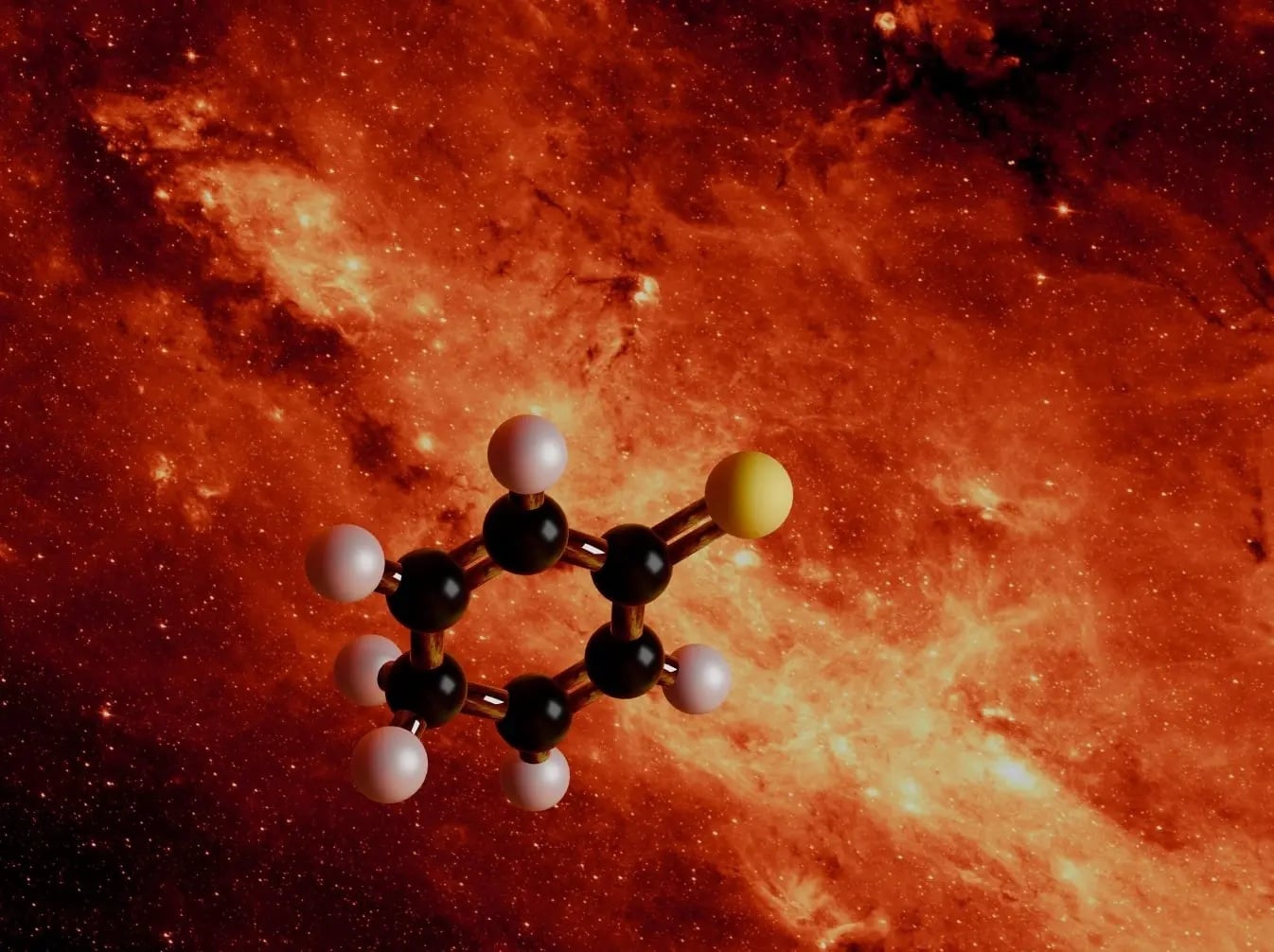
Recent research utilizing data from the James Webb Space Telescope (JWST) has uncovered a significant presence of organic molecules in the ultra-luminous infrared galaxy IRAS 07251-0248. An international team, which includes scientists from the Consejo Superior de Investigaciones Científicas (CSIC) and various universities, has detected a remarkable inventory of organic matter in both gaseous and solid states. This discovery contributes to ongoing investigations into the origins of life and suggests that the building blocks of life may indeed form in space.
The focus on IRAS 07251-0248 is particularly compelling due to the vast quantities of gas and dust obscuring its nucleus. This dense material poses challenges for traditional telescopes aiming to study the central supermassive black hole (SMBH). Nonetheless, the JWST’s infrared capabilities allow it to penetrate this dust, revealing insights into the chemical processes prevalent in the galaxy’s core.
By employing the JWST’s Near-Infrared Spectrometer (NIRSpec) and Mid-Infrared Instrument (MIRI), researchers characterized the types and temperatures of various chemical species present in the galactic nucleus. Among the identified molecules were hydrocarbons, fundamental to complex organic chemistry and essential for life. Notably, the team detected the methyl radical (CH3) for the first time in another galaxy, along with benzene (C6H6), methane (CH4), acetylene (C2H2), diacetylene (C4H2), and triacetylene (C6H2).
In addition to these gaseous compounds, the researchers found a significant abundance of organics in solid form, including carbonaceous grains and water ices. Dr. Ismael García Bernete, a researcher at the Centro de Astrobiología (CAB) and lead author of the study, remarked, “We found an unexpected chemical complexity, with abundances far higher than predicted by current theoretical models.” According to him, this suggests a continuous source of carbon within these galactic nuclei, fueling a rich chemical network.
Professor Dimitra Rigopoulou from the University of Oxford added that although these small organic molecules are not found in living cells, they could play a crucial role in prebiotic chemistry. This represents a significant step toward the formation of amino acids and nucleotides.
The team’s analysis was further bolstered by theoretical models of polycyclic aromatic hydrocarbons (PAHs) developed by Oxford researchers. Their findings indicate that the presence of organic molecules cannot solely be attributed to high temperatures or turbulent gas motions. Instead, they propose that cosmic-ray exposure fragmented PAHs and carbon-rich dust grains, releasing these organics into gaseous form.
This explanation aligns with studies of similar galaxies, which have observed a correlation between the abundance of gaseous hydrocarbons and the intensity of cosmic-ray ionization. The results suggest that dusty galactic nuclei produce organic molecules abundantly, playing a vital role in the chemical evolution of galaxies.
The findings also highlight the effectiveness of the JWST in exploring environments previously inaccessible to scientists. This research opens new avenues for studying the formation and processing of organic molecules in extreme environments, enhancing our understanding of how galaxies are seeded with the fundamental ingredients for life.
These results contribute to the growing body of evidence that the essential components of life can be found in space and emerge spontaneously. This research is especially encouraging for scientists engaged in the search for extraterrestrial life and civilizations. Further insights can be anticipated as exploration continues, revealing the complex interplay of chemistry and cosmic phenomena.
For more details, refer to the findings published in Nature Astronomy and the ongoing contributions of the University of Oxford.










Revolutionary Photonic Ski-Jump Could Miniaturize LiDAR Systems

Couples Detox from Plastics in New Netflix Doc: Can It Boost Fertility?

Aventon Launches Affordable Full-Suspension Electric Mountain Bike

Discover Eight Must-Try Restaurants This Spring Season

UC Irvine Team Unveils Innovative Ion Pump for Water Treatment

One-Third of Americans Trim Daily Expenses for Healthcare Needs

Apple Secures First Oscar in Three Years with F1: The Movie

Fourth Graders Celebrate St. Patrick’s Day with Creative Weather Drawings

Kim Kardashian Dazzles at Vanity Fair Oscars Party 2026

Nostradamus’ 2026 Predictions: Star Death and Dark Events Loom

Breakthroughs and Challenges Await Science in 2026

Electric Moto Influencer Surronster Arrested in Tijuana

OpenAI to Implement Age Verification for ChatGPT by December 2025

Discover the Top 10 Calorie Counting Apps of 2025

Recovering a Suspended TikTok Account: A Step-by-Step Guide

Bella Hadid Shares Health Update After Treatment for Lyme Disease

Backpack Drives Equip Students with Supplies for New School Year

Analysts Project Stronger Growth for Apple’s iPhone 17 Lineup
-
 Science8 months ago
Nostradamus’ 2026 Predictions: Star Death and Dark Events Loom
-
 Science8 months ago
Breakthroughs and Challenges Await Science in 2026
-
 Technology11 months ago
Electric Moto Influencer Surronster Arrested in Tijuana
-
 Technology9 months ago
OpenAI to Implement Age Verification for ChatGPT by December 2025
-
 Technology1 year ago
Discover the Top 10 Calorie Counting Apps of 2025
-
 Technology1 year ago
Recovering a Suspended TikTok Account: A Step-by-Step Guide
-
 Health11 months ago
Bella Hadid Shares Health Update After Treatment for Lyme Disease
-
 Education1 year ago
Backpack Drives Equip Students with Supplies for New School Year
-
 Health12 months ago
Analysts Project Stronger Growth for Apple’s iPhone 17 Lineup
-

 Health12 months ago
Japanese Study Finds Rose Oil Can Increase Brain Gray Matter
-

 Technology8 months ago
Top 10 Penny Stocks to Watch in 2026 for Strong Returns
-

 Science10 months ago
Starship V3 Set for 2026 Launch After Successful Final Test of Version 2