
Science
NASA Prepares for Historic Artemis II Moon Mission Launch


NASA is on the verge of a significant milestone in human space exploration with the upcoming launch of the Artemis II mission, scheduled for as early as February 6, 2026. This mission aims to return American astronauts to the moon for the first time since the Apollo program concluded in 1972. The Artemis program, initiated in 2017, not only aims to send astronauts back to the lunar surface but also to establish a sustainable presence there.
The Artemis II mission will feature a crew of four astronauts: NASA’s Reid Wiseman, Victor Glover, and Christina Koch, alongside Jeremy Hansen from the Canadian Space Agency. This journey will mark humanity’s first return to deep space since the conclusion of the Apollo missions, as the crew embarks on a trajectory that will take them around the moon.
Challenges Ahead for Artemis II
While the mission draws heavily from the experiences of the Apollo program, the Artemis II mission faces unique challenges and objectives. “The most important thing we are working on is how do we handle the unknown,” Hansen stated during a September news conference. Unlike Apollo missions, which entered low lunar orbit, Artemis II is designed to test the Orion spacecraft’s systems and components without landing on the moon.
The mission includes a slingshot trajectory around the moon, allowing the crew to return to Earth even if the capsule’s propulsion system encounters issues. Although the astronauts will not land on the lunar surface, their path will provide them with unprecedented views of the moon. Koch expressed excitement about the mission, saying, “We could see parts of the moon that never have had human eyes laid upon them before.”
The Artemis II launch comes at a time of heightened geopolitical focus on space exploration. As nations like China advance their own lunar programs, U.S. lawmakers emphasize the importance of maintaining a leadership role in space. This mission serves as a precursor to future lunar landings, particularly aimed at the moon’s south pole region, where astronauts are expected to land later this decade.
Scientific Exploration and Human Factors
A significant aspect of the Artemis II mission is understanding the effects of deep space on the human body. Astronauts will experience a more intense radiation environment compared to those aboard the International Space Station. Jacob Bleacher, chief exploration scientist at NASA, noted that while lessons have been learned from previous lunar missions, the study of human health in deep space remains limited.
The Artemis II crew will be equipped with various tools to monitor their cognitive and physiological responses during the mission. This includes small chips with human organ tissue to assess biological reactions in space. Glover highlighted the isolation aspects of the mission, stating, “For the 45 minutes we are closest to the lunar surface, we will also be out of contact — we’re going to have a loss of signal.”
The mission’s duration is expected to last approximately ten days, during which the crew will gather crucial data that could inform future missions, including potential manned trips to Mars. NASA aims to utilize the Artemis program not only to explore the moon but also to prepare for more complex voyages beyond.
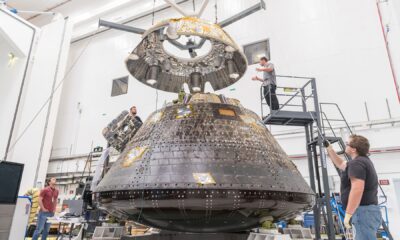
As the Artemis II mission approaches, NASA is keen to ensure the safety and success of the astronauts. The Orion capsule, which will carry the crew, underwent extensive testing during the Artemis I mission. However, concerns remain about its heat shield performance, which showed wear during previous tests. Lakiesha Hawkins, NASA’s acting deputy associate administrator for the Exploration Systems Development Mission Directorate, expressed confidence in the upcoming mission, stating, “We feel very confident that we are going to be able to bring our crew back safely for Artemis II.”
The Artemis II mission represents a vital step towards a sustainable human presence on the moon. As NASA prepares for its launch, the world watches closely, anticipating a new chapter in space exploration that could redefine humanity’s relationship with the cosmos.





Revolutionary Photonic Ski-Jump Could Miniaturize LiDAR Systems

Couples Detox from Plastics in New Netflix Doc: Can It Boost Fertility?

Aventon Launches Affordable Full-Suspension Electric Mountain Bike

Discover Eight Must-Try Restaurants This Spring Season

UC Irvine Team Unveils Innovative Ion Pump for Water Treatment

One-Third of Americans Trim Daily Expenses for Healthcare Needs

Apple Secures First Oscar in Three Years with F1: The Movie

Fourth Graders Celebrate St. Patrick’s Day with Creative Weather Drawings

Kim Kardashian Dazzles at Vanity Fair Oscars Party 2026

Nostradamus’ 2026 Predictions: Star Death and Dark Events Loom

Breakthroughs and Challenges Await Science in 2026

Electric Moto Influencer Surronster Arrested in Tijuana

OpenAI to Implement Age Verification for ChatGPT by December 2025

Discover the Top 10 Calorie Counting Apps of 2025

Bella Hadid Shares Health Update After Treatment for Lyme Disease

Analysts Project Stronger Growth for Apple’s iPhone 17 Lineup

Japanese Study Finds Rose Oil Can Increase Brain Gray Matter

Top 10 Penny Stocks to Watch in 2026 for Strong Returns
-
 Science3 months ago
Nostradamus’ 2026 Predictions: Star Death and Dark Events Loom
-
 Science3 months ago
Breakthroughs and Challenges Await Science in 2026
-
 Technology7 months ago
Electric Moto Influencer Surronster Arrested in Tijuana
-
 Technology4 months ago
OpenAI to Implement Age Verification for ChatGPT by December 2025
-
 Technology9 months ago
Discover the Top 10 Calorie Counting Apps of 2025
-
 Health7 months ago
Bella Hadid Shares Health Update After Treatment for Lyme Disease
-
 Health7 months ago
Analysts Project Stronger Growth for Apple’s iPhone 17 Lineup
-
 Health7 months ago
Japanese Study Finds Rose Oil Can Increase Brain Gray Matter
-
 Technology4 months ago
Top 10 Penny Stocks to Watch in 2026 for Strong Returns
-

 Science6 months ago
Starship V3 Set for 2026 Launch After Successful Final Test of Version 2
-

 Technology1 month ago
Nvidia GTC 2026: Major Announcements Expected for AI and Hardware
-

 Education7 months ago
Harvard Secures Court Victory Over Federal Funding Cuts