
Science
NASA Plans Artemis II Rocket Rollback Amid Helium Flow Issues

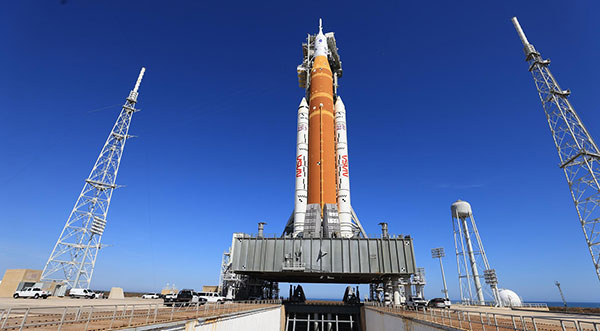
NASA is preparing to potentially roll back the Artemis II rocket and Orion spacecraft to the Vehicle Assembly Building (VAB) at the Kennedy Space Center in Florida. This decision follows an incident on February 21, 2024, when teams detected an interrupted flow of helium to the Space Launch System (SLS) rocket’s interim cryogenic propulsion stage. As a result, the launch of Artemis II is unlikely to occur during the March launch window.
Teams are currently analyzing data to identify the cause of the helium flow issue, which is critical for maintaining the appropriate environmental conditions for the upper stage’s engines. The helium also pressurizes the liquid hydrogen and liquid oxygen propellant tanks. Although the systems functioned as intended during previous wet dress rehearsals, the helium flow could not be properly established during normal operations after the rehearsal concluded on February 19, 2024.
In light of these developments, NASA is taking proactive measures. Preparations are underway to remove the access platforms at Launch Pad B, which are currently hindered by wind conditions. High winds are forecasted for the coming days, complicating the removal process. The agency aims to keep all troubleshooting options open at both the launch pad and VAB.
NASA’s teams are exploring various potential causes for the helium flow issue. They are examining the interface between the ground and rocket lines responsible for routing helium, a valve in the upper stage, and a filter that connects the ground to the rocket. They are also reviewing data from the Artemis I mission, which faced similar helium-related pressurization challenges.
Should the decision to rollback be finalized, it would mean Artemis II will not launch in March. However, preparations are being made to allow for an April launch window, depending on the results of ongoing data analysis and repair efforts.
The Artemis II mission is significant as it carries a crew of NASA astronauts: Reid Wiseman, Victor Glover, and Christina Koch, along with Jeremy Hansen from the Canadian Space Agency. Their participation marks a crucial step in NASA’s efforts to return humans to the Moon and eventually send astronauts to Mars.
As developments unfold, the agency remains focused on addressing the helium flow issue to ensure the mission’s success.









Revolutionary Photonic Ski-Jump Could Miniaturize LiDAR Systems

Couples Detox from Plastics in New Netflix Doc: Can It Boost Fertility?

Aventon Launches Affordable Full-Suspension Electric Mountain Bike

Discover Eight Must-Try Restaurants This Spring Season

UC Irvine Team Unveils Innovative Ion Pump for Water Treatment

One-Third of Americans Trim Daily Expenses for Healthcare Needs

Apple Secures First Oscar in Three Years with F1: The Movie

Fourth Graders Celebrate St. Patrick’s Day with Creative Weather Drawings

Kim Kardashian Dazzles at Vanity Fair Oscars Party 2026

Nostradamus’ 2026 Predictions: Star Death and Dark Events Loom

Breakthroughs and Challenges Await Science in 2026

OpenAI to Implement Age Verification for ChatGPT by December 2025

Electric Moto Influencer Surronster Arrested in Tijuana

Discover the Top 10 Calorie Counting Apps of 2025

Bella Hadid Shares Health Update After Treatment for Lyme Disease

Analysts Project Stronger Growth for Apple’s iPhone 17 Lineup

Top 10 Penny Stocks to Watch in 2026 for Strong Returns

Japanese Study Finds Rose Oil Can Increase Brain Gray Matter
-
 Science3 months ago
Nostradamus’ 2026 Predictions: Star Death and Dark Events Loom
-
 Science3 months ago
Breakthroughs and Challenges Await Science in 2026
-
 Technology4 months ago
OpenAI to Implement Age Verification for ChatGPT by December 2025
-
 Technology6 months ago
Electric Moto Influencer Surronster Arrested in Tijuana
-
 Technology8 months ago
Discover the Top 10 Calorie Counting Apps of 2025
-
 Health6 months ago
Bella Hadid Shares Health Update After Treatment for Lyme Disease
-
 Health7 months ago
Analysts Project Stronger Growth for Apple’s iPhone 17 Lineup
-
 Technology3 months ago
Top 10 Penny Stocks to Watch in 2026 for Strong Returns
-
 Health7 months ago
Japanese Study Finds Rose Oil Can Increase Brain Gray Matter
-

 Science5 months ago
Starship V3 Set for 2026 Launch After Successful Final Test of Version 2
-

 Technology4 weeks ago
Nvidia GTC 2026: Major Announcements Expected for AI and Hardware
-

 Education7 months ago
Harvard Secures Court Victory Over Federal Funding Cuts