
Science
Fossils of Potential Early Animal Named After Punk Rock Icon

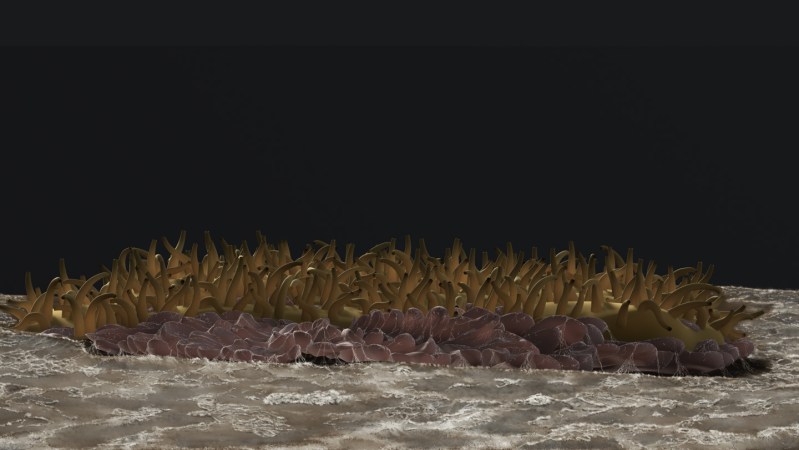
Recent research may have redefined a significant chapter in the history of early life on Earth. A group of fossils previously dismissed as mere organic debris has been identified as an early animal species, now named Lydonia jiggamintia. This discovery, detailed in the journal Palaeontologia Electronica on September 16, 2023, brings exciting insights into the evolution of organisms that existed over half a billion years ago.
Paleontologist Christopher McKean and his research team analyzed 39 fossils originally classified as Blackbrookia. These specimens were discovered along the coast of Newfoundland, particularly near an area known as Mistaken Point, renowned for housing some of the oldest animal fossils ever found. The region has produced remarkable discoveries, including a jellyfish fossil estimated to be around 570 million years old, highlighting its significance in paleontological research.
The newly identified L. jiggamintia measures up to 53 centimeters in length and is characterized by its unique appearance, which has drawn comparisons to a punk rock hairstyle. Its structure features fingerlike tubes that extend vertically, indicating it likely fed by filtering nutrients from the water above. The creature’s rounded and pointed shape suggests it adapted to its environment, possibly taking on characteristics based on the organisms beneath it.
Historic Significance and Cultural Connection
McKean, who is now affiliated with the University of Essex in England, emphasizes the rarity of Precambrian animal fossils, particularly those potentially related to existing species. The identification of L. jiggamintia not only expands our understanding of early life forms but also connects to the cultural heritage of the region. The species name is inspired by the jiggamint, a spiky wild fruit referenced by the Beothuk peoples, who inhabited Newfoundland long before European settlers arrived.
The discovery challenges long-held perceptions of these fossils as mere remnants of decomposed material. The spongelike pores of L. jiggamintia were crucial in distinguishing it as an animal rather than organic debris. As McKean notes, this finding is significant for the scientific community, enhancing our understanding of the origins and diversity of life during the Precambrian era.
As research continues to unveil the complexities of early organisms, Lydonia jiggamintia stands as a testament to the ongoing pursuit of knowledge in the field of paleontology. The study not only sheds light on ancient life forms but also serves as a reminder of the interconnectedness of history, culture, and science.





Revolutionary Photonic Ski-Jump Could Miniaturize LiDAR Systems

Couples Detox from Plastics in New Netflix Doc: Can It Boost Fertility?

Aventon Launches Affordable Full-Suspension Electric Mountain Bike

Discover Eight Must-Try Restaurants This Spring Season

UC Irvine Team Unveils Innovative Ion Pump for Water Treatment

One-Third of Americans Trim Daily Expenses for Healthcare Needs

Apple Secures First Oscar in Three Years with F1: The Movie

Fourth Graders Celebrate St. Patrick’s Day with Creative Weather Drawings

Kim Kardashian Dazzles at Vanity Fair Oscars Party 2026

Nostradamus’ 2026 Predictions: Star Death and Dark Events Loom

Breakthroughs and Challenges Await Science in 2026

Electric Moto Influencer Surronster Arrested in Tijuana

OpenAI to Implement Age Verification for ChatGPT by December 2025

Discover the Top 10 Calorie Counting Apps of 2025

Recovering a Suspended TikTok Account: A Step-by-Step Guide

Bella Hadid Shares Health Update After Treatment for Lyme Disease

Backpack Drives Equip Students with Supplies for New School Year

Analysts Project Stronger Growth for Apple’s iPhone 17 Lineup
-
 Science7 months ago
Nostradamus’ 2026 Predictions: Star Death and Dark Events Loom
-
 Science7 months ago
Breakthroughs and Challenges Await Science in 2026
-
 Technology11 months ago
Electric Moto Influencer Surronster Arrested in Tijuana
-
 Technology8 months ago
OpenAI to Implement Age Verification for ChatGPT by December 2025
-
 Technology1 year ago
Discover the Top 10 Calorie Counting Apps of 2025
-
 Technology1 year ago
Recovering a Suspended TikTok Account: A Step-by-Step Guide
-
 Health11 months ago
Bella Hadid Shares Health Update After Treatment for Lyme Disease
-
 Education1 year ago
Backpack Drives Equip Students with Supplies for New School Year
-
 Health11 months ago
Analysts Project Stronger Growth for Apple’s iPhone 17 Lineup
-

 Technology8 months ago
Top 10 Penny Stocks to Watch in 2026 for Strong Returns
-

 Health11 months ago
Japanese Study Finds Rose Oil Can Increase Brain Gray Matter
-

 Science10 months ago
Starship V3 Set for 2026 Launch After Successful Final Test of Version 2