
Science
Exploring Human Evolution: From Ancestors to Future Adaptations

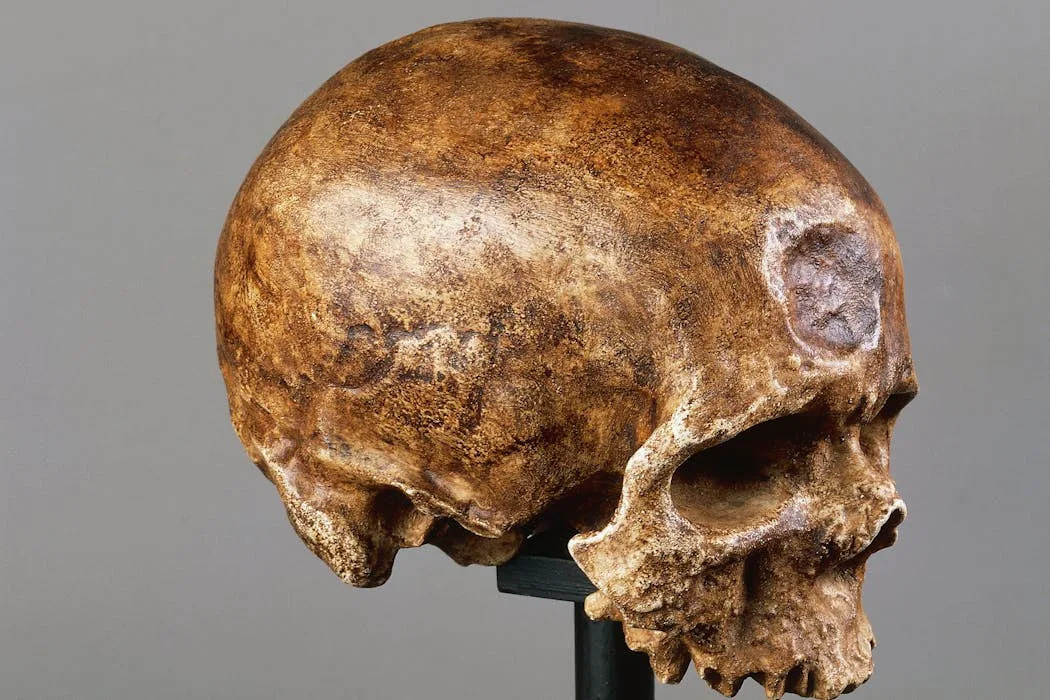
Research into human evolution reveals a complex journey that spans millions of years, illustrating how our ancestors adapted to their environments. Anya T., a 13-year-old from Brookline, Massachusetts, recently posed an intriguing question: “How did humans evolve, and will they evolve more?” This question touches on the core of evolutionary science and the ongoing adaptations in our species.
Understanding Human Evolution
Every living organism today has undergone evolution, and humans are no exception. The process of evolution involves the transmission of traits from parents to offspring through genes. Variations in these genes, known as alleles, can influence an individual’s survival within their environment. Thus, evolution is not simply about becoming the fastest or the strongest; it is about adaptation to specific environmental challenges.
About 6 million years ago, early human ancestors began to walk upright on two legs. The exact reasons for this shift remain a topic of research, but one prevalent theory suggests that bipedalism allowed our ancestors to navigate increasingly fragmented forests due to climate change. This adaptation was critical for survival as it enhanced mobility and resource access.
Another significant aspect of human evolution is the development of our brains. Humans possess the largest brains relative to body size among all species. While elephants have larger brains overall, their body size is proportionally greater. The evolution of larger brains has enabled humans to innovate, allowing the creation of complex systems such as written language, space exploration technologies, and medical advancements like vaccines that combat diseases such as measles.
Over time, the size of human brains increased until approximately 200,000 to 300,000 years ago, when modern humans, classified as Homo sapiens, emerged. Interestingly, since then, human brains have gradually decreased in size, potentially due to changes in body size or energy efficiency considerations.
Current and Future Evolution
Human evolution is an ongoing process. For instance, individuals in Pune, India have developed a genetic mutation that enhances their ability to process omega-3 and omega-6 fatty acids. This adaptation may be linked to their traditional vegetarian diets, which can sometimes lack these essential nutrients vital for brain health.
The future trajectory of human evolution remains uncertain. All living organisms, including humans, continuously adapt to their environments, which are subject to unpredictable changes. While it may be tempting to envision dramatic transformations similar to those seen in comic book characters from the “X-Men” or the Marvel Cinematic Universe, such superhuman abilities are unlikely to manifest through natural evolution. Instead, the real-life capabilities humans develop will likely stem from our intelligence and innovation, akin to the technological enhancements seen in characters like Iron Man.
While humans may not evolve laser beam eyes or wings, the evolution of our cognitive abilities has allowed us to create tools and technologies that can extend our lifespan and enhance our quality of life. The journey of human evolution continues to unfold, driven by both biological changes and technological advancements.
This exploration of human evolution is based on insights from Evan Simons, a scholar from the University at Buffalo, who emphasizes the importance of understanding our past to navigate future challenges. As we ponder the future of human evolution, it is essential to remain curious and engaged with the science that shapes our understanding.
For those with questions about evolution or related topics, inquiries can be sent to [email protected]. Curiosity knows no age limit, and all questions are welcome.
This article is republished from The Conversation, a nonprofit, independent news organization dedicated to providing factual and trustworthy analysis.









Revolutionary Photonic Ski-Jump Could Miniaturize LiDAR Systems

Couples Detox from Plastics in New Netflix Doc: Can It Boost Fertility?

Aventon Launches Affordable Full-Suspension Electric Mountain Bike

Discover Eight Must-Try Restaurants This Spring Season

UC Irvine Team Unveils Innovative Ion Pump for Water Treatment

One-Third of Americans Trim Daily Expenses for Healthcare Needs

Apple Secures First Oscar in Three Years with F1: The Movie

Fourth Graders Celebrate St. Patrick’s Day with Creative Weather Drawings

Kim Kardashian Dazzles at Vanity Fair Oscars Party 2026

Nostradamus’ 2026 Predictions: Star Death and Dark Events Loom

Breakthroughs and Challenges Await Science in 2026

Electric Moto Influencer Surronster Arrested in Tijuana

OpenAI to Implement Age Verification for ChatGPT by December 2025

Discover the Top 10 Calorie Counting Apps of 2025

Recovering a Suspended TikTok Account: A Step-by-Step Guide

Bella Hadid Shares Health Update After Treatment for Lyme Disease

Backpack Drives Equip Students with Supplies for New School Year

Analysts Project Stronger Growth for Apple’s iPhone 17 Lineup
-
 Science8 months ago
Nostradamus’ 2026 Predictions: Star Death and Dark Events Loom
-
 Science8 months ago
Breakthroughs and Challenges Await Science in 2026
-
 Technology11 months ago
Electric Moto Influencer Surronster Arrested in Tijuana
-
 Technology9 months ago
OpenAI to Implement Age Verification for ChatGPT by December 2025
-
 Technology1 year ago
Discover the Top 10 Calorie Counting Apps of 2025
-
 Technology1 year ago
Recovering a Suspended TikTok Account: A Step-by-Step Guide
-
 Health11 months ago
Bella Hadid Shares Health Update After Treatment for Lyme Disease
-
 Education1 year ago
Backpack Drives Equip Students with Supplies for New School Year
-
 Health12 months ago
Analysts Project Stronger Growth for Apple’s iPhone 17 Lineup
-

 Health12 months ago
Japanese Study Finds Rose Oil Can Increase Brain Gray Matter
-

 Technology8 months ago
Top 10 Penny Stocks to Watch in 2026 for Strong Returns
-

 Science10 months ago
Starship V3 Set for 2026 Launch After Successful Final Test of Version 2