
Science
Ancient Dog Skulls Unveil Early Diversity in Canine Evolution

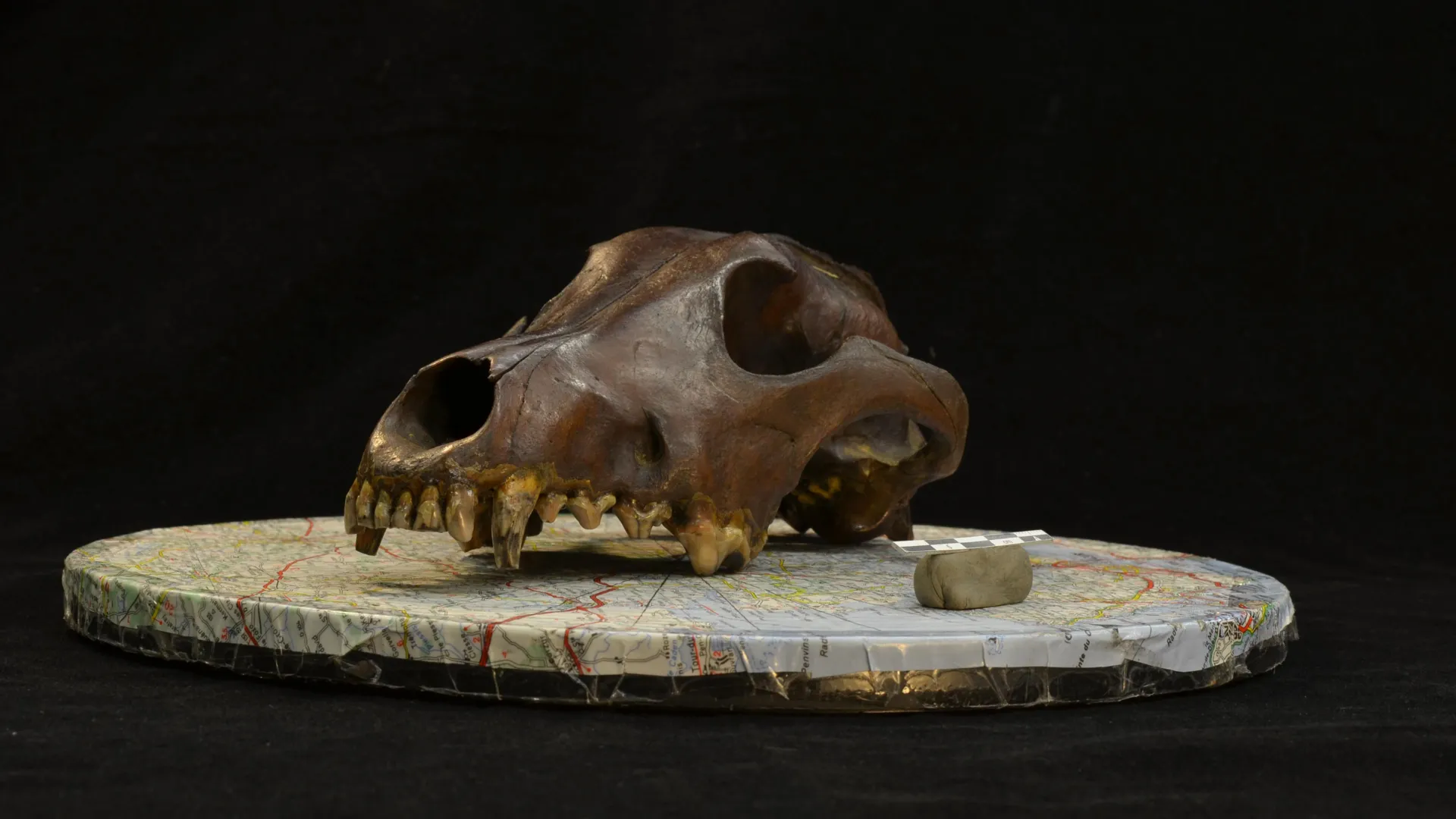
A groundbreaking study has revealed that domestic dogs began diversifying thousands of years earlier than previously believed, with significant differences in their size and shape identified in skulls that date back over 11,000 years. Conducted by researchers at the University of Exeter and the French CNRS, this extensive analysis challenges the notion that dog diversity is primarily a result of recent selective breeding practices, highlighting instead a long history of coevolution between dogs and humans.
Insights from a Global Analysis
Published in the journal *Science*, the research represents the most comprehensive examination of dog skulls to date. The investigation began in 2014 and involved the analysis of 643 canid skulls, which included specimens from both modern and archaeological sources. This collection spans approximately 50,000 years, from the Pleistocene to the present, allowing scientists from over 40 institutions to create detailed 3D models for geometric morphometric analysis. This method enabled precise comparisons of size and shape, revealing how early dogs adapted to their roles in human societies.
The findings indicate that by the Mesolithic and Neolithic periods, dogs were already exhibiting a broad range of skull shapes and body sizes, reflecting their diverse functions in early human communities, such as hunting, herding, guarding, and companionship. According to Dr. Carly Ameen, co-lead author from Exeter’s Department of Archaeology and History, “These results highlight the deep history of our relationship with dogs. Diversity among dogs isn’t just a product of Victorian breeders, but instead a legacy of thousands of years of coevolution with human societies.”
Tracing the Origin of Domestic Dogs
The study identified the oldest confirmed domestic dog from the Russian Mesolithic site of Veretye, dating back approximately 11,000 years. Early domestic dogs were also found in North America, dating to around 8,500 years ago, and in Asia around 7,500 years ago, based on distinct skull shapes associated with domestication.
Dr. Allowen Evin, another co-lead author from the CNRS, explained the findings: “A reduction in skull size for dogs is first detectable between 9,700 and 8,700 years ago, while an increase in size variance appears from 7,700 years ago. Greater variability in skull shape begins to emerge from around 8,200 years ago onwards.” Notably, while modern dogs display extreme morphological variations, such as short-faced bulldogs and long-faced borzois, early archaeological specimens already demonstrate a significant diversity that was double that of Pleistocene dogs.
The research also underscores the challenges in identifying the earliest stages of dog domestication. None of the Late Pleistocene specimens examined, previously suggested as “proto-dogs,” showed skull features indicative of domestication. This suggests that the initial phases of domestication remain elusive in the archaeological record.
Professor Greger Larson, senior author from the University of Oxford, stated, “The earliest phases of dog domestication are still hidden from view, and the first dogs continue to elude us. But what we can now show with confidence is that once dogs emerged, they diversified rapidly. Their early variation reflects both natural ecological pressures and the profound impact of living alongside humans.”
This research not only reshapes the understanding of dog evolution but also opens new avenues for exploring how the interplay of human culture and environment influenced the development of canine diversity. Funded by various national and international agencies, including the Natural Environment Research Council (UK) and the European Research Council, this study reinforces the notion that dogs have been integral to human life for millennia.









Revolutionary Photonic Ski-Jump Could Miniaturize LiDAR Systems

Couples Detox from Plastics in New Netflix Doc: Can It Boost Fertility?

Aventon Launches Affordable Full-Suspension Electric Mountain Bike

Discover Eight Must-Try Restaurants This Spring Season

UC Irvine Team Unveils Innovative Ion Pump for Water Treatment

One-Third of Americans Trim Daily Expenses for Healthcare Needs

Apple Secures First Oscar in Three Years with F1: The Movie

Fourth Graders Celebrate St. Patrick’s Day with Creative Weather Drawings

Kim Kardashian Dazzles at Vanity Fair Oscars Party 2026

Nostradamus’ 2026 Predictions: Star Death and Dark Events Loom

Breakthroughs and Challenges Await Science in 2026

Electric Moto Influencer Surronster Arrested in Tijuana

OpenAI to Implement Age Verification for ChatGPT by December 2025

Discover the Top 10 Calorie Counting Apps of 2025

Bella Hadid Shares Health Update After Treatment for Lyme Disease

Analysts Project Stronger Growth for Apple’s iPhone 17 Lineup

Japanese Study Finds Rose Oil Can Increase Brain Gray Matter

Top 10 Penny Stocks to Watch in 2026 for Strong Returns
-
 Science3 months ago
Nostradamus’ 2026 Predictions: Star Death and Dark Events Loom
-
 Science4 months ago
Breakthroughs and Challenges Await Science in 2026
-
 Technology7 months ago
Electric Moto Influencer Surronster Arrested in Tijuana
-
 Technology4 months ago
OpenAI to Implement Age Verification for ChatGPT by December 2025
-
 Technology9 months ago
Discover the Top 10 Calorie Counting Apps of 2025
-
 Health7 months ago
Bella Hadid Shares Health Update After Treatment for Lyme Disease
-
 Health7 months ago
Analysts Project Stronger Growth for Apple’s iPhone 17 Lineup
-
 Health7 months ago
Japanese Study Finds Rose Oil Can Increase Brain Gray Matter
-
 Technology4 months ago
Top 10 Penny Stocks to Watch in 2026 for Strong Returns
-

 Science6 months ago
Starship V3 Set for 2026 Launch After Successful Final Test of Version 2
-

 Technology1 month ago
Nvidia GTC 2026: Major Announcements Expected for AI and Hardware
-

 Education7 months ago
Harvard Secures Court Victory Over Federal Funding Cuts