
Health
Urgent Liver Transplant Saves Infant from Rare Genetic Disease

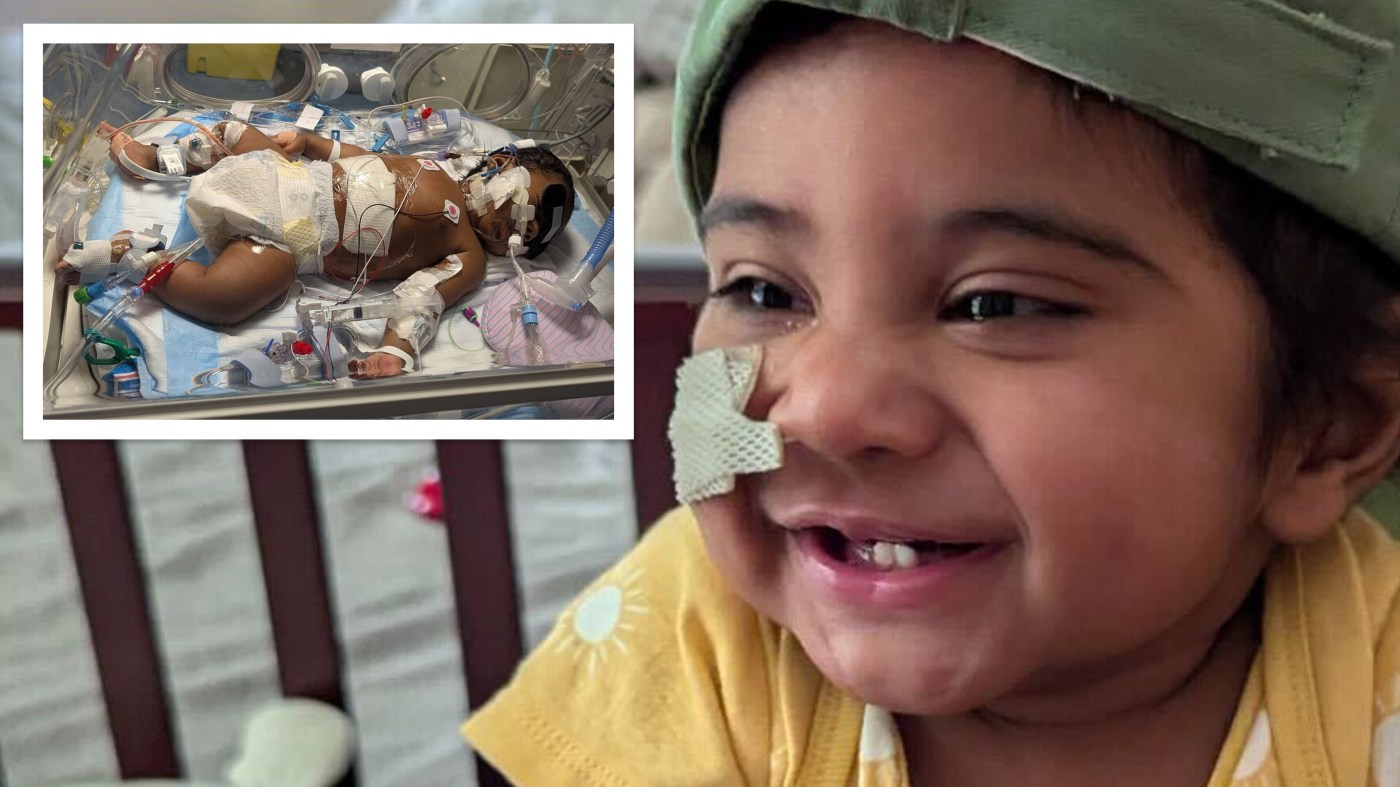
When just seven weeks old, little Dhruvan Gopi faced a life-threatening crisis due to acute liver failure, prompting an urgent need for a liver transplant at Mount Sinai Hospital in Manhattan. His parents, Gopi and Prabha Subramanian, rushed him from a New Jersey urgent care center to various hospitals, unaware that their seemingly healthy infant was grappling with a rare genetic disorder.
Initially born on October 15, 2024, Dhruvan exhibited normal health for several weeks. However, his condition deteriorated dramatically in late November, marked by dark urine and vomiting. Following a visit to a local clinic, he was transferred to St. Peter’s University Hospital, where doctors discovered alarming liver function results. As his health declined, with blood clotting issues and severe anemia, the family was referred to Mount Sinai for specialized care.
Critical Condition Leads to Life-Saving Surgery
Upon arrival at Mount Sinai’s neonatal intensive care unit (NICU) on December 2, 2024, Dhruvan was in dire straits. According to Dr. Sander Florman, director of the Recanati/Miller Transplantation Institute, the infant had “only a day or so to live.” The medical team quickly initiated a comprehensive evaluation, including blood tests and imaging, to assess his condition.
As the situation progressed, a breakthrough occurred when Dr. Florman received a call suggesting the availability of a liver from a two-year-old child suffering from Maple Syrup Urine Disease (MSUD). This condition prevented the child from producing a crucial enzyme, rendering their liver suitable for transplant to a recipient like Dhruvan, who did not have this metabolic issue. The procedure, known as a domino liver transplant, involves a donor providing a liver while simultaneously receiving one from another patient.
“Would you ever use a 2-year-old liver from a ‘domino?’” Dr. Florman recalled being asked. With the same blood type as Dhruvan, the opportunity was too significant to ignore. After meeting the Subramanian family and explaining the complex procedure, the parents consented to the transplant, recognizing it as their son’s best chance for survival.
Post-Transplant Recovery and Unexpected Challenges
The transplant surgery was executed with precision, despite the inherent risks associated with operating on such a small patient. Dr. Florman noted that the liver was split to accommodate Dhruvan’s size, which was critical given his weight of just 10 pounds. The procedure succeeded, providing hope for the infant and his family.
Despite the initial success, Dhruvan’s recovery was fraught with complications, including infections and blood clots. His condition necessitated prolonged support, including the use of a breathing tube and ventilator. During this challenging period, the Subramanian family witnessed the dedication of the hospital staff, who treated Dhruvan as if he were their own child.
After spending more than three months in the hospital, Dhruvan returned home. His father, Gopi, reflected on the emotional toll, stating, “We were happy he was back home, but it hit hard. He needs constant care and a regimen of medications.” The family managed the transition, initially starting with 11 medications daily.
As his recovery progressed, Dhruvan faced additional challenges, including a severe gut reaction known as FPIES, which caused him to reject certain foods. Nevertheless, he demonstrated resilience, gradually tolerating more foods and adapting to his new life.
“We started having a lot of appreciation for what we already have,” Gopi remarked, highlighting how the experience altered their perspective on life. Their older son, now 8 years old, provided support and companionship to his younger brother, creating a lively household once again.
Today, Dhruvan, now 15 months old, is thriving. During a recent visit to Mount Sinai, he was lively and playful, much to the delight of the medical team who fought to save him. Dr. Florman expressed his gratitude, stating, “Could there be anything more gratifying than seeing them a year later, running around like a normal kid?”
Dhruvan’s journey serves as a testament to the complexities of modern medicine and the profound impact of collaborative care. His story not only highlights the intricacies of rare genetic diseases but also the extraordinary lengths to which medical professionals will go to save lives.











Revolutionary Photonic Ski-Jump Could Miniaturize LiDAR Systems

Couples Detox from Plastics in New Netflix Doc: Can It Boost Fertility?

Aventon Launches Affordable Full-Suspension Electric Mountain Bike

Discover Eight Must-Try Restaurants This Spring Season

UC Irvine Team Unveils Innovative Ion Pump for Water Treatment

One-Third of Americans Trim Daily Expenses for Healthcare Needs

Apple Secures First Oscar in Three Years with F1: The Movie

Fourth Graders Celebrate St. Patrick’s Day with Creative Weather Drawings

Kim Kardashian Dazzles at Vanity Fair Oscars Party 2026

Nostradamus’ 2026 Predictions: Star Death and Dark Events Loom

Breakthroughs and Challenges Await Science in 2026

Electric Moto Influencer Surronster Arrested in Tijuana

OpenAI to Implement Age Verification for ChatGPT by December 2025

Discover the Top 10 Calorie Counting Apps of 2025

Bella Hadid Shares Health Update After Treatment for Lyme Disease

Analysts Project Stronger Growth for Apple’s iPhone 17 Lineup

Japanese Study Finds Rose Oil Can Increase Brain Gray Matter

Top 10 Penny Stocks to Watch in 2026 for Strong Returns
-
 Science4 months ago
Nostradamus’ 2026 Predictions: Star Death and Dark Events Loom
-
 Science4 months ago
Breakthroughs and Challenges Await Science in 2026
-
 Technology7 months ago
Electric Moto Influencer Surronster Arrested in Tijuana
-
 Technology4 months ago
OpenAI to Implement Age Verification for ChatGPT by December 2025
-
 Technology9 months ago
Discover the Top 10 Calorie Counting Apps of 2025
-
 Health7 months ago
Bella Hadid Shares Health Update After Treatment for Lyme Disease
-
 Health7 months ago
Analysts Project Stronger Growth for Apple’s iPhone 17 Lineup
-
 Health7 months ago
Japanese Study Finds Rose Oil Can Increase Brain Gray Matter
-
 Technology4 months ago
Top 10 Penny Stocks to Watch in 2026 for Strong Returns
-

 Science6 months ago
Starship V3 Set for 2026 Launch After Successful Final Test of Version 2
-

 Technology1 month ago
Nvidia GTC 2026: Major Announcements Expected for AI and Hardware
-

 Education7 months ago
Harvard Secures Court Victory Over Federal Funding Cuts