
Science
Exploring Earth’s Subsurface Life to Uncover Extraterrestrial Secrets

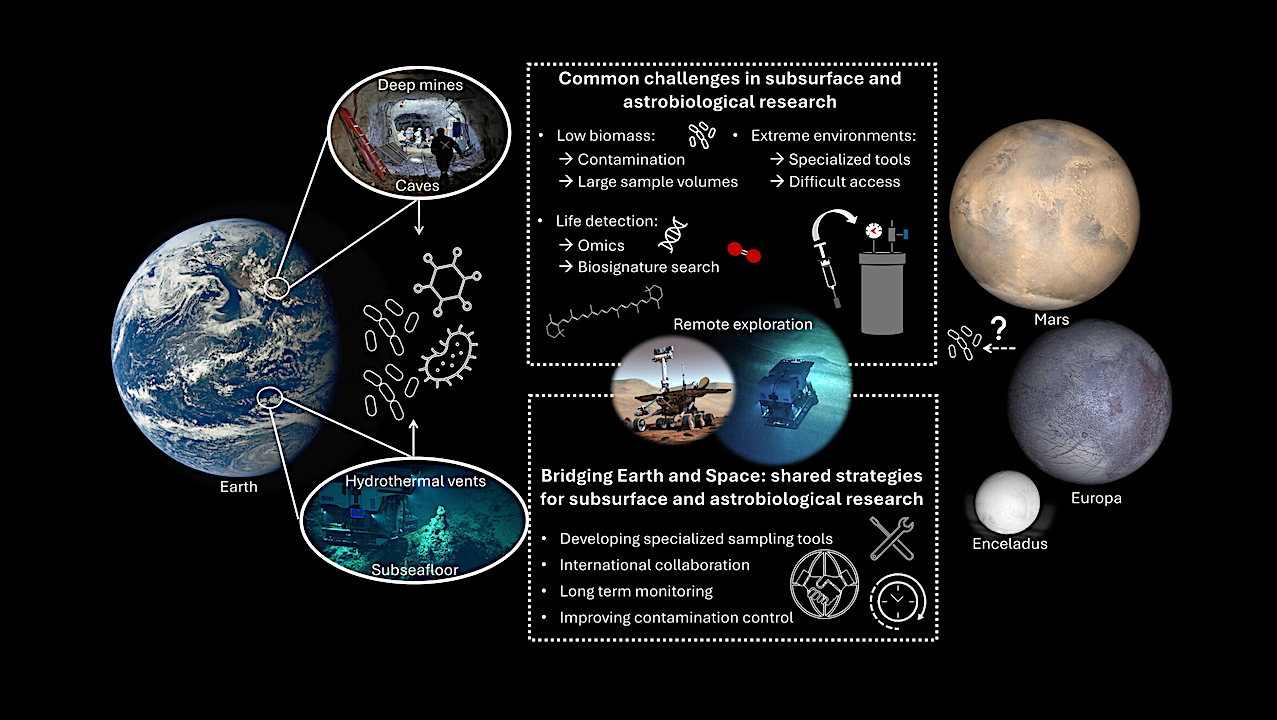
The search for extraterrestrial life takes a new turn as scientists draw parallels between Earth’s subsurface ecosystems and potential habitats beyond our planet. Researchers emphasize that the first forms of life on Earth were microbial, emerging more than two billion years before multicellular organisms. This foundational understanding suggests that microbial life could also be the first to inhabit other worlds.
Extreme conditions on the surfaces of most planets, such as high radiation, extreme temperatures, and aridity, make subsurface environments the most likely refuges for extraterrestrial microbes. Earth’s subsurface holds a diverse array of habitats, including deep marine sediments, crustal aquifers, rock fracture fluids, hydrocarbon reservoirs, caves, and permafrost soils. These environments are known to host a remarkable diversity of life, predominantly microbial organisms that thrive under harsh conditions and limited energy sources.
Subsurface Environments as Models for Extraterrestrial Life
The ability of life to endure and evolve in these extreme subsurface environments supports the notion that similar conditions could exist on other planetary bodies. This insight not only fuels the search for extraterrestrial life but also informs scientists about the types of biosignatures they might encounter. Investigations of Earth’s deep, dark ecosystems enable researchers to refine their strategies and technologies for detecting life elsewhere.
Techniques such as analyzing extraterrestrial samples on Earth, conducting in situ analyses on other planets, and employing remote sensing are pivotal in this ongoing exploration. Subsurface exploration is thus positioned as a vital aspect of astrobiology, enhancing our understanding of the complex processes that might create and sustain life in the universe.
Recent advancements in subsurface research and technology highlight the importance of Earth’s environments as models for potential extraterrestrial habitats. For instance, the International Ocean Drilling Programme (IODP) and the International Continental Drilling Programme (ICDP) have conducted extensive drilling to explore microbial life in various subsurface settings. Locations of interest include key drilling sites mapped across oceans and continents, where scientists continue to uncover how life adapts to extreme conditions.
Implications for the Future of Astrobiology
Insights from these subsurface microbiomes significantly enhance our understanding of life’s possibilities beyond Earth. By studying microbial communities in environments like permafrost and deep-sea sediments, researchers can develop better models for anticipating how life might exist in extraterrestrial settings. This research not only broadens our comprehension of life’s adaptability but also lays the groundwork for future missions aimed at locating biosignatures on other planets.
Technological developments are also advancing the field of astrobiology. Innovations in drilling techniques and molecular analysis are crucial for investigating subsurface environments more effectively. As scientists continue to explore the depths of Earth, they are not only uncovering secrets about our planet’s history but also paving the way for future discoveries in the search for life beyond our solar system.
In summary, the intersection of subsurface research and astrobiology presents an exciting frontier. By examining Earth’s microbial ecosystems, scientists are unlocking clues that may help us understand whether life exists elsewhere in the universe. The ongoing quest to explore these enigmatic environments will continue to shape our understanding of life’s potential across the cosmos.







Revolutionary Photonic Ski-Jump Could Miniaturize LiDAR Systems

Couples Detox from Plastics in New Netflix Doc: Can It Boost Fertility?

Aventon Launches Affordable Full-Suspension Electric Mountain Bike

Discover Eight Must-Try Restaurants This Spring Season

UC Irvine Team Unveils Innovative Ion Pump for Water Treatment

One-Third of Americans Trim Daily Expenses for Healthcare Needs

Apple Secures First Oscar in Three Years with F1: The Movie

Fourth Graders Celebrate St. Patrick’s Day with Creative Weather Drawings

Kim Kardashian Dazzles at Vanity Fair Oscars Party 2026

Nostradamus’ 2026 Predictions: Star Death and Dark Events Loom

Breakthroughs and Challenges Await Science in 2026

Electric Moto Influencer Surronster Arrested in Tijuana

OpenAI to Implement Age Verification for ChatGPT by December 2025

Discover the Top 10 Calorie Counting Apps of 2025

Recovering a Suspended TikTok Account: A Step-by-Step Guide

Bella Hadid Shares Health Update After Treatment for Lyme Disease

Backpack Drives Equip Students with Supplies for New School Year

Analysts Project Stronger Growth for Apple’s iPhone 17 Lineup
-
 Science8 months ago
Nostradamus’ 2026 Predictions: Star Death and Dark Events Loom
-
 Science8 months ago
Breakthroughs and Challenges Await Science in 2026
-
 Technology11 months ago
Electric Moto Influencer Surronster Arrested in Tijuana
-
 Technology9 months ago
OpenAI to Implement Age Verification for ChatGPT by December 2025
-
 Technology1 year ago
Discover the Top 10 Calorie Counting Apps of 2025
-
 Technology1 year ago
Recovering a Suspended TikTok Account: A Step-by-Step Guide
-
 Health11 months ago
Bella Hadid Shares Health Update After Treatment for Lyme Disease
-
 Education1 year ago
Backpack Drives Equip Students with Supplies for New School Year
-
 Health12 months ago
Analysts Project Stronger Growth for Apple’s iPhone 17 Lineup
-

 Health12 months ago
Japanese Study Finds Rose Oil Can Increase Brain Gray Matter
-

 Technology8 months ago
Top 10 Penny Stocks to Watch in 2026 for Strong Returns
-

 Science10 months ago
Starship V3 Set for 2026 Launch After Successful Final Test of Version 2