
Science
Study Reveals Common Traits Among Radicals and Extremists

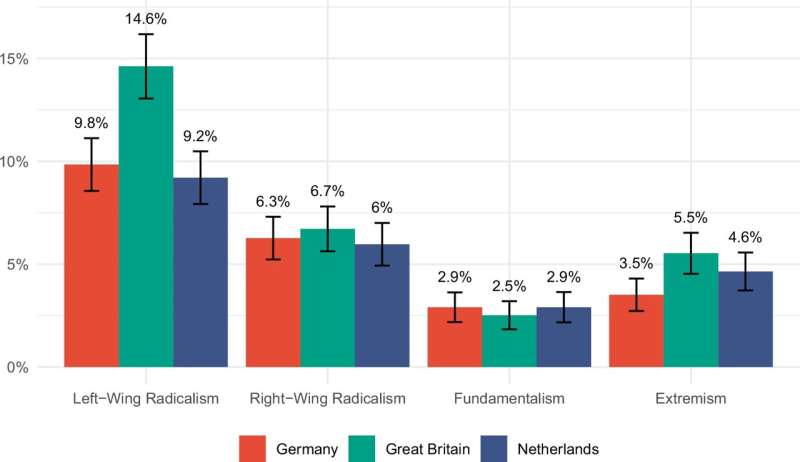
Research led by Marc Helbling, a sociologist at the University of Mannheim, has uncovered significant commonalities and differences among individuals with radical, extremist, or fundamentalist views. This study, published on January 24, 2026, in the journal Humanities and Social Sciences Communications, is the first of its kind to systematically compare these attitudes across Germany, Great Britain, and the Netherlands.
The research team, which includes Nina Fadarkhan Osenbrügge and Dr. Sebastian Jungkunz from the University of Halle and University of Bamberg, analyzed survey data from over 6,000 respondents. They found that many individuals with these views share similar sociodemographic and sociopsychological backgrounds. In many cases, they are younger men with lower levels of education who feel marginalized and overlooked in society.
Helbling emphasized the importance of understanding these commonalities and differences. “Using newly developed and validated measures, we make commonalities and differences more clearly visible and can better understand the backgrounds of these tendencies—this facilitates developing effective prevention and countermeasures,” he stated.
The study identifies key factors contributing to radical, extremist, and fundamentalist attitudes. These include feelings of disillusionment with politics, social marginalization, experiences of discrimination, and income inequality. Such factors can lead to social isolation and financial disadvantages. While the findings show that individuals with radical views often share these backgrounds, notable differences exist as well.
For instance, the study indicates that women are more likely to be left-wing radicals rather than right-wing. Furthermore, older individuals are generally less likely to adopt fundamentalist, extremist, or left-wing radical views, although they do not show a decrease in right-wing radicalism compared to younger individuals. Interestingly, the research also reveals that religious individuals are more prone to radicalism across various faiths, including Catholics, Protestants, and Muslims. The only exception noted is that Protestants are less inclined towards left-wing radicalism.
The study also provides insight into the prevalence of support for political violence. It indicates that between 4% and 9% of the general population endorses various forms of political violence, while this figure rises to approximately 60% among right-wing and left-wing extremists. In contrast, only 10% to 20% of religious fundamentalists support such violence.
“In all societies analyzed, there is only a small minority that justifies violence. And apparently very few of them also want to use violence themselves. However, merely supporting violence can already legitimize it and thus encourage others to use it,” Helbling summarized.
Defining what constitutes radical, extremist, or fundamentalist views is crucial for understanding this research. The team uses specific definitions: “Extremism” refers to anti-democratic attitudes that challenge the rule of law. Religious fundamentalism shares anti-democratic characteristics but focuses on religious beliefs, asserting a singular interpretation of religious doctrine as the ultimate truth. In contrast, radicalism accepts procedural democracy while opposing the fundamental values of liberal democracy.
Right-wing radicals and extremists express support for ethnic nationalism, racism, and social Darwinism. On the other hand, left-wing radicals and extremists extend the concept of equality to the detriment of individual freedom, promoting socialism, anti-fascism, and opposition to capitalism and imperialism.
This comprehensive analysis highlights the complexities surrounding radical, extremist, and fundamentalist attitudes, shedding light on the factors that drive individuals towards these ideologies. Understanding these dynamics is essential for crafting targeted prevention strategies that address the root causes of radicalization.






Revolutionary Photonic Ski-Jump Could Miniaturize LiDAR Systems

Couples Detox from Plastics in New Netflix Doc: Can It Boost Fertility?

Aventon Launches Affordable Full-Suspension Electric Mountain Bike

Discover Eight Must-Try Restaurants This Spring Season

UC Irvine Team Unveils Innovative Ion Pump for Water Treatment

One-Third of Americans Trim Daily Expenses for Healthcare Needs

Apple Secures First Oscar in Three Years with F1: The Movie

Fourth Graders Celebrate St. Patrick’s Day with Creative Weather Drawings

Kim Kardashian Dazzles at Vanity Fair Oscars Party 2026

Nostradamus’ 2026 Predictions: Star Death and Dark Events Loom

Breakthroughs and Challenges Await Science in 2026

Electric Moto Influencer Surronster Arrested in Tijuana

OpenAI to Implement Age Verification for ChatGPT by December 2025

Discover the Top 10 Calorie Counting Apps of 2025

Recovering a Suspended TikTok Account: A Step-by-Step Guide

Bella Hadid Shares Health Update After Treatment for Lyme Disease

Backpack Drives Equip Students with Supplies for New School Year

Analysts Project Stronger Growth for Apple’s iPhone 17 Lineup
-
 Science7 months ago
Nostradamus’ 2026 Predictions: Star Death and Dark Events Loom
-
 Science7 months ago
Breakthroughs and Challenges Await Science in 2026
-
 Technology10 months ago
Electric Moto Influencer Surronster Arrested in Tijuana
-
 Technology8 months ago
OpenAI to Implement Age Verification for ChatGPT by December 2025
-
 Technology1 year ago
Discover the Top 10 Calorie Counting Apps of 2025
-
 Technology1 year ago
Recovering a Suspended TikTok Account: A Step-by-Step Guide
-
 Health10 months ago
Bella Hadid Shares Health Update After Treatment for Lyme Disease
-
 Education12 months ago
Backpack Drives Equip Students with Supplies for New School Year
-
 Health11 months ago
Analysts Project Stronger Growth for Apple’s iPhone 17 Lineup
-

 Technology7 months ago
Top 10 Penny Stocks to Watch in 2026 for Strong Returns
-

 Health11 months ago
Japanese Study Finds Rose Oil Can Increase Brain Gray Matter
-

 Science9 months ago
Starship V3 Set for 2026 Launch After Successful Final Test of Version 2