
Science
Scientists Unveil New ‘Lucifer’ Bee Species in Australia

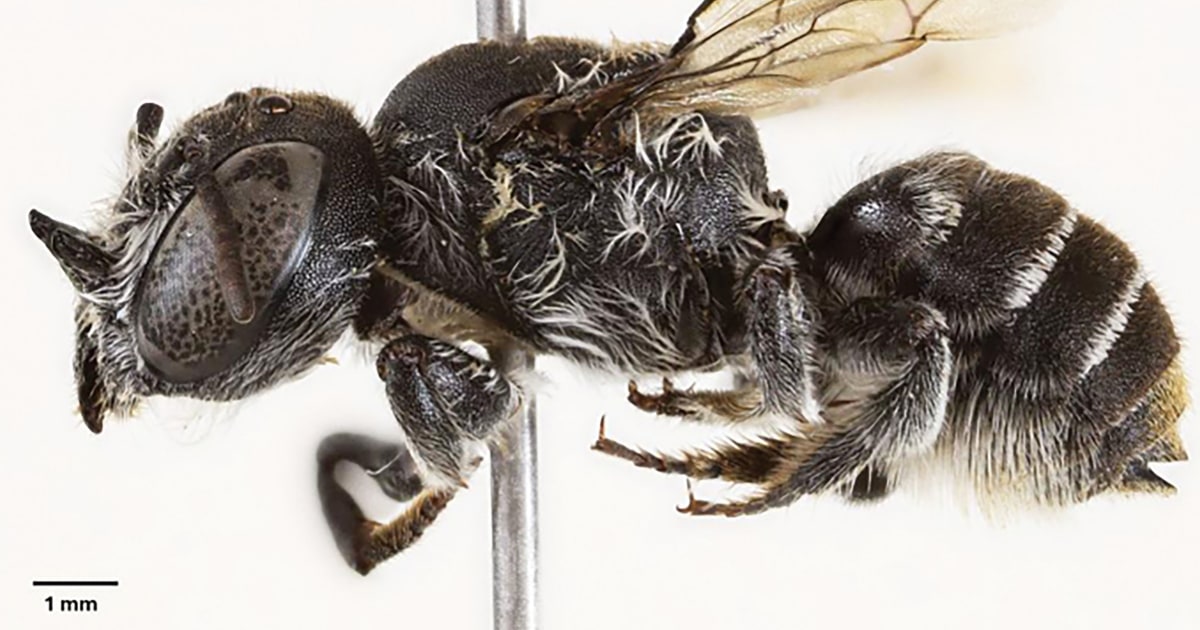
Scientists in Australia have identified a new species of native bee, named Megachile lucifer, notable for its small, devil-like horns. This discovery, made during a survey of a critically endangered wildflower in Western Australia’s Goldfields in 2019, was detailed in a study published in the Journal of Hymenoptera Research on March 15, 2024.
The female Lucifer bee has distinctive horns, each measuring approximately 0.9 millimeters long. These unique features inspired its name, according to Kit Prendergast, the study’s lead author and an adjunct research fellow at Curtin University. “When writing up the new species description, I was watching the Netflix show Lucifer,” Prendergast stated. “The name just fit perfectly.”
Researchers conducted DNA testing, which confirmed that this new species does not match any known bees in existing databases. It marks the first new member of the Megachile group to be described in over two decades.
Potential Roles of the Horns
While the exact functions of the horns remain unclear, researchers suggest they may assist in accessing flowers, competing for resources, and defending nests. Interestingly, the male bees of this species do not possess horns, raising questions about the evolutionary advantages for females.
The discovery of Megachile lucifer underscores the urgent need to study Australia’s native bee populations, which are currently under-researched. Prendergast emphasized the potential risks facing this new species due to habitat disturbances and climate change. “Without knowing which native bees exist and what plants they depend on, we risk losing both before we even realize they’re there,” she remarked.
Australia is home to around 2,000 species of native bees, with over 300 yet to be scientifically named and described, according to the CSIRO, Australia’s national science agency. The lack of data on these bees contributes to a poor understanding of their conservation status.
Calls for Conservation Action
Tobias Smith, a bee researcher at the University of Queensland, noted that Australia’s native bees are “understudied and data poor.” He highlighted the need for stronger policies to protect these bees from habitat loss, inappropriate fire regimes, and risks associated with megafires.
In a statement to NBC News, Smith encouraged the public to engage with their local environments: “Get outside and look for some native bees and appreciate them.” Such actions could foster greater awareness of the importance of these pollinators and the ecosystems they support.
The identification of the Lucifer bee serves as a reminder of the biodiversity present in Australia and the ongoing challenges faced by its native species. As research continues, the need for conservation efforts becomes ever more pressing to ensure the survival of such unique organisms.












Revolutionary Photonic Ski-Jump Could Miniaturize LiDAR Systems

Couples Detox from Plastics in New Netflix Doc: Can It Boost Fertility?

Aventon Launches Affordable Full-Suspension Electric Mountain Bike

Discover Eight Must-Try Restaurants This Spring Season

UC Irvine Team Unveils Innovative Ion Pump for Water Treatment

One-Third of Americans Trim Daily Expenses for Healthcare Needs

Apple Secures First Oscar in Three Years with F1: The Movie

Fourth Graders Celebrate St. Patrick’s Day with Creative Weather Drawings

Kim Kardashian Dazzles at Vanity Fair Oscars Party 2026

Nostradamus’ 2026 Predictions: Star Death and Dark Events Loom

Breakthroughs and Challenges Await Science in 2026

Electric Moto Influencer Surronster Arrested in Tijuana

OpenAI to Implement Age Verification for ChatGPT by December 2025

Discover the Top 10 Calorie Counting Apps of 2025

Recovering a Suspended TikTok Account: A Step-by-Step Guide

Bella Hadid Shares Health Update After Treatment for Lyme Disease

Backpack Drives Equip Students with Supplies for New School Year

Analysts Project Stronger Growth for Apple’s iPhone 17 Lineup
-
 Science8 months ago
Nostradamus’ 2026 Predictions: Star Death and Dark Events Loom
-
 Science8 months ago
Breakthroughs and Challenges Await Science in 2026
-
 Technology11 months ago
Electric Moto Influencer Surronster Arrested in Tijuana
-
 Technology9 months ago
OpenAI to Implement Age Verification for ChatGPT by December 2025
-
 Technology1 year ago
Discover the Top 10 Calorie Counting Apps of 2025
-
 Technology1 year ago
Recovering a Suspended TikTok Account: A Step-by-Step Guide
-
 Health11 months ago
Bella Hadid Shares Health Update After Treatment for Lyme Disease
-
 Education1 year ago
Backpack Drives Equip Students with Supplies for New School Year
-
 Health11 months ago
Analysts Project Stronger Growth for Apple’s iPhone 17 Lineup
-

 Health12 months ago
Japanese Study Finds Rose Oil Can Increase Brain Gray Matter
-

 Technology8 months ago
Top 10 Penny Stocks to Watch in 2026 for Strong Returns
-

 Science10 months ago
Starship V3 Set for 2026 Launch After Successful Final Test of Version 2