
Science
Researchers Discover Ionic Liquids Could Support Life Beyond Earth

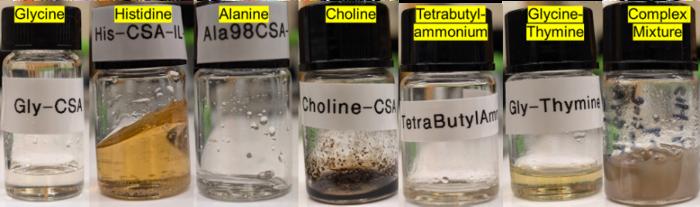
A new study from researchers at MIT suggests that ionic liquids, which can form under extreme conditions, may serve as alternative solvents for life on other planets. This research challenges the long-held belief that water is the only viable liquid for supporting life, particularly in harsh environments such as those found on Venus.
The concept of ionic liquids as biological solvents stems from their unique properties. These substances are essentially salts that remain liquid at room temperature and consist entirely of charged ions. Researchers found that ionic liquids possess a polar nature, essential for dissolving biomolecules like enzymes. This property makes them intriguing candidates for life in environments where water would be either absent or unstable.
One significant finding is that ionic liquids can exist at temperatures far exceeding those suitable for liquid water. They also demonstrate extremely low vapor pressure, meaning they remain stable even in conditions with minimal atmospheric pressure. This stability could potentially expand the habitable zone around stars, allowing for the possibility of life on planets previously deemed inhospitable.
The researchers’ journey began with an experiment aimed at detecting organic compounds in the sulfuric acid-laden atmosphere of Venus. During the process, they encountered difficulties isolating these compounds. Each attempt to evaporate the sulfuric acid resulted in residual liquid, which led to the realization that the acid was reacting with glycine, forming an ionic liquid.
Ionic liquids are not commonly found in nature on Earth, but the researchers noted that they can form when sulfuric acid interacts with organic materials. Sulfuric acid itself is prevalent in various environments, including those shaped by volcanic activity, suggesting that it might be widespread across many exoplanets.
To validate their findings, the researchers replicated the reaction under conditions analogous to those found on rocky exoplanets. They introduced glycine and sulfuric acid on a slab of basalt, simulating a planetary surface. The results confirmed that ionic liquids could form and remain stable in these extreme environments.
Looking ahead, the researchers acknowledge that actual extraterrestrial conditions may be even more challenging. They propose that excess sulfuric acid could be absorbed into rock pores, while organic molecules might survive the harsh radiation of space, potentially shielded by magnetic fields or the very rocks that mitigate harmful substances.
This research represents a crucial step in understanding the diverse forms life might take beyond Earth. While it does not provide definitive proof of extraterrestrial life, it opens new avenues for astrobiologists in their quest to investigate life’s possibilities in the universe. The study offers a fresh perspective on habitability criteria, allowing scientists to rethink traditional assumptions about the conditions required for life.
In summary, the prospect of ionic liquids contributing to biological processes on other planets not only broadens the definition of potentially habitable environments but also ignites curiosity for future explorations. The findings were detailed in a paper authored by R. Agrawal and colleagues, highlighting the ongoing quest to uncover the mysteries of life beyond our planet.







Revolutionary Photonic Ski-Jump Could Miniaturize LiDAR Systems

Couples Detox from Plastics in New Netflix Doc: Can It Boost Fertility?

Aventon Launches Affordable Full-Suspension Electric Mountain Bike

Discover Eight Must-Try Restaurants This Spring Season

UC Irvine Team Unveils Innovative Ion Pump for Water Treatment

One-Third of Americans Trim Daily Expenses for Healthcare Needs

Apple Secures First Oscar in Three Years with F1: The Movie

Fourth Graders Celebrate St. Patrick’s Day with Creative Weather Drawings

Kim Kardashian Dazzles at Vanity Fair Oscars Party 2026

Nostradamus’ 2026 Predictions: Star Death and Dark Events Loom

Breakthroughs and Challenges Await Science in 2026

Electric Moto Influencer Surronster Arrested in Tijuana

OpenAI to Implement Age Verification for ChatGPT by December 2025

Discover the Top 10 Calorie Counting Apps of 2025

Recovering a Suspended TikTok Account: A Step-by-Step Guide

Bella Hadid Shares Health Update After Treatment for Lyme Disease

Backpack Drives Equip Students with Supplies for New School Year

Analysts Project Stronger Growth for Apple’s iPhone 17 Lineup
-
 Science7 months ago
Nostradamus’ 2026 Predictions: Star Death and Dark Events Loom
-
 Science7 months ago
Breakthroughs and Challenges Await Science in 2026
-
 Technology10 months ago
Electric Moto Influencer Surronster Arrested in Tijuana
-
 Technology8 months ago
OpenAI to Implement Age Verification for ChatGPT by December 2025
-
 Technology1 year ago
Discover the Top 10 Calorie Counting Apps of 2025
-
 Technology1 year ago
Recovering a Suspended TikTok Account: A Step-by-Step Guide
-
 Health10 months ago
Bella Hadid Shares Health Update After Treatment for Lyme Disease
-
 Education1 year ago
Backpack Drives Equip Students with Supplies for New School Year
-
 Health11 months ago
Analysts Project Stronger Growth for Apple’s iPhone 17 Lineup
-

 Technology7 months ago
Top 10 Penny Stocks to Watch in 2026 for Strong Returns
-

 Health11 months ago
Japanese Study Finds Rose Oil Can Increase Brain Gray Matter
-

 Science9 months ago
Starship V3 Set for 2026 Launch After Successful Final Test of Version 2