
Science
MIT’s Eliezer Calo Explores Genetic Links to Craniofacial Disorders

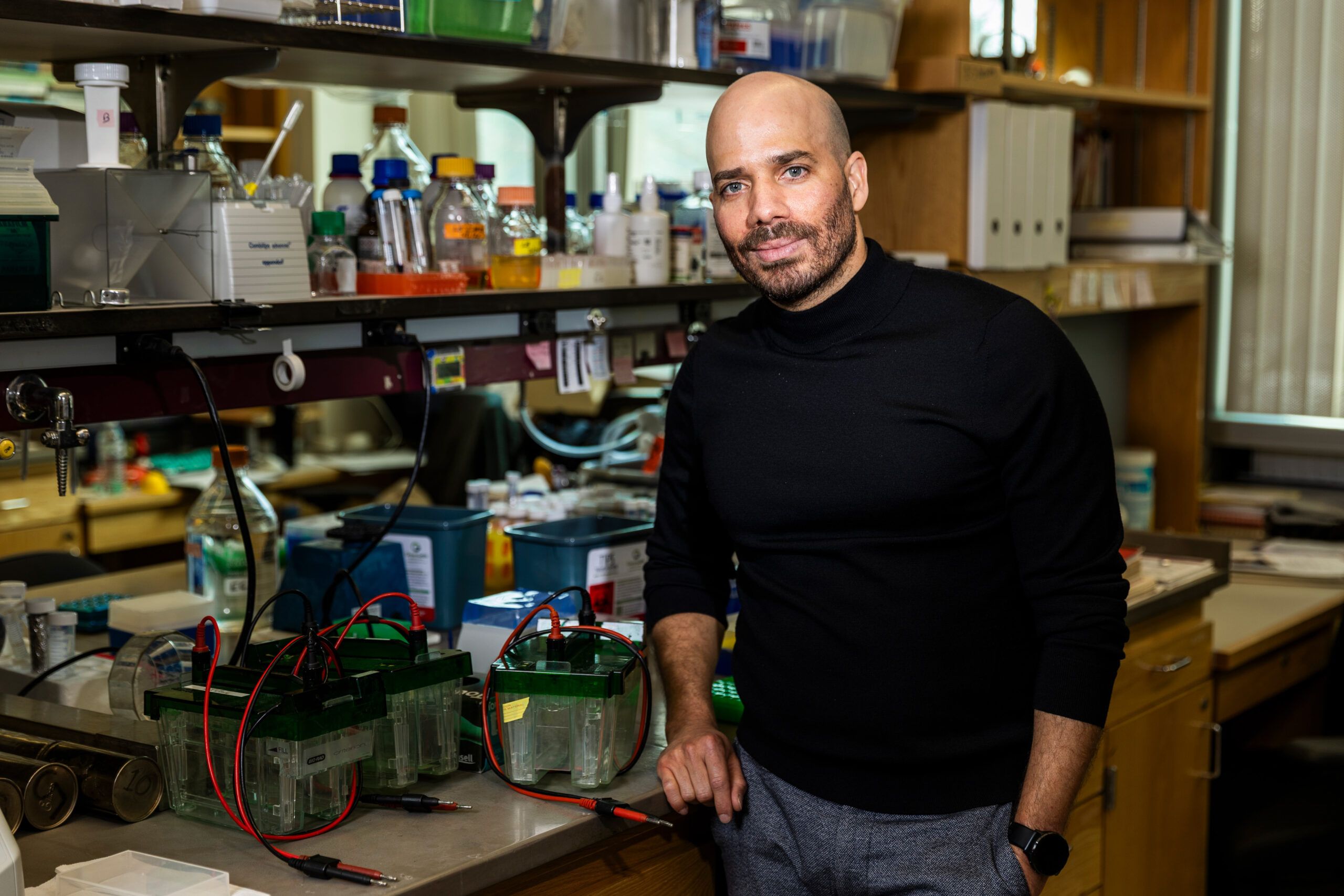
Associate Professor Eliezer Calo at the Massachusetts Institute of Technology (MIT) is making significant strides in understanding the genetic basis of craniofacial malformations. His research aims not only to uncover treatments for conditions like cleft palate but also to answer fundamental biological questions regarding protein synthesis and embryonic development. Calo emphasizes that studying genes mutated in diseases can reveal vital insights into essential biological processes.
“We use genes that are mutated in disease to uncover fundamental biology,” Calo explains. “Mutations that happen in disease are an experiment of nature, telling us that those are the important genes, and then we follow them up not only to understand the disease, but to fundamentally understand what the genes are doing.”
Impact of Ribosome Formation on Development
Since establishing his lab in 2017, Calo has focused on the role of ribosomes in cellular development. Ribosomes are essential organelles where protein synthesis occurs and are composed of two subunits made up of approximately 80 proteins. A long-standing question in biology is why mutations affecting ribosome formation primarily impact facial development over other parts of the body. In a groundbreaking study published in 2018, Calo discovered that mutations in the TCOF1 gene activate the protein p53 in facial embryonic cells at higher levels than in other cells, leading to programmed cell death. This discovery is linked to Treacher-Collins Syndrome, a disorder characterized by underdeveloped facial bones.
His lab has also shown that p53 overactivation links to craniofacial disorders caused by mutations in RNA splicing factors. This work highlights the complex interaction between genetics and developmental biology, providing potential pathways for new treatments.
From Puerto Rico to MIT: A Nontraditional Journey
Calo’s path to academia began in a mountainous region of Puerto Rico, where he became the first in his family to complete high school. Initially exploring various majors at the University of Puerto Rico at Rio Piedras, he settled on chemistry after being invited to work in a professor’s lab. His project on the pharmacokinetics of cell receptors in astrocytes blended his interests in biology and chemistry and sparked his passion for scientific research.
His involvement in MIT’s Summer Research Program (MSRP), where he worked under Stephen Bell, solidified his decision to pursue a career in the sciences. “Without that experience, I would have probably chosen another career,” Calo reflects, noting the differences he experienced in research environments.
After completing his PhD at MIT, where he shifted his focus to cancer biology under the mentorship of Jacqueline Lees, Calo initially hesitated about continuing in academia. Encouraged by his thesis committee, he pursued a postdoctoral position at Stanford University. During this time, he became enamored with developmental biology and the regulation of proteins involved in ribosome assembly, a focus that remains central to his current research.
When considering faculty positions, Calo initially leaned towards California institutions. However, a compelling conversation with the late Angelika Amon, an influential MIT professor, convinced him to return to MIT. “She had me on the phone for more than one hour telling me why I should come to MIT,” he recalls. “That was so heartwarming that I could not say no.”
Since his return, Calo has made it a priority to mentor undergraduate students through the MSRP, reflecting on his own transformative experiences. He believes in giving back to the program that helped him discover his passion for science.
In 2023, Calo’s lab uncovered additional critical functions of the TCOF1 gene, demonstrating its importance in forming the three compartments of the nucleolus, which is essential for ribosome production. This discovery offers insights into a significant evolutionary transition that occurred around 300 million years ago. The findings suggest that the evolution of the nucleolus from two to three compartments has implications for understanding craniofacial development and broader biological processes.
“Studying disease-related genes allowed us to understand a very fundamental biological process of how the nucleolus evolved, which has been a question in the field that nobody could figure out the answer for,” Calo states.
Calo’s ongoing research not only addresses pressing medical questions but also contributes to our understanding of fundamental biological mechanisms, bridging the gap between genetics and evolutionary biology.








Revolutionary Photonic Ski-Jump Could Miniaturize LiDAR Systems

Couples Detox from Plastics in New Netflix Doc: Can It Boost Fertility?

Aventon Launches Affordable Full-Suspension Electric Mountain Bike

Discover Eight Must-Try Restaurants This Spring Season

UC Irvine Team Unveils Innovative Ion Pump for Water Treatment

One-Third of Americans Trim Daily Expenses for Healthcare Needs

Apple Secures First Oscar in Three Years with F1: The Movie

Fourth Graders Celebrate St. Patrick’s Day with Creative Weather Drawings

Kim Kardashian Dazzles at Vanity Fair Oscars Party 2026

Nostradamus’ 2026 Predictions: Star Death and Dark Events Loom

Breakthroughs and Challenges Await Science in 2026

Electric Moto Influencer Surronster Arrested in Tijuana

OpenAI to Implement Age Verification for ChatGPT by December 2025

Discover the Top 10 Calorie Counting Apps of 2025

Recovering a Suspended TikTok Account: A Step-by-Step Guide

Bella Hadid Shares Health Update After Treatment for Lyme Disease

Backpack Drives Equip Students with Supplies for New School Year

Analysts Project Stronger Growth for Apple’s iPhone 17 Lineup
-
 Science8 months ago
Nostradamus’ 2026 Predictions: Star Death and Dark Events Loom
-
 Science8 months ago
Breakthroughs and Challenges Await Science in 2026
-
 Technology11 months ago
Electric Moto Influencer Surronster Arrested in Tijuana
-
 Technology9 months ago
OpenAI to Implement Age Verification for ChatGPT by December 2025
-
 Technology1 year ago
Discover the Top 10 Calorie Counting Apps of 2025
-
 Technology1 year ago
Recovering a Suspended TikTok Account: A Step-by-Step Guide
-
 Health11 months ago
Bella Hadid Shares Health Update After Treatment for Lyme Disease
-
 Education1 year ago
Backpack Drives Equip Students with Supplies for New School Year
-
 Health11 months ago
Analysts Project Stronger Growth for Apple’s iPhone 17 Lineup
-

 Health12 months ago
Japanese Study Finds Rose Oil Can Increase Brain Gray Matter
-

 Technology8 months ago
Top 10 Penny Stocks to Watch in 2026 for Strong Returns
-

 Science10 months ago
Starship V3 Set for 2026 Launch After Successful Final Test of Version 2