
Science
New Catalyst Boosts Efficiency of Electrochemical Methane Conversion

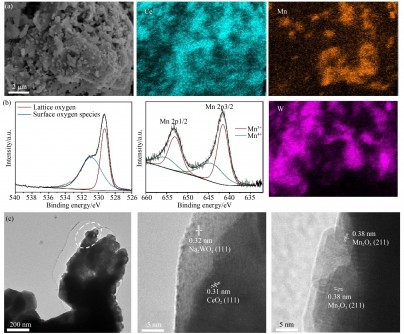
Recent advancements in electrochemical technology have led to a significant breakthrough in the conversion of methane, a key component of natural gas, into valuable chemicals. Researchers from the Sinopec Beijing Research Institute of Chemical Industry and Tsinghua University have developed an innovative catalyst that enhances both the efficiency and stability of the electrochemical oxidative coupling of methane (EOCM) process. This development could have profound implications for the energy and chemical sectors.
Traditional oxidative coupling of methane (OCM) methods have struggled with issues such as low product selectivity and high operational costs, particularly due to the reliance on pure oxygen oxidants. The newly introduced EOCM technology overcomes these challenges by separating methane from oxidants and managing oxygen ion migration more effectively. Yet, the stability of catalysts for reactive oxygen species has limited the yield and selectivity of C2 products.
In response to these limitations, a team led by Yifeng Li and Yu Bo has created a novel electrode using a perovskite material, La0.6Sr0.4MnO3–δ (LSM), paired with a composite of Ce-Mn-W oxides. The support material, (Ce0.90Gd0.10)O1.95 (GDC), plays a crucial role in stabilizing reactive oxygen species during the oxygen evolution reaction (OER).
By optimizing the interaction between these materials, the researchers achieved remarkable results. Under conditions of 850 °C, the C2 product selectivity of the CMW@GDC/LSM composite electrode reached a maximum of 80.3%, with a yield of 313 μL/min/cm2 at a current density of 600 mA/cm2. This performance significantly surpasses that of either the pure LSM or single CMW catalysts.
The design of the composite electrode not only stabilizes reactive oxygen species but also enhances the adsorption capacity of methane, thereby facilitating the activation of C-H bonds and the formation of C-C bonds. This advancement addresses critical hurdles faced by traditional catalysts, achieving a balance between selectivity and activity.
Furthermore, the electrode demonstrated substantial stability, maintaining approximately 70% C2 selectivity over 5500 seconds of continuous operation without significant deactivation. This robustness is attributed to the synergistic effects between the GDC support, which stabilizes O2 2- species and reduces their formation free energy, and LSM, which provides excellent electronic conductivity and OER activity.
This research, published in November 2023, represents a pivotal step toward the precise regulation of reactive oxygen species through engineered material interfaces. The implications extend beyond enhanced methane conversion; the technology couples methane conversion with CO2 electrolysis, improving energy conversion efficiency and promoting carbon cycling via cathodic CO2 reduction. This innovative approach offers a promising solution for developing low-carbon energy systems, addressing both environmental concerns and energy needs in a sustainable manner.
In summary, the collaborative efforts of Yifeng Li, Yu Bo, and their teams mark a significant advancement in the quest for efficient methane conversion technologies, potentially reshaping the landscape of chemical manufacturing and energy production.





Revolutionary Photonic Ski-Jump Could Miniaturize LiDAR Systems

Couples Detox from Plastics in New Netflix Doc: Can It Boost Fertility?

Aventon Launches Affordable Full-Suspension Electric Mountain Bike

Discover Eight Must-Try Restaurants This Spring Season

UC Irvine Team Unveils Innovative Ion Pump for Water Treatment

One-Third of Americans Trim Daily Expenses for Healthcare Needs

Apple Secures First Oscar in Three Years with F1: The Movie

Fourth Graders Celebrate St. Patrick’s Day with Creative Weather Drawings

Kim Kardashian Dazzles at Vanity Fair Oscars Party 2026

Nostradamus’ 2026 Predictions: Star Death and Dark Events Loom

Breakthroughs and Challenges Await Science in 2026

Electric Moto Influencer Surronster Arrested in Tijuana

OpenAI to Implement Age Verification for ChatGPT by December 2025

Discover the Top 10 Calorie Counting Apps of 2025

Recovering a Suspended TikTok Account: A Step-by-Step Guide

Bella Hadid Shares Health Update After Treatment for Lyme Disease

Backpack Drives Equip Students with Supplies for New School Year

Analysts Project Stronger Growth for Apple’s iPhone 17 Lineup
-
 Science8 months ago
Nostradamus’ 2026 Predictions: Star Death and Dark Events Loom
-
 Science8 months ago
Breakthroughs and Challenges Await Science in 2026
-
 Technology11 months ago
Electric Moto Influencer Surronster Arrested in Tijuana
-
 Technology9 months ago
OpenAI to Implement Age Verification for ChatGPT by December 2025
-
 Technology1 year ago
Discover the Top 10 Calorie Counting Apps of 2025
-
 Technology1 year ago
Recovering a Suspended TikTok Account: A Step-by-Step Guide
-
 Health11 months ago
Bella Hadid Shares Health Update After Treatment for Lyme Disease
-
 Education1 year ago
Backpack Drives Equip Students with Supplies for New School Year
-
 Health12 months ago
Analysts Project Stronger Growth for Apple’s iPhone 17 Lineup
-

 Health12 months ago
Japanese Study Finds Rose Oil Can Increase Brain Gray Matter
-

 Technology8 months ago
Top 10 Penny Stocks to Watch in 2026 for Strong Returns
-

 Science10 months ago
Starship V3 Set for 2026 Launch After Successful Final Test of Version 2