
Science
NASA’s StarBurst Passes Key Tests Ahead of Launch in 2027

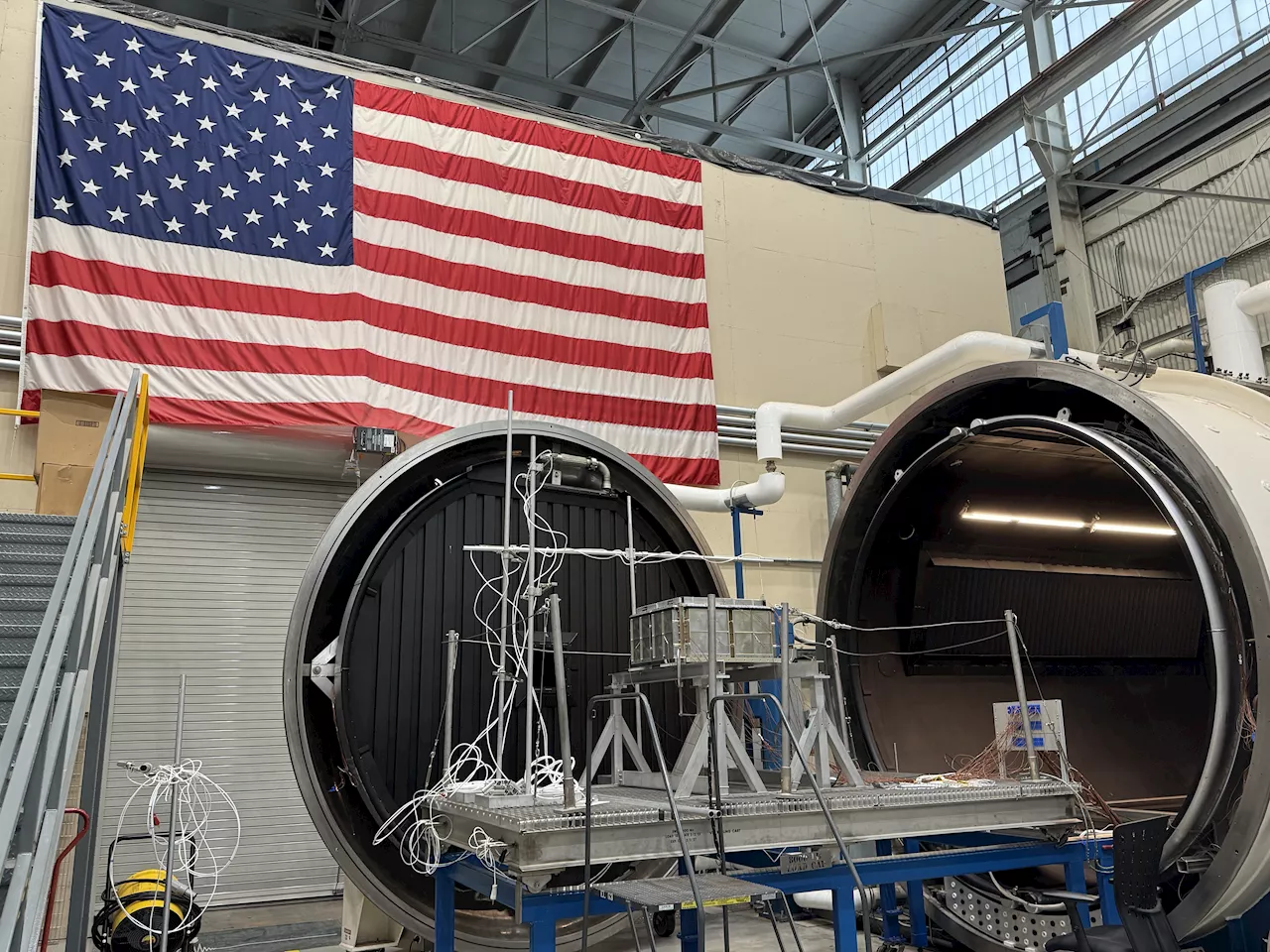
NASA’s StarBurst instrument has successfully completed a series of critical tests, bringing it closer to its planned launch in 2027. After rigorous evaluations, including thermal vacuum and vibration tests, the satellite is now prepared for calibration. Located outside a thermal vacuum chamber at NASA’s Marshall Space Flight Center in Huntsville, Alabama, StarBurst is poised to advance our understanding of cosmic phenomena.
The StarBurst mission aims to detect short gamma-ray bursts, which are some of the most energetic explosions in the universe and serve as key indicators of neutron star mergers. These astronomical events provide vital insights into the origins of heavy metals, such as gold and platinum, which are formed during such mergers. To date, only one event has been observed simultaneously by gravitational wave observatories and gamma-ray detection.
StarBurst arrived at NASA Marshall in March 2025 and has since undergone extensive thermal testing. The instrument experienced continuous thermal testing in a vacuum chamber, conducted 24 hours a day for 18 days. During these tests, technicians introduced radioactive material to simulate gamma-ray signals, enabling engineers to assess the instrument’s capabilities under space-like conditions.
A major aspect of StarBurst’s preparation involved thermal balance testing designed to replicate the extreme temperatures the instrument will face in orbit. This data will enhance NASA’s thermal models, ensuring the satellite can endure these conditions. Additionally, a 24-hour “bake-out” process was implemented to eliminate unwanted gases and vapors from the instrument using high heat in a vacuum environment.
Daniel Kocevski, principal investigator at NASA Marshall, expressed satisfaction with the progress, stating, “NASA’s StarBurst mission is ready for its next stage of assembly and is one step closer to flight.” These tests have verified engineering models, enhancing understanding of how StarBurst will operate in space while it observes gamma-ray emissions from merging neutron stars.
Following the testing phase at Marshall, the StarBurst instrument was shipped to the Space Flight Laboratory at the University of Toronto in August 2026. This facility is responsible for manufacturing the spacecraft bus. The integration of StarBurst with the spacecraft bus occurred in early September, with Marshall’s team providing support during this critical phase.
Future testing will include functional and electromagnetic compatibility assessments to ensure all systems operate harmoniously. StarBurst is scheduled for additional calibration, vibration, and thermal vacuum testing in spring 2027, with plans to have it launch-ready by mid-2026.
NASA intends to launch StarBurst as early as 2027, aligning its mission with the next operations of the Laser-Interferometer Gravitational Wave Observatory. This coordination aims to maximize the potential for detecting simultaneous gamma-ray bursts and gravitational waves, a phenomenon that has only been observed once.
The StarBurst mission is a collaborative endeavor led by NASA’s Marshall Space Flight Center in partnership with the U.S. Naval Research Laboratory, the University of Alabama Huntsville, the Universities Space Research Association, and the University of Toronto Institute for Aerospace Studies Space Flight Laboratory. This initiative is part of NASA’s Astrophysics Pioneers program, which supports innovative, cost-effective missions to explore astrophysical science.
As StarBurst continues through its developmental stages, the scientific community eagerly anticipates the insights it will provide into the universe’s most enigmatic events.




Revolutionary Photonic Ski-Jump Could Miniaturize LiDAR Systems

Couples Detox from Plastics in New Netflix Doc: Can It Boost Fertility?

Aventon Launches Affordable Full-Suspension Electric Mountain Bike

Discover Eight Must-Try Restaurants This Spring Season

UC Irvine Team Unveils Innovative Ion Pump for Water Treatment

One-Third of Americans Trim Daily Expenses for Healthcare Needs

Apple Secures First Oscar in Three Years with F1: The Movie

Fourth Graders Celebrate St. Patrick’s Day with Creative Weather Drawings

Kim Kardashian Dazzles at Vanity Fair Oscars Party 2026

Nostradamus’ 2026 Predictions: Star Death and Dark Events Loom

Breakthroughs and Challenges Await Science in 2026

Electric Moto Influencer Surronster Arrested in Tijuana

OpenAI to Implement Age Verification for ChatGPT by December 2025

Discover the Top 10 Calorie Counting Apps of 2025

Recovering a Suspended TikTok Account: A Step-by-Step Guide

Bella Hadid Shares Health Update After Treatment for Lyme Disease

Backpack Drives Equip Students with Supplies for New School Year

Analysts Project Stronger Growth for Apple’s iPhone 17 Lineup
-
 Science8 months ago
Nostradamus’ 2026 Predictions: Star Death and Dark Events Loom
-
 Science8 months ago
Breakthroughs and Challenges Await Science in 2026
-
 Technology11 months ago
Electric Moto Influencer Surronster Arrested in Tijuana
-
 Technology9 months ago
OpenAI to Implement Age Verification for ChatGPT by December 2025
-
 Technology1 year ago
Discover the Top 10 Calorie Counting Apps of 2025
-
 Technology1 year ago
Recovering a Suspended TikTok Account: A Step-by-Step Guide
-
 Health11 months ago
Bella Hadid Shares Health Update After Treatment for Lyme Disease
-
 Education1 year ago
Backpack Drives Equip Students with Supplies for New School Year
-
 Health12 months ago
Analysts Project Stronger Growth for Apple’s iPhone 17 Lineup
-

 Health12 months ago
Japanese Study Finds Rose Oil Can Increase Brain Gray Matter
-

 Technology8 months ago
Top 10 Penny Stocks to Watch in 2026 for Strong Returns
-

 Science10 months ago
Starship V3 Set for 2026 Launch After Successful Final Test of Version 2