
Science
NASA’s Habitable Worlds Observatory Aims to Redefine Astrometry

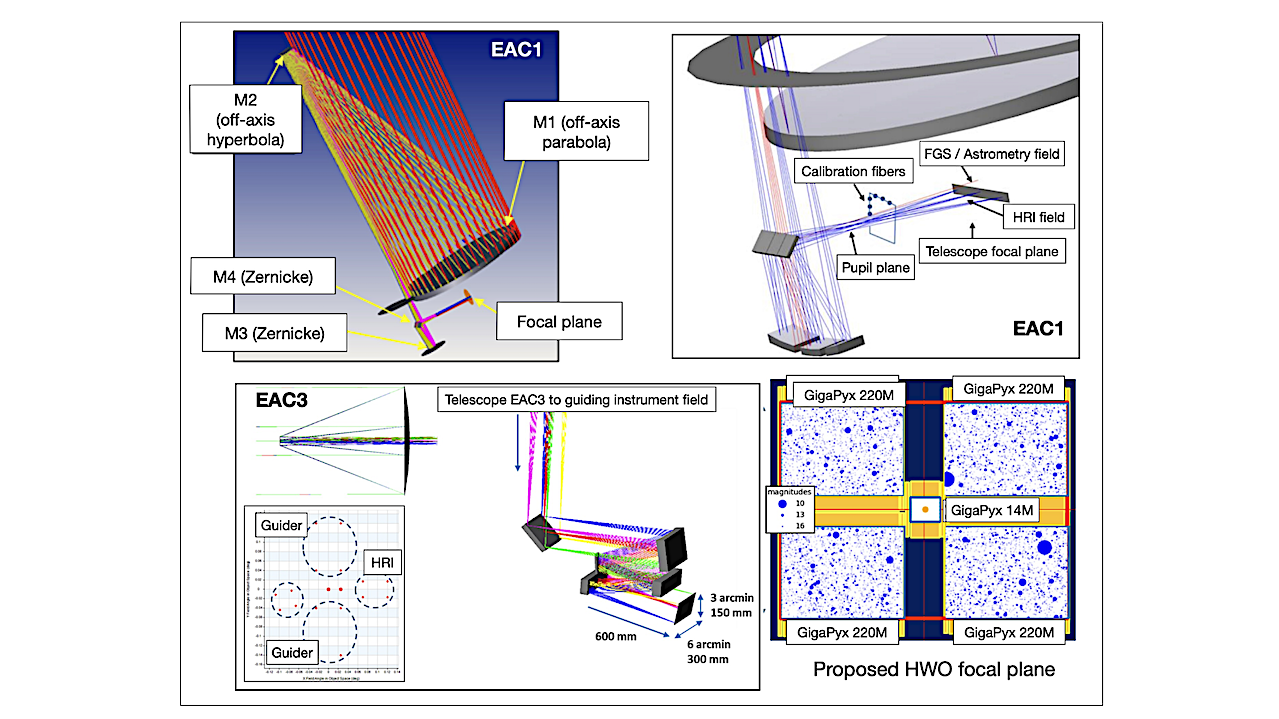
NASA’s upcoming Habitable Worlds Observatory (HWO) seeks to transform astrometry, a foundational branch of astronomy, through enhanced precision in detecting Earth-like exoplanets and understanding dark matter. Utilizing a large-aperture telescope with a diameter of 6 to 8 meters, HWO will operate primarily in visible wavelengths, enabling scientists to identify rocky exoplanets within a distance of 10 parsecs and analyze their atmospheric conditions.
Recent advancements in astrometry, particularly through missions like Hipparcos and Gaia, have set new standards by mapping billions of stars with remarkable accuracy. Nevertheless, the quest for sub-microarcsecond precision remains vital for addressing challenges such as locating Earth-like exoplanets in habitable zones and investigating the effects of dark matter in galactic settings.
Innovative Astrometric Instrumentation
The proposed astrometric instrument on HWO aims to deliver diffraction-limited images across extensive fields, achieving a point-spread function (PSF) precision of 20 milliarcseconds. By integrating a sophisticated detector calibration system, the observatory will conduct high-precision astrometry, which includes detecting and measuring the orbits of Earth-mass planets around nearby solar-type stars.
A key feature of HWO’s instrument is its visible channel, which boasts a large CMOS-based focal plane made up of stitched pixel arrays. This design allows for a broad field of view, making it easier to capture celestial phenomena. The “Detector Calibration Unit” employs interferometric laser fringes to ensure pixel positions are accurately calibrated, enhancing the overall quality of the data collected.
Advancing Our Understanding of Dark Matter
Beyond exoplanet detection, the Habitable Worlds Observatory is poised to significantly advance research on dark matter. By studying stellar motions within galactic environments, HWO could provide critical insights that improve current constraints on the self-interaction cross-section of heavy dark matter particles, commonly referred to as WIMPs. Additionally, it aims to refine measurements regarding the masses of ultra-high dark matter particles.
The combination of differential astrometry and a stable telescope design facilitates extended integration times, which is vital for achieving the necessary sensitivity to detect exoplanets and conduct in-depth studies of dark matter. This innovative approach could mark a notable shift in our understanding of both planetary systems and the elusive nature of dark matter.
The ambitious project, led by scientists including Fabien Malbet from IPAG and numerous colleagues from various institutions, is set to be presented at a conference in Washington DC in July 2025. As the scientific community anticipates the launch of HWO, the potential for groundbreaking discoveries in astrobiology and cosmology remains a point of excitement and hope for future explorations in our universe.
For further details on this transformative initiative, the research can be referenced through arXiv:2510.18920 [astro-ph.IM].





Revolutionary Photonic Ski-Jump Could Miniaturize LiDAR Systems

Couples Detox from Plastics in New Netflix Doc: Can It Boost Fertility?

Aventon Launches Affordable Full-Suspension Electric Mountain Bike

Discover Eight Must-Try Restaurants This Spring Season

UC Irvine Team Unveils Innovative Ion Pump for Water Treatment

One-Third of Americans Trim Daily Expenses for Healthcare Needs

Apple Secures First Oscar in Three Years with F1: The Movie

Fourth Graders Celebrate St. Patrick’s Day with Creative Weather Drawings

Kim Kardashian Dazzles at Vanity Fair Oscars Party 2026

Nostradamus’ 2026 Predictions: Star Death and Dark Events Loom

Breakthroughs and Challenges Await Science in 2026

Electric Moto Influencer Surronster Arrested in Tijuana

OpenAI to Implement Age Verification for ChatGPT by December 2025

Discover the Top 10 Calorie Counting Apps of 2025

Recovering a Suspended TikTok Account: A Step-by-Step Guide

Bella Hadid Shares Health Update After Treatment for Lyme Disease

Backpack Drives Equip Students with Supplies for New School Year

Analysts Project Stronger Growth for Apple’s iPhone 17 Lineup
-
 Science8 months ago
Nostradamus’ 2026 Predictions: Star Death and Dark Events Loom
-
 Science8 months ago
Breakthroughs and Challenges Await Science in 2026
-
 Technology11 months ago
Electric Moto Influencer Surronster Arrested in Tijuana
-
 Technology9 months ago
OpenAI to Implement Age Verification for ChatGPT by December 2025
-
 Technology1 year ago
Discover the Top 10 Calorie Counting Apps of 2025
-
 Technology1 year ago
Recovering a Suspended TikTok Account: A Step-by-Step Guide
-
 Health11 months ago
Bella Hadid Shares Health Update After Treatment for Lyme Disease
-
 Education1 year ago
Backpack Drives Equip Students with Supplies for New School Year
-
 Health11 months ago
Analysts Project Stronger Growth for Apple’s iPhone 17 Lineup
-

 Health12 months ago
Japanese Study Finds Rose Oil Can Increase Brain Gray Matter
-

 Technology8 months ago
Top 10 Penny Stocks to Watch in 2026 for Strong Returns
-

 Science10 months ago
Starship V3 Set for 2026 Launch After Successful Final Test of Version 2