
Science
NASA Launches STELLA Project to Democratize Remote Sensing Science

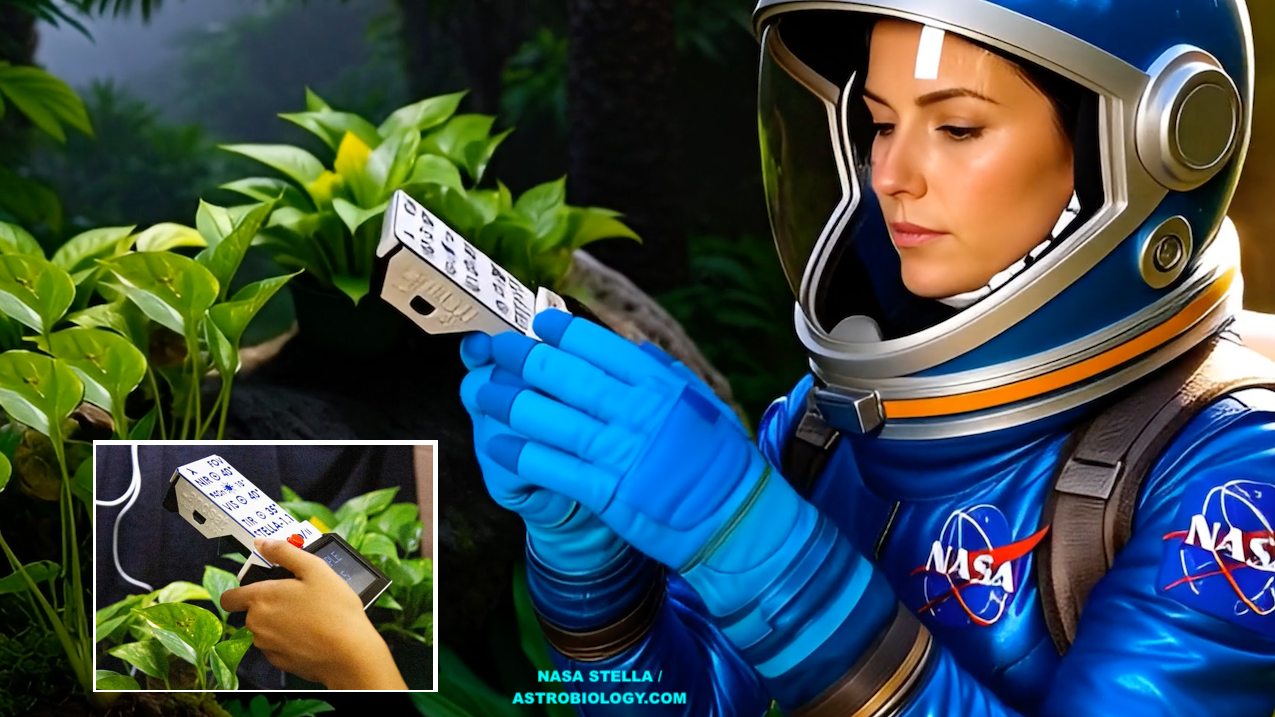
NASA has unveiled the STELLA project, creating low-cost, open-source instruments designed to make remote sensing technology accessible to a broader audience. The initiative aims to engage various communities in scientific exploration, particularly in understanding environmental features and potential life forms on other planets. The project is detailed in a recent paper titled “Science and Technology Education for Land / Life Assessment (STELLA): Democratizing Remote Sensing Science With Low-Cost Open-Source Instruments for Research and Education.”
The STELLA instruments are designed to measure light spectra over 18 channels in the visible and near-infrared range. This capability enables users to evaluate vegetation reflectance characteristics and monitor environmental conditions effectively. The simplest model, known as the STELLA-Q, can be assembled for approximately $200 and requires minimal technical expertise, making it suitable for a wide range of users, including students and citizen scientists.
Empowering Future Explorers
Located at NASA’s Goddard Space Flight Center in Greenbelt, Maryland, the STELLA project is part of NASA’s commitment to foster the next generation of scientists—often referred to as the “Artemis Generation.” These young explorers are expected to play a critical role in future missions that will explore other worlds. The STELLA initiative not only provides hands-on learning experiences but also encourages analytical thinking and a deeper understanding of remote sensing technologies.
The STELLA instruments are built from commercially available components, allowing users to create their own devices with straightforward assembly instructions. The open-source software, based on a variant of the Python programming language, is designed for ease of use, enabling users to record data on micro-SD cards for subsequent analysis. This accessibility opens new avenues for scientific research, particularly in educational settings.
According to the paper, “STELLA instruments help engage students in the quantitative aspects of satellite data and provide insight into the scientific process.” By making sophisticated technology more widely available, NASA aims to democratize the field of remote sensing science.
Practical Applications and Future Impact
The practical applications of STELLA extend beyond education. For instance, during testing at NASA’s Goddard Space Flight Center, the instruments were used to monitor plant health by assessing the effects of varying water levels. This real-world application illustrates how STELLA can contribute to both environmental science and educational outcomes.
With the ongoing exploration of other planets, the ability to conduct in situ examinations becomes increasingly vital. Sample return missions can be logistically challenging and expensive. Thus, having the capability to analyze data on-site and relay findings back to Earth in real-time significantly enhances the efficiency of space missions. The STELLA project positions itself as an essential tool for future explorations, allowing for immediate empirical exploration and data collection.
As NASA continues to develop these instruments, the role of community engagement in science is becoming more pronounced. The vibrant DIY and citizen science movements around the world are eager to innovate and utilize available materials to create impactful scientific tools. This collaborative spirit aligns with NASA’s vision for the STELLA project, as it seeks to inspire individuals to participate in scientific discovery.
NASA’s STELLA program is funded by the NASA Science Mission Directorate, ensuring continued support for its mission to make remote sensing technologies accessible to diverse populations. The collaboration with university researchers, including those from the University of Virginia, enhances the project’s reach and effectiveness.
The implications of the STELLA initiative extend far beyond the immediate educational benefits. By fostering a culture of innovation and collaboration, NASA is laying the groundwork for future generations of scientists who will embark on ambitious missions to explore new worlds. The tools developed through STELLA will not only empower these future explorers but also enrich our understanding of life in the universe.
In conclusion, NASA’s STELLA project represents a significant step towards democratizing remote sensing science. By equipping individuals with the means to explore and understand their environments, NASA is not only enhancing educational opportunities but also paving the way for exciting discoveries in the field of astrobiology and beyond.





Revolutionary Photonic Ski-Jump Could Miniaturize LiDAR Systems

Couples Detox from Plastics in New Netflix Doc: Can It Boost Fertility?

Aventon Launches Affordable Full-Suspension Electric Mountain Bike

Discover Eight Must-Try Restaurants This Spring Season

UC Irvine Team Unveils Innovative Ion Pump for Water Treatment

One-Third of Americans Trim Daily Expenses for Healthcare Needs

Apple Secures First Oscar in Three Years with F1: The Movie

Fourth Graders Celebrate St. Patrick’s Day with Creative Weather Drawings

Kim Kardashian Dazzles at Vanity Fair Oscars Party 2026

Nostradamus’ 2026 Predictions: Star Death and Dark Events Loom

Breakthroughs and Challenges Await Science in 2026

Electric Moto Influencer Surronster Arrested in Tijuana

OpenAI to Implement Age Verification for ChatGPT by December 2025

Discover the Top 10 Calorie Counting Apps of 2025

Recovering a Suspended TikTok Account: A Step-by-Step Guide

Bella Hadid Shares Health Update After Treatment for Lyme Disease

Backpack Drives Equip Students with Supplies for New School Year

Analysts Project Stronger Growth for Apple’s iPhone 17 Lineup
-
 Science8 months ago
Nostradamus’ 2026 Predictions: Star Death and Dark Events Loom
-
 Science8 months ago
Breakthroughs and Challenges Await Science in 2026
-
 Technology11 months ago
Electric Moto Influencer Surronster Arrested in Tijuana
-
 Technology9 months ago
OpenAI to Implement Age Verification for ChatGPT by December 2025
-
 Technology1 year ago
Discover the Top 10 Calorie Counting Apps of 2025
-
 Technology1 year ago
Recovering a Suspended TikTok Account: A Step-by-Step Guide
-
 Health11 months ago
Bella Hadid Shares Health Update After Treatment for Lyme Disease
-
 Education1 year ago
Backpack Drives Equip Students with Supplies for New School Year
-
 Health12 months ago
Analysts Project Stronger Growth for Apple’s iPhone 17 Lineup
-

 Health12 months ago
Japanese Study Finds Rose Oil Can Increase Brain Gray Matter
-

 Technology8 months ago
Top 10 Penny Stocks to Watch in 2026 for Strong Returns
-

 Science10 months ago
Starship V3 Set for 2026 Launch After Successful Final Test of Version 2