
Science
Manifolds Revolutionize Mathematics and Shape Our Understanding of Space

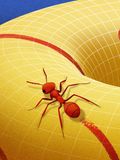
Mathematicians have undergone a profound transformation in their understanding of space, largely due to the concept of manifolds, introduced by Bernhard Riemann in the mid-19th century. This revolutionary idea has reshaped not only geometry but also fields such as physics and data analysis, providing a new framework for examining complex mathematical spaces.
Standing in a field, it is easy to overlook that we inhabit a spherical planet. Our limited perspective makes the Earth appear flat, a phenomenon mirrored in various geometric shapes. These shapes, which can seem flat from certain viewpoints yet possess intricate structures, are classified as manifolds. Riemann’s introduction of this concept marked a significant departure from viewing space merely as a physical setting for mathematical objects; instead, it emerged as an abstract entity worthy of rigorous study.
As mathematicians began to explore these new dimensions, the field of topology was born. This branch of mathematics, dedicated to understanding the properties of space that are preserved under continuous transformations, owes much to Riemann’s groundbreaking work. Today, manifolds provide a shared vocabulary for addressing a wide range of mathematical problems. They have become as essential to mathematics as the alphabet is to language, as articulated by Fabrizio Bianchi, a mathematician at the University of Pisa: “If I know Cyrillic, do I know Russian? No. But try to learn Russian without learning Cyrillic.”
Understanding Manifolds and Their Impact
For centuries, geometry was synonymous with the study of Euclidean space, where distances and angles behave predictably. As José Ferreirós, a philosopher of science at the University of Seville, notes, “Until the 1800s, ‘space’ meant ‘physical space.’” In this traditional framework, the shortest path between points is a straight line, and the angles of a triangle sum to 180 degrees.
However, as early as the 19th century, mathematicians began to investigate non-Euclidean spaces, revealing that geometries could be curved rather than flat. In these environments, properties such as angle sums and parallel lines exhibit behaviors that challenge conventional understanding. Despite initial resistance from the mathematical community, Riemann’s insights expanded the possibilities of geometric exploration.
Riemann, who initially pursued theology before turning to mathematics, delivered a pivotal lecture in 1854 at the University of Göttingen. His discussion on the foundations of geometry introduced a theory that generalized Carl Friedrich Gauss’s ideas, extending them to infinite dimensions. Although his work was met with skepticism, it eventually gained recognition, influencing later figures such as Henri Poincaré and Albert Einstein. By the 20th century, Riemann’s theories had solidified their place in the mathematical canon, particularly as Einstein applied them in his general theory of relativity.
The term “manifold” is derived from Riemann’s German word Mannigfaltigkeit, meaning “variety” or “multiplicity.” A manifold is defined as a space that appears Euclidean when viewed at a small scale. For example, a circle represents a one-dimensional manifold because any tiny segment looks like a straight line. Conversely, a figure eight fails to qualify as a manifold, as its intersection creates a non-Euclidean perspective.
Applications in Modern Mathematics and Physics
Manifolds simplify the complexities inherent in geometric properties. When considering a shape, its characteristics can shift depending on the space it occupies. For instance, tying a piece of string into a knot creates different properties than a simple loop when viewed in three dimensions, reinforcing the need for a manifold’s intrinsic properties.
Mathematicians often divide manifolds into overlapping patches, each represented by a “chart” of coordinates. Collectively, these charts form an atlas that allows mathematicians to measure and explore the manifold incrementally. This method has become integral in various mathematical and physical contexts, making complex problems more manageable.
In the realm of physics, manifolds are crucial for understanding fundamental concepts. For instance, in general relativity, Einstein depicted spacetime as a four-dimensional manifold, illustrating gravity as the curvature of this manifold. The three-dimensional space experienced by humans also conforms to manifold characteristics, appearing Euclidean while remaining complex in its overall structure.
In addition, researchers leverage manifold theory to understand phenomena ranging from the unpredictable behavior of a double pendulum to the movements of fluids and robots. By representing configurations as manifolds, physicists can translate intricate physical questions into more intuitive geometric terms. Jonathan Sorce, a theoretical physicist at Princeton University, emphasizes the foundational role of geometry in physics, stating, “So much of physics comes down to understanding geometry.”
The study of high-dimensional datasets, such as neural activity in the brain, is also enhanced by examining how data points relate to lower-dimensional manifolds. The versatility of manifolds allows scientists and mathematicians to approach problems with a shared, powerful framework.
In summary, the introduction of manifolds by Bernhard Riemann has significantly altered the landscape of mathematics, providing tools and perspectives that facilitate understanding across diverse fields. As integral to mathematical practice as language itself, manifolds continue to shape our comprehension of the universe, making their study as critical today as it was over a century ago. Original story reprinted with permission from Quanta Magazine, an editorially independent publication of the Simons Foundation whose mission is to enhance public understanding of science by covering research developments and trends in mathematics and the physical and life sciences.








Revolutionary Photonic Ski-Jump Could Miniaturize LiDAR Systems

Couples Detox from Plastics in New Netflix Doc: Can It Boost Fertility?

Aventon Launches Affordable Full-Suspension Electric Mountain Bike

Discover Eight Must-Try Restaurants This Spring Season

UC Irvine Team Unveils Innovative Ion Pump for Water Treatment

One-Third of Americans Trim Daily Expenses for Healthcare Needs

Apple Secures First Oscar in Three Years with F1: The Movie

Fourth Graders Celebrate St. Patrick’s Day with Creative Weather Drawings

Kim Kardashian Dazzles at Vanity Fair Oscars Party 2026

Nostradamus’ 2026 Predictions: Star Death and Dark Events Loom

Breakthroughs and Challenges Await Science in 2026

Electric Moto Influencer Surronster Arrested in Tijuana

OpenAI to Implement Age Verification for ChatGPT by December 2025

Discover the Top 10 Calorie Counting Apps of 2025

Recovering a Suspended TikTok Account: A Step-by-Step Guide

Bella Hadid Shares Health Update After Treatment for Lyme Disease

Backpack Drives Equip Students with Supplies for New School Year

Analysts Project Stronger Growth for Apple’s iPhone 17 Lineup
-
 Science7 months ago
Nostradamus’ 2026 Predictions: Star Death and Dark Events Loom
-
 Science7 months ago
Breakthroughs and Challenges Await Science in 2026
-
 Technology10 months ago
Electric Moto Influencer Surronster Arrested in Tijuana
-
 Technology8 months ago
OpenAI to Implement Age Verification for ChatGPT by December 2025
-
 Technology1 year ago
Discover the Top 10 Calorie Counting Apps of 2025
-
 Technology1 year ago
Recovering a Suspended TikTok Account: A Step-by-Step Guide
-
 Health10 months ago
Bella Hadid Shares Health Update After Treatment for Lyme Disease
-
 Education1 year ago
Backpack Drives Equip Students with Supplies for New School Year
-
 Health11 months ago
Analysts Project Stronger Growth for Apple’s iPhone 17 Lineup
-

 Technology7 months ago
Top 10 Penny Stocks to Watch in 2026 for Strong Returns
-

 Health11 months ago
Japanese Study Finds Rose Oil Can Increase Brain Gray Matter
-

 Science9 months ago
Starship V3 Set for 2026 Launch After Successful Final Test of Version 2