
Science
Houston Museum’s Foucault Pendulum Stops Swinging After Decades

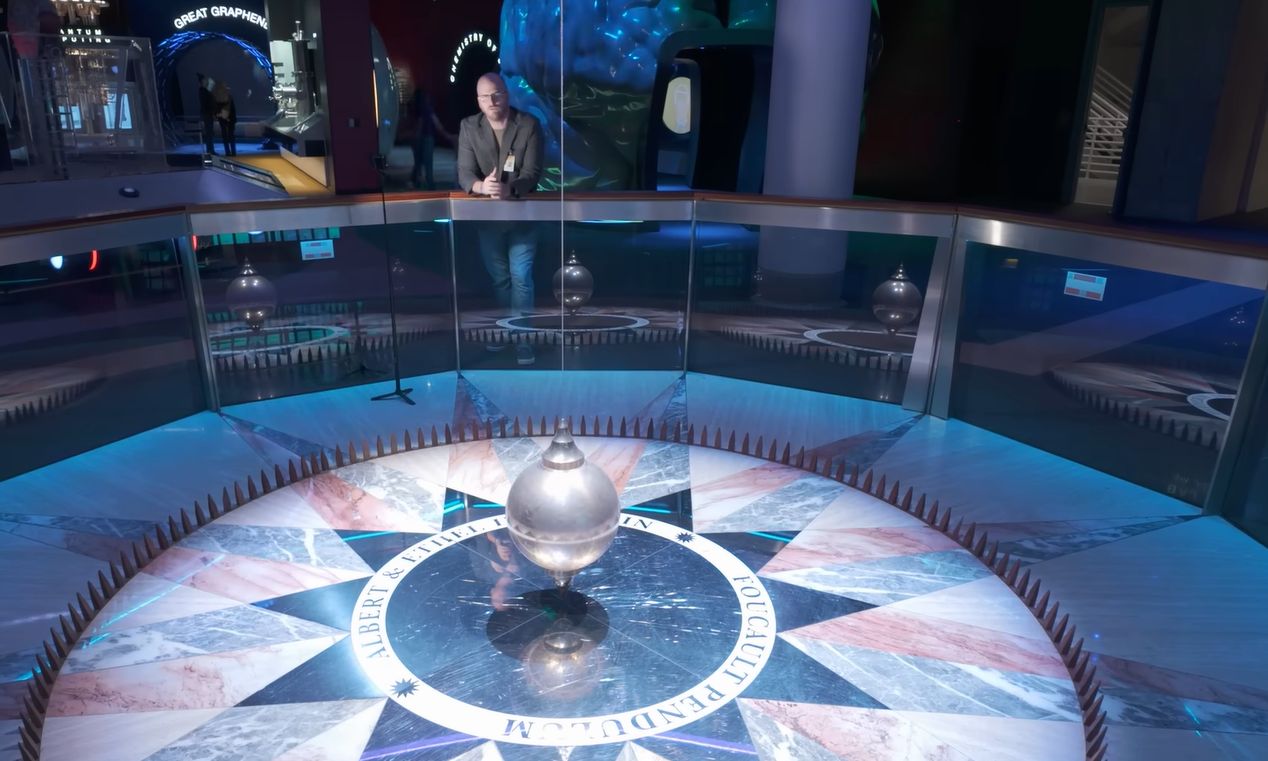
The Houston Museum of Natural Science recently faced an unusual situation: their Foucault pendulum, a popular exhibit, has stopped swinging for the first time since its installation in the 1970s. This surprising development is attributed to a malfunction in the electromagnetic system responsible for maintaining the pendulum’s movement.
Understanding the Foucault Pendulum
Invented by Léon Foucault in 1851, the Foucault pendulum serves as an experimental demonstration of the Earth’s rotation. It operates on the principle that while the pendulum swings back and forth, its plane of oscillation gradually shifts. This phenomenon gives the impression that the pendulum is rotating around its attachment point, a captivating effect that varies depending on the pendulum’s geographic location.
For instance, at the poles, the pendulum completes a full rotation every 24 hours, while at the equator, it remains stationary in its oscillation plane. This unique behavior not only showcases the Earth’s rotation but also highlights its shape, making it a significant educational tool in museums worldwide.
The pendulum at the Houston Museum weighs 81.6 kg and has been a key attraction for visitors. Its mechanism relies on a series of electromagnets that periodically provide the necessary energy to sustain the motion. A video available from the museum explains both the physics behind the pendulum and the specifics of its construction, offering insight into this fascinating exhibit.
Next Steps for the Exhibit
Following the pendulum’s unexpected halt, museum staff are working to diagnose and repair the fault in the electromagnetic system. The museum has expressed hope for a swift resolution to the issue so that visitors can once again experience the striking movement of the pendulum. An informative video detailing the inner workings and the anticipated repair process is expected to be released, providing further engagement for the curious public.
The incident has sparked conversations among museum-goers, with some humorously speculating about it being a sign of impending doom. In reality, the situation reflects merely a technical challenge, rather than a cause for alarm.
As the Houston Museum of Natural Science seeks to restore this remarkable demonstration of physics, it remains committed to educating the public about the principles of motion and the Earth’s dynamics. The museum’s dedication to scientific education ensures that exhibits like the Foucault pendulum will continue to inspire future generations.



Revolutionary Photonic Ski-Jump Could Miniaturize LiDAR Systems

Couples Detox from Plastics in New Netflix Doc: Can It Boost Fertility?

Aventon Launches Affordable Full-Suspension Electric Mountain Bike

Discover Eight Must-Try Restaurants This Spring Season

UC Irvine Team Unveils Innovative Ion Pump for Water Treatment

One-Third of Americans Trim Daily Expenses for Healthcare Needs

Apple Secures First Oscar in Three Years with F1: The Movie

Fourth Graders Celebrate St. Patrick’s Day with Creative Weather Drawings

Kim Kardashian Dazzles at Vanity Fair Oscars Party 2026

Nostradamus’ 2026 Predictions: Star Death and Dark Events Loom

Breakthroughs and Challenges Await Science in 2026

Electric Moto Influencer Surronster Arrested in Tijuana

OpenAI to Implement Age Verification for ChatGPT by December 2025

Discover the Top 10 Calorie Counting Apps of 2025

Recovering a Suspended TikTok Account: A Step-by-Step Guide

Bella Hadid Shares Health Update After Treatment for Lyme Disease

Backpack Drives Equip Students with Supplies for New School Year

Analysts Project Stronger Growth for Apple’s iPhone 17 Lineup
-
 Science7 months ago
Nostradamus’ 2026 Predictions: Star Death and Dark Events Loom
-
 Science7 months ago
Breakthroughs and Challenges Await Science in 2026
-
 Technology11 months ago
Electric Moto Influencer Surronster Arrested in Tijuana
-
 Technology8 months ago
OpenAI to Implement Age Verification for ChatGPT by December 2025
-
 Technology1 year ago
Discover the Top 10 Calorie Counting Apps of 2025
-
 Technology1 year ago
Recovering a Suspended TikTok Account: A Step-by-Step Guide
-
 Health11 months ago
Bella Hadid Shares Health Update After Treatment for Lyme Disease
-
 Education1 year ago
Backpack Drives Equip Students with Supplies for New School Year
-
 Health11 months ago
Analysts Project Stronger Growth for Apple’s iPhone 17 Lineup
-

 Technology8 months ago
Top 10 Penny Stocks to Watch in 2026 for Strong Returns
-

 Health11 months ago
Japanese Study Finds Rose Oil Can Increase Brain Gray Matter
-

 Science10 months ago
Starship V3 Set for 2026 Launch After Successful Final Test of Version 2