
Science
Iowa State Scientists Propel Genomic Selection in Crop Breeding

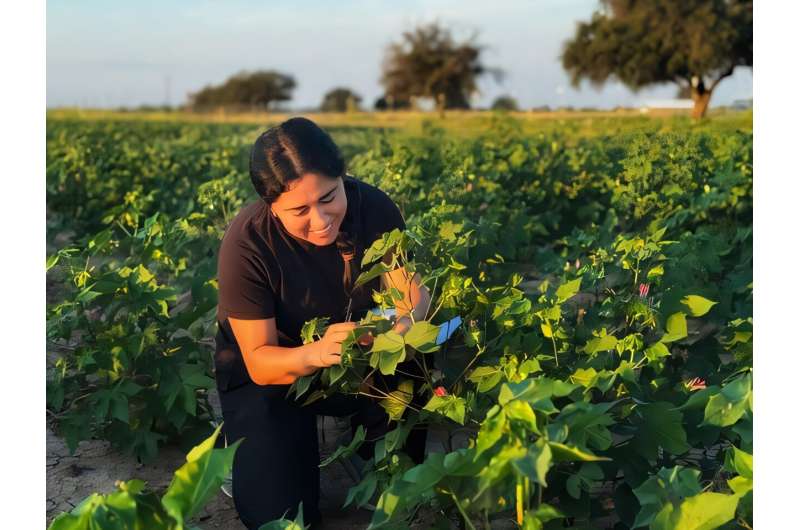
In a significant advancement for agricultural science, researchers at Iowa State University are leveraging genomic selection to enhance crop breeding efforts. This innovative approach aims to develop high-yield, nutritious, and climate-resilient crops necessary for future global food security.
Advancing Crop Improvement Through Genomic Selection
According to Professor Jianming Yu, the Pioneer Distinguished Chair in Maize Breeding and director of the Raymond F. Baker Center for Plant Breeding at Iowa State, genomic selection (GS) is essential in addressing the challenges of modern agriculture. This strategy is rapidly transitioning from theoretical frameworks to practical applications, reshaping crop and animal breeding programs within a relatively short timeframe.
A recent publication titled “Genomic Selection: Essence, Applications, and Prospects” in The Plant Genome highlights the transformative impact of GS. The paper’s lead author, Diana Escamilla, a former post-doctoral researcher in Yu’s lab, now works as a crop breeding specialist in the private sector. The article discusses GS as a method that predicts measurable traits by examining the relationship between a plant’s genetic composition and its observable characteristics.
Harnessing Technology for Future Food Security
Genomic selection increases the ability to evaluate individual crops, significantly shortening breeding cycles. This technique is versatile, allowing for the exploration of genetic diversity, the selection of breeding parents with desired traits, and the adaptation of genetics to anticipated environmental conditions.
“It was exciting to be invited to write this paper to help people understand genomic selection, why it’s important and how it is evolving,” Escamilla stated. “We aim to capture the essence of genomic selection and explain how it allows breeders to respond more quickly and accurately to farmers’ needs and the demands of a growing population.”
Looking to the future, the field of genomic selection is expected to integrate advanced technologies, including artificial intelligence, to create decision-support tools that will enhance breeding efficiency. Initially focused on corn, wheat, and soybeans, this approach has the potential to be applied across various crops crucial for global diets, such as legumes and vegetables.
Professor Yu emphasized the importance of technology training for emerging generations of agricultural scientists. “I am proud of the good work by students like Diana who are helping us carry on the legacy of Iowa State as a worldwide center of leadership in plant breeding,” he said.
As agricultural challenges grow, innovations like genomic selection will be vital in ensuring food security and sustainability for future generations. For more information, refer to the article by Diana M. Escamilla et al, published in The Plant Genome in 2025.










Revolutionary Photonic Ski-Jump Could Miniaturize LiDAR Systems

Couples Detox from Plastics in New Netflix Doc: Can It Boost Fertility?

Aventon Launches Affordable Full-Suspension Electric Mountain Bike

Discover Eight Must-Try Restaurants This Spring Season

UC Irvine Team Unveils Innovative Ion Pump for Water Treatment

One-Third of Americans Trim Daily Expenses for Healthcare Needs

Apple Secures First Oscar in Three Years with F1: The Movie

Fourth Graders Celebrate St. Patrick’s Day with Creative Weather Drawings

Kim Kardashian Dazzles at Vanity Fair Oscars Party 2026

Nostradamus’ 2026 Predictions: Star Death and Dark Events Loom

Breakthroughs and Challenges Await Science in 2026

Electric Moto Influencer Surronster Arrested in Tijuana

OpenAI to Implement Age Verification for ChatGPT by December 2025

Discover the Top 10 Calorie Counting Apps of 2025

Recovering a Suspended TikTok Account: A Step-by-Step Guide

Bella Hadid Shares Health Update After Treatment for Lyme Disease

Backpack Drives Equip Students with Supplies for New School Year

Analysts Project Stronger Growth for Apple’s iPhone 17 Lineup
-
 Science7 months ago
Nostradamus’ 2026 Predictions: Star Death and Dark Events Loom
-
 Science7 months ago
Breakthroughs and Challenges Await Science in 2026
-
 Technology10 months ago
Electric Moto Influencer Surronster Arrested in Tijuana
-
 Technology8 months ago
OpenAI to Implement Age Verification for ChatGPT by December 2025
-
 Technology1 year ago
Discover the Top 10 Calorie Counting Apps of 2025
-
 Technology1 year ago
Recovering a Suspended TikTok Account: A Step-by-Step Guide
-
 Health10 months ago
Bella Hadid Shares Health Update After Treatment for Lyme Disease
-
 Education1 year ago
Backpack Drives Equip Students with Supplies for New School Year
-
 Health11 months ago
Analysts Project Stronger Growth for Apple’s iPhone 17 Lineup
-

 Technology7 months ago
Top 10 Penny Stocks to Watch in 2026 for Strong Returns
-

 Health11 months ago
Japanese Study Finds Rose Oil Can Increase Brain Gray Matter
-

 Science9 months ago
Starship V3 Set for 2026 Launch After Successful Final Test of Version 2