
Science
Remembering Lyle Feisel: A Champion of Engineering Education

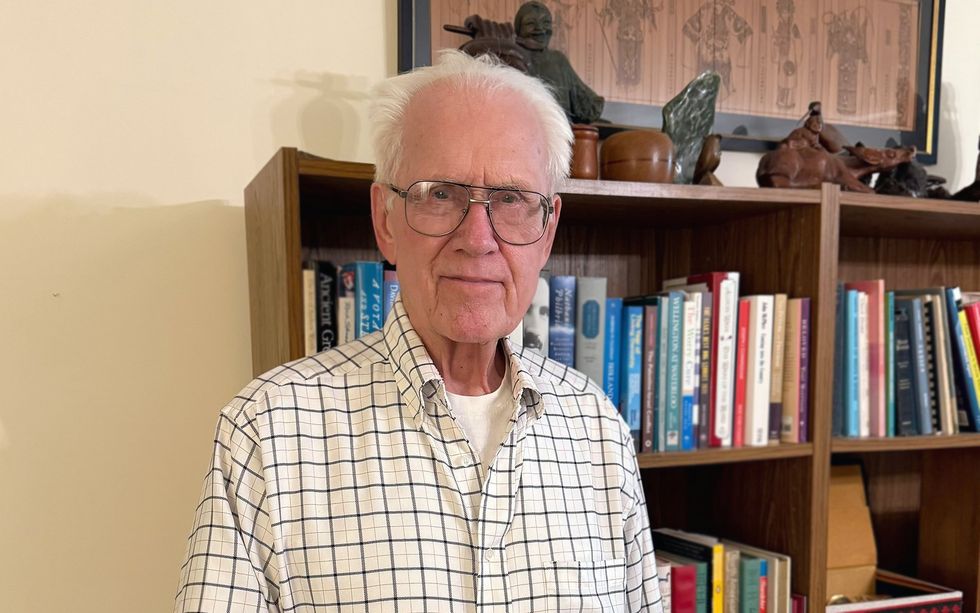
Lyle Feisel, a prominent figure in engineering education and a dedicated volunteer with the IEEE, passed away on November 5, 2023, at the age of 90. As a professor of electrical engineering and the founding dean of the Watson engineering school at the State University of New York, Binghamton, Feisel significantly influenced academic structures and programs in engineering education. His contributions extended over six decades, during which he played a vital role in shaping IEEE’s educational policies and professional development initiatives.
Feisel’s legacy began with his service in the U.S. Navy from 1954 to 1958, where he worked as a radio operator. This experience ignited his passion for electronics and communications. Following his military service, he earned his bachelor’s, master’s, and doctoral degrees in electrical engineering from Iowa State University in Ames. In 1964, he began his academic career at the South Dakota School of Mines and Technology in Rapid City, where he taught for two decades.
Building a Legacy at Binghamton University
In 1983, Feisel transitioned to SUNY Binghamton, where he established the Watson engineering school, now known as the Watson College of Engineering and Applied Science. His vision led to the development of a robust academic environment, fostering an interdisciplinary approach among electrical engineering, mechanical engineering, computer science, and industrial engineering. Feisel served as dean until his retirement in 2001.
Reflecting on his career in a 2023 interview, Feisel remarked on the school’s evolution, stating, “Every year, new programs were added.” His leadership was instrumental in expanding the school’s offerings, with a significant increase in degree programs from 1983 to 2001. Michael McGoff, who served as assistant dean under Feisel for 17 years, credited him with bringing together the necessary elements to create exceptional academic programs, saying, “Without his vision, there would not be a Watson College today.”
Feisel’s commitment to education was evident in his research, particularly in the field of thin-film materials and early solar-cell technology, which he pursued during a time when photovoltaics were still emerging. He was dedicated to hands-on learning and emphasized the importance of industry partnerships to prepare students for successful careers.
Influence and Service within IEEE
Beyond his contributions at Binghamton, Feisel dedicated much of his career to the IEEE, holding various leadership roles that shaped educational policies and programs. He became a member of the IEEE Education Society and served as its president from 1978 to 1979. His tenure as vice president of IEEE Educational Activities from 2000 to 2003 allowed him to influence strategic plans for accreditation and the expansion of digital learning resources for engineering faculty and students globally.
“IEEE is incredibly blessed to have volunteers, like Lyle, who passionately work on behalf of the mission of our organization,” stated Jamie Moesch, managing director of IEEE Educational Activities. Feisel was also actively involved with ABET, the organization responsible for accrediting engineering programs, where he contributed to setting accreditation criteria and evaluation processes.
Feisel’s impact extended to the IEEE Foundation, where he served on the board of directors and was the 2006 chair of the IEEE Life Members Committee. His advocacy for educational initiatives culminated in the creation of the IEEE REACH Program, designed to provide preuniversity history teachers with resources to help students understand the significance of engineering and technology in society.
Feisel’s dedication to philanthropy was recognized by the IEEE Foundation, which honored him as a “Forever Generous” donor for his continued support of scholarships and educational initiatives. He and his wife, Dorothy, were also members of the IEEE Goldsmith Legacy League, acknowledging their commitment to the foundation’s mission.
In a recent interview, Feisel expressed the importance of collective efforts in achieving significant goals, stating, “The critical function of the IEEE Foundation—or any charity—is that it lets you help accomplish a goal that you could never achieve by yourself.”
Lyle Feisel leaves behind a remarkable legacy in engineering education, characterized by his unwavering commitment to academic excellence and community service. His contributions have had a lasting impact on countless students, faculty, and professionals in the field of engineering.












Revolutionary Photonic Ski-Jump Could Miniaturize LiDAR Systems

Couples Detox from Plastics in New Netflix Doc: Can It Boost Fertility?

Aventon Launches Affordable Full-Suspension Electric Mountain Bike

Discover Eight Must-Try Restaurants This Spring Season

UC Irvine Team Unveils Innovative Ion Pump for Water Treatment

One-Third of Americans Trim Daily Expenses for Healthcare Needs

Apple Secures First Oscar in Three Years with F1: The Movie

Fourth Graders Celebrate St. Patrick’s Day with Creative Weather Drawings

Kim Kardashian Dazzles at Vanity Fair Oscars Party 2026

Nostradamus’ 2026 Predictions: Star Death and Dark Events Loom

Breakthroughs and Challenges Await Science in 2026

Electric Moto Influencer Surronster Arrested in Tijuana

OpenAI to Implement Age Verification for ChatGPT by December 2025

Discover the Top 10 Calorie Counting Apps of 2025

Recovering a Suspended TikTok Account: A Step-by-Step Guide

Bella Hadid Shares Health Update After Treatment for Lyme Disease

Backpack Drives Equip Students with Supplies for New School Year

Analysts Project Stronger Growth for Apple’s iPhone 17 Lineup
-
 Science8 months ago
Nostradamus’ 2026 Predictions: Star Death and Dark Events Loom
-
 Science8 months ago
Breakthroughs and Challenges Await Science in 2026
-
 Technology11 months ago
Electric Moto Influencer Surronster Arrested in Tijuana
-
 Technology9 months ago
OpenAI to Implement Age Verification for ChatGPT by December 2025
-
 Technology1 year ago
Discover the Top 10 Calorie Counting Apps of 2025
-
 Technology1 year ago
Recovering a Suspended TikTok Account: A Step-by-Step Guide
-
 Health11 months ago
Bella Hadid Shares Health Update After Treatment for Lyme Disease
-
 Education1 year ago
Backpack Drives Equip Students with Supplies for New School Year
-
 Health12 months ago
Analysts Project Stronger Growth for Apple’s iPhone 17 Lineup
-

 Health12 months ago
Japanese Study Finds Rose Oil Can Increase Brain Gray Matter
-

 Technology8 months ago
Top 10 Penny Stocks to Watch in 2026 for Strong Returns
-

 Science10 months ago
Starship V3 Set for 2026 Launch After Successful Final Test of Version 2