
Science
Canadian Astronomers Unveil Milky Way’s Chaotic Origins Using JWST

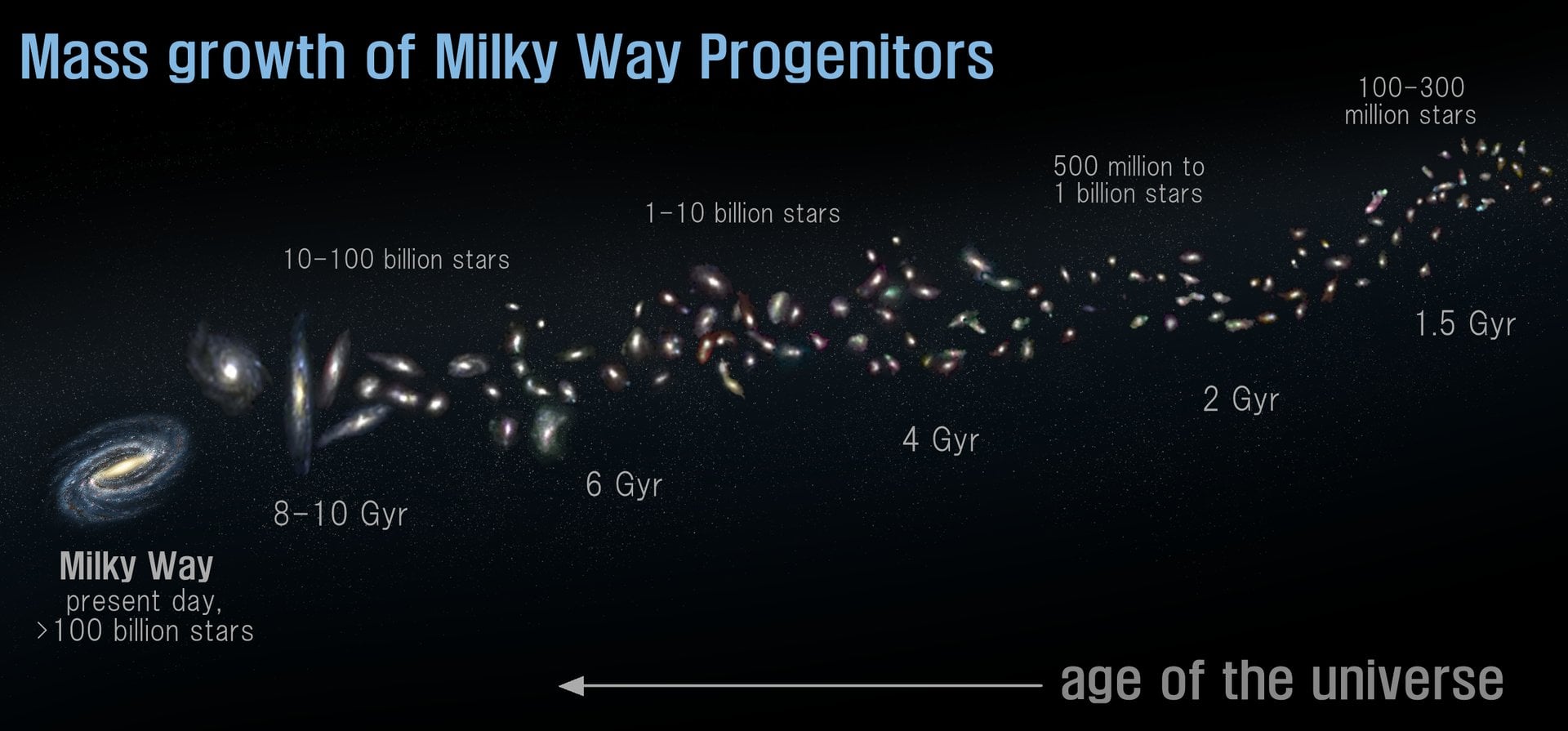
Canadian astronomers have made significant strides in understanding the Milky Way’s tumultuous formation, tracing its evolution back to the early Universe, approximately 13.61 billion years ago. A recent study led by Dr. Vivian Tan from York University utilized data from the James Webb Space Telescope (JWST) to create the most detailed reconstruction of the galaxy’s history. The researchers examined 877 galaxies that share properties with what scientists believe the Milky Way resembled during its formative years.
The study offers a visual timeline of the Milky Way’s evolution, focusing on galaxies that existed when the Universe was between 1.5 and 10 billion years old (12.3 to 3.5 billion years ago). By observing these more distant galaxies, the team discovered that the Milky Way underwent a remarkably turbulent youth before settling into the stable spiral we recognize today.
Reconstructing Galactic History
The research team, which included experts from multiple institutions such as the Dunlap Institute for Astronomy & Astrophysics and the SMU Institute for Computational Astrophysics, compiled data from the JWST as part of the Canadian NIRISS Unbiased Cluster Survey (CANUCS). This program leverages the JWST’s Near-Infrared Imager and Slitless Spectrograph (NIRISS), developed through collaboration with the Canadian Space Agency (CSA) and the Université de Montréal.
By combining high-resolution imaging from the JWST with observations from the Hubble Space Telescope, the researchers created detailed maps of stellar mass and star formation rates for each galaxy. These maps illustrated where stars were forming and how they were distributed throughout different phases of evolution. The findings revealed a consistent pattern: Milky Way-like galaxies grew inward, accumulating mass in their outer regions through mergers and new star formation.
Dr. Tan expressed the significance of these findings, stating, “Astronomers have been modeling the formation of the Milky Way and other spiral galaxies for decades. It’s amazing that with the JWST, we can test their models and map out how Milky Way progenitors grow with the Universe itself.”
Insights into Early Galactic Behavior
The research indicates that the early history of the Milky Way was marked by chaos, with galaxies frequently colliding and merging, leading to intense periods of star formation. The asymmetrical features and disturbed shapes of these early galaxies provide evidence of this tumultuous activity. In contrast, Milky Way twins from later periods display more stable structures and evenly distributed star formation.
Co-author Prof. Adam Muzzin highlighted the importance of this research for the CANUCS collaboration, stating that it represents a milestone for Canadian astronomers engaged in JWST research. The team plans to expand their study, aiming to create a more comprehensive picture of the evolution of galaxies similar to the Milky Way. This will involve integrating additional high-resolution data and updated simulations to analyze larger samples of Milky Way twins.
The team hopes to determine when galaxies like the Milky Way transitioned into stable disks and the physical processes that drove this transition. As they continue their work, these findings will help refine theoretical models of galactic evolution and the mechanisms at play during critical periods of formation.
The research findings were published in The Astrophysical Journal on March 15, 2024, marking a pivotal moment in our understanding of the Milky Way’s origins and the broader processes that shape galaxies throughout the cosmos.









Revolutionary Photonic Ski-Jump Could Miniaturize LiDAR Systems

Couples Detox from Plastics in New Netflix Doc: Can It Boost Fertility?

Aventon Launches Affordable Full-Suspension Electric Mountain Bike

Discover Eight Must-Try Restaurants This Spring Season

UC Irvine Team Unveils Innovative Ion Pump for Water Treatment

One-Third of Americans Trim Daily Expenses for Healthcare Needs

Apple Secures First Oscar in Three Years with F1: The Movie

Fourth Graders Celebrate St. Patrick’s Day with Creative Weather Drawings

Kim Kardashian Dazzles at Vanity Fair Oscars Party 2026

Nostradamus’ 2026 Predictions: Star Death and Dark Events Loom

Breakthroughs and Challenges Await Science in 2026

OpenAI to Implement Age Verification for ChatGPT by December 2025

Electric Moto Influencer Surronster Arrested in Tijuana

Discover the Top 10 Calorie Counting Apps of 2025

Bella Hadid Shares Health Update After Treatment for Lyme Disease

Analysts Project Stronger Growth for Apple’s iPhone 17 Lineup

Top 10 Penny Stocks to Watch in 2026 for Strong Returns

Japanese Study Finds Rose Oil Can Increase Brain Gray Matter
-
 Science3 months ago
Nostradamus’ 2026 Predictions: Star Death and Dark Events Loom
-
 Science3 months ago
Breakthroughs and Challenges Await Science in 2026
-
 Technology4 months ago
OpenAI to Implement Age Verification for ChatGPT by December 2025
-
 Technology6 months ago
Electric Moto Influencer Surronster Arrested in Tijuana
-
 Technology8 months ago
Discover the Top 10 Calorie Counting Apps of 2025
-
 Health6 months ago
Bella Hadid Shares Health Update After Treatment for Lyme Disease
-
 Health6 months ago
Analysts Project Stronger Growth for Apple’s iPhone 17 Lineup
-
 Technology3 months ago
Top 10 Penny Stocks to Watch in 2026 for Strong Returns
-
 Health7 months ago
Japanese Study Finds Rose Oil Can Increase Brain Gray Matter
-

 Science5 months ago
Starship V3 Set for 2026 Launch After Successful Final Test of Version 2
-

 Education7 months ago
Harvard Secures Court Victory Over Federal Funding Cuts
-

 Health6 months ago
Erin Bates Shares Recovery Update Following Sepsis Complications