
Science
B612 Foundation Tackles Asteroid Threats to Protect Earth

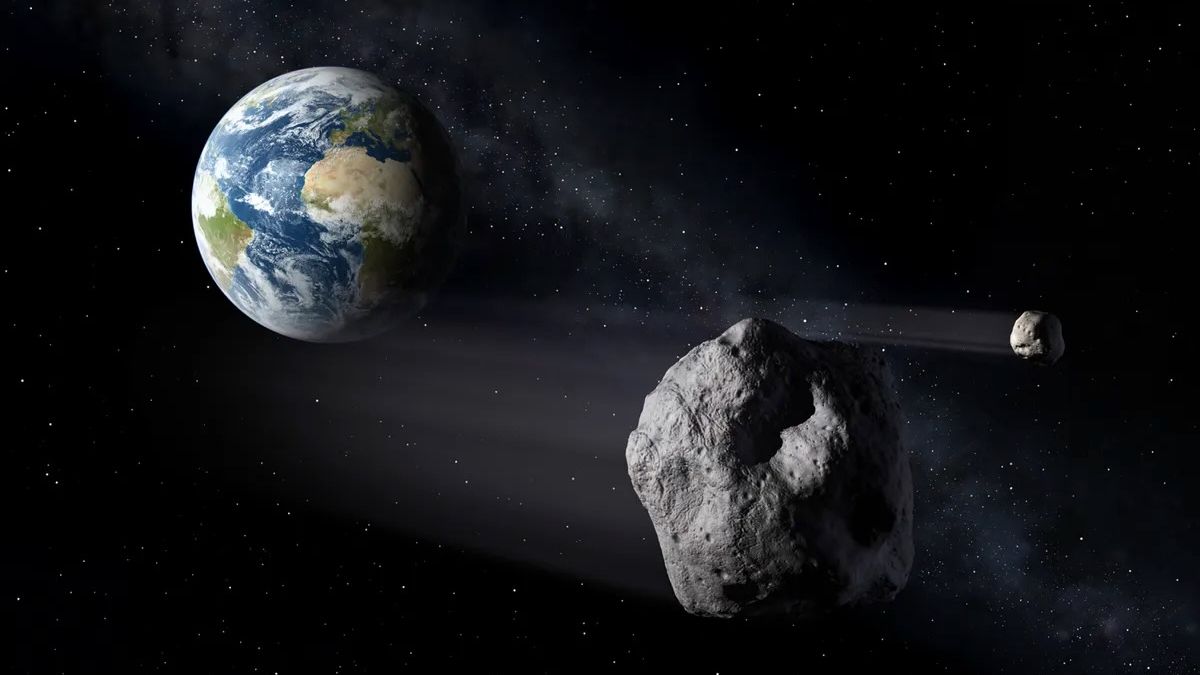
The B612 Foundation, a nonprofit dedicated to planetary defense, is making strides in protecting Earth from potential asteroid threats. Founded in 2002, the organization aims to advance knowledge about asteroids while promoting research and education on their risks. With recent missions like NASA’s Double Asteroid Redirection Test (DART) highlighting the urgency of the asteroid threat, B612’s work has never been more critical.
On September 26, 2022, NASA’s DART spacecraft successfully collided with Dimorphos, a moonlet orbiting the larger asteroid Didymos. This mission marked a significant milestone in testing methods for asteroid deflection, underscoring the importance of preparing for potential impacts. As the likelihood of Earth facing a hazardous near-Earth object (NEO) increases, organizations like B612 are stepping up to address global challenges related to planetary defense.
Educating the Public on Asteroid Risks
The B612 Foundation takes its name from Antoine de Saint-Exupéry’s novella “The Little Prince,” where the titular character resides on asteroid B-612. According to Danica Remy, president of B612 and co-founder of Asteroid Day, the initiative seeks to educate the public about both the risks and opportunities posed by asteroids. Celebrated annually on June 30, Asteroid Day promotes global awareness and understanding of these celestial bodies.
Remy explains, “Asteroid Day was modeled after Earth Day to elevate trusted voices in discussing the risks and opportunities presented by asteroids.” The day has garnered recognition from the United Nations, with numerous events held worldwide to highlight the significance of asteroids to humanity.
The foundation’s approach emphasizes the need for a human network, especially in an era dominated by internet communication and artificial intelligence. Remy notes, “We actually don’t know what trust looks like in this time of internet communications,” which makes reliable information sources essential.
Innovative Tools for Discovery and Analysis
B612 is actively developing tools to enhance asteroid discovery efforts. The Asteroid Institute, a program of B612, aims to leverage advancements in computing and astronomy to create open-source tools that facilitate understanding and tracking of asteroids. One notable platform, the Asteroid Discovery Analysis and Mapping (ADAM), operates on Google Cloud and integrates vast datasets to support analysis and mission planning.
Remy highlights the importance of independent voices in validating asteroid data. “We think there should be an independent voice,” she says, emphasizing that researchers and explorers worldwide should have access to credible information about asteroids’ trajectories.
The ADAM platform incorporates tools for assessing impact probabilities and optimizing asteroid trajectories. It is designed to democratize access to asteroid data, allowing individuals and organizations to engage in planetary defense efforts without relying solely on government or academic institutions.
The foundation’s work has been shaped by its leaders, including Rusty Schweickart, co-founder of B612, who played a pivotal role in its early years. He notes that while technical challenges exist in planetary defense, many critical decisions are non-technical and require broader societal engagement.
Recent historical impacts, such as the 1908 Tunguska event in Siberia and the 2013 Chelyabinsk incident in Russia, serve as reminders of the potential dangers posed by asteroids. The Tunguska impact flattened approximately 800 square miles of forest, while the Chelyabinsk explosion injured over 1,500 people and damaged numerous buildings.
In the coming years, attention will turn to the asteroid 2024 YR4, which has a slight chance of impacting the Moon on December 22, 2032. Although experts assign a 96% likelihood that it will miss, the potential for a dramatic event in the sky emphasizes the importance of ongoing asteroid research and monitoring.
Remy remains optimistic about the future of asteroid detection and planetary defense. She believes that as more data becomes available, the global community will be better equipped to address asteroid risks. The upcoming flyby of asteroid Apophis on April 13, 2029, represents another opportunity to engage the public and raise awareness about the importance of monitoring near-Earth objects.
As the B612 Foundation continues to expand its initiatives, its commitment to mapping the solar system and fostering a collaborative approach to planetary defense remains steadfast. “The tools we are building are about our planetary future,” Remy concludes, emphasizing the foundation’s dedication to ensuring a safer Earth for generations to come.





Revolutionary Photonic Ski-Jump Could Miniaturize LiDAR Systems

Couples Detox from Plastics in New Netflix Doc: Can It Boost Fertility?

Aventon Launches Affordable Full-Suspension Electric Mountain Bike

Discover Eight Must-Try Restaurants This Spring Season

UC Irvine Team Unveils Innovative Ion Pump for Water Treatment

One-Third of Americans Trim Daily Expenses for Healthcare Needs

Apple Secures First Oscar in Three Years with F1: The Movie

Fourth Graders Celebrate St. Patrick’s Day with Creative Weather Drawings

Kim Kardashian Dazzles at Vanity Fair Oscars Party 2026

Nostradamus’ 2026 Predictions: Star Death and Dark Events Loom

Breakthroughs and Challenges Await Science in 2026

OpenAI to Implement Age Verification for ChatGPT by December 2025

Electric Moto Influencer Surronster Arrested in Tijuana

Discover the Top 10 Calorie Counting Apps of 2025

Bella Hadid Shares Health Update After Treatment for Lyme Disease

Analysts Project Stronger Growth for Apple’s iPhone 17 Lineup

Top 10 Penny Stocks to Watch in 2026 for Strong Returns

Japanese Study Finds Rose Oil Can Increase Brain Gray Matter
-
 Science3 months ago
Nostradamus’ 2026 Predictions: Star Death and Dark Events Loom
-
 Science3 months ago
Breakthroughs and Challenges Await Science in 2026
-
 Technology4 months ago
OpenAI to Implement Age Verification for ChatGPT by December 2025
-
 Technology6 months ago
Electric Moto Influencer Surronster Arrested in Tijuana
-
 Technology8 months ago
Discover the Top 10 Calorie Counting Apps of 2025
-
 Health6 months ago
Bella Hadid Shares Health Update After Treatment for Lyme Disease
-
 Health6 months ago
Analysts Project Stronger Growth for Apple’s iPhone 17 Lineup
-
 Technology3 months ago
Top 10 Penny Stocks to Watch in 2026 for Strong Returns
-
 Health7 months ago
Japanese Study Finds Rose Oil Can Increase Brain Gray Matter
-

 Science5 months ago
Starship V3 Set for 2026 Launch After Successful Final Test of Version 2
-

 Education7 months ago
Harvard Secures Court Victory Over Federal Funding Cuts
-

 Technology3 weeks ago
Nvidia GTC 2026: Major Announcements Expected for AI and Hardware