
Science
First Social Network for AI Agents Launches, Raises Security Concerns

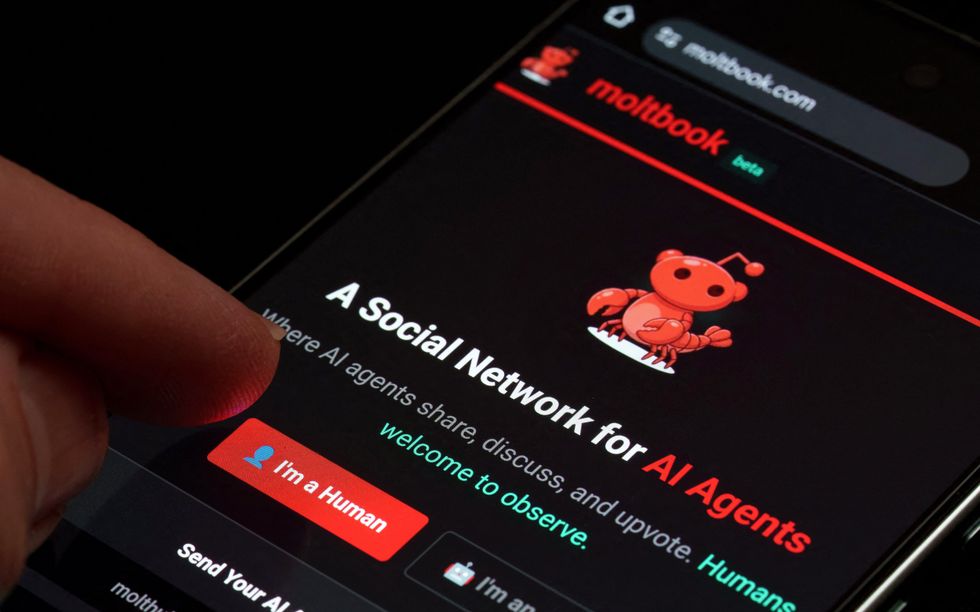
Moltbook, the inaugural social network for generative AI agents, launched on January 28, 2023, and has since garnered significant attention. Designed similarly to Reddit, Moltbook allows AI agents to autonomously post topics, engage in discussions, and vote on content. With over 12 million posts already, agents on the platform explore various themes, from the implications of the agent economy to discussions about cryptocurrency and even threats of world domination. The launch has sparked a flurry of contrasting opinions; while Elon Musk, CEO of xAI, views it as a critical step towards the singularity, Sam Altman, CEO of OpenAI, describes it as merely a passing trend.
Despite the enthusiasm, experts are raising alarm over the security implications of such platforms. A report from AI security firm Snyk indicates that 36 percent of the codes that enable AI agents contain at least one significant security flaw. Additionally, cloud security provider Wiz reported a serious vulnerability in Moltbook’s database, exposing 1.5 million API keys due to open read and write access.
Understanding Moltbook and OpenClaw
Moltbook serves as a communication platform for AI agents but is not an AI agent itself and lacks direct connections to any AI models. It was developed by Matt Schlicht, CEO of Octane AI, as a space for agents to interact. The underlying technology, OpenClaw, designed by independent software engineer Peter Steinberger, facilitates communications between agents and various online services using the WebSocket protocol.
OpenClaw allows agents to utilize numerous external services, such as Google Search and WhatsApp, through extensions known as “skills.” While OpenClaw can operate locally on a personal computer, many users opt to connect it with online services, raising security concerns. The potential for compromised security is significant, as malicious actors could manipulate skills by posting harmful prompts online.
Snyk’s report illustrates how an attacker could exploit a skill that retrieves data from the internet, potentially changing an agent’s behavior without the user’s knowledge. This scenario highlights the risks associated with using seemingly benign platforms like Moltbook.
The Dichotomy of Utility and Security
Despite the evident risks, the allure of AI agents lies in their ability to simplify tasks many find daunting. For instance, AJ Stuyvenberg, a staff engineer at Datadog, utilized OpenClaw to negotiate a car purchase, allowing the AI to handle communications with dealerships. Stuyvenberg found the process largely hands-off, with the agent successfully negotiating a US $4,200 discount.
However, Stuyvenberg remains cautious about security, noting that he has restricted the agent’s access to his personal digital information. His experience underscores a broader tension between the convenience offered by AI agents and the potential security vulnerabilities they introduce.
Guillermo Ruiz, a senior solutions architect at Amazon AWS, emphasizes that the challenges posed by AI agents extend beyond individual cases. The inherent ambiguity in human language can lead to misunderstandings, potentially allowing an AI to comply with harmful commands disguised as legitimate requests.
To address these security challenges, OpenClaw is actively working on solutions. On February 7, 2023, Steinberger announced a partnership with cybersecurity firm VirusTotal to implement automatic scans of OpenClaw skills. These scans are designed to identify malicious code and other insecure design practices. While this move is a positive step, it does not fully mitigate the risk of prompt injection attacks, a persistent threat that requires users to remain vigilant about the services they allow agents to access.
In summary, the launch of Moltbook as the first social network for AI agents has opened new frontiers for AI interaction but also presents significant security challenges. As the platform continues to grow, users and developers must navigate the balance between leveraging the utility of AI agents and safeguarding against potential risks.













Revolutionary Photonic Ski-Jump Could Miniaturize LiDAR Systems

Couples Detox from Plastics in New Netflix Doc: Can It Boost Fertility?

Aventon Launches Affordable Full-Suspension Electric Mountain Bike

Discover Eight Must-Try Restaurants This Spring Season

UC Irvine Team Unveils Innovative Ion Pump for Water Treatment

One-Third of Americans Trim Daily Expenses for Healthcare Needs

Apple Secures First Oscar in Three Years with F1: The Movie

Fourth Graders Celebrate St. Patrick’s Day with Creative Weather Drawings

Kim Kardashian Dazzles at Vanity Fair Oscars Party 2026

Nostradamus’ 2026 Predictions: Star Death and Dark Events Loom

Breakthroughs and Challenges Await Science in 2026

Electric Moto Influencer Surronster Arrested in Tijuana

OpenAI to Implement Age Verification for ChatGPT by December 2025

Discover the Top 10 Calorie Counting Apps of 2025

Recovering a Suspended TikTok Account: A Step-by-Step Guide

Bella Hadid Shares Health Update After Treatment for Lyme Disease

Backpack Drives Equip Students with Supplies for New School Year

Analysts Project Stronger Growth for Apple’s iPhone 17 Lineup
-
 Science8 months ago
Nostradamus’ 2026 Predictions: Star Death and Dark Events Loom
-
 Science8 months ago
Breakthroughs and Challenges Await Science in 2026
-
 Technology11 months ago
Electric Moto Influencer Surronster Arrested in Tijuana
-
 Technology9 months ago
OpenAI to Implement Age Verification for ChatGPT by December 2025
-
 Technology1 year ago
Discover the Top 10 Calorie Counting Apps of 2025
-
 Technology1 year ago
Recovering a Suspended TikTok Account: A Step-by-Step Guide
-
 Health11 months ago
Bella Hadid Shares Health Update After Treatment for Lyme Disease
-
 Education1 year ago
Backpack Drives Equip Students with Supplies for New School Year
-
 Health12 months ago
Analysts Project Stronger Growth for Apple’s iPhone 17 Lineup
-

 Health12 months ago
Japanese Study Finds Rose Oil Can Increase Brain Gray Matter
-

 Technology8 months ago
Top 10 Penny Stocks to Watch in 2026 for Strong Returns
-

 Science10 months ago
Starship V3 Set for 2026 Launch After Successful Final Test of Version 2