
Science
Ancient Bone Arrow Points Illuminate Craft Production in Argentina

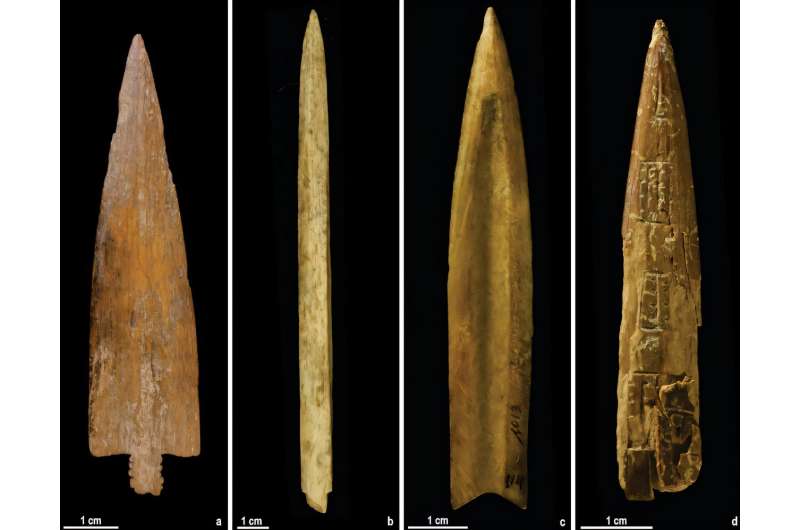
Research conducted by Dr. Matías Medina and his team has shed light on the organized craft production of bone arrow points in prehistoric Argentina. Their findings, published in the International Journal of Osteoarchaeology, reveal insights into the manufacturing techniques employed by communities in the Sierras de Córdoba during the Late Prehispanic Period, approximately between 1220 to 330 cal BP.
For many years, the understanding of bone raw materials used by these ancient communities was limited. The recent technological analysis marks a significant advancement in archaeology, addressing a long-standing gap in knowledge regarding how these societies operated and produced essential tools.
Understanding Prehistoric Economies
The Late Prehistoric Period in the Sierras de Córdoba was characterized by diverse communities that practiced mixed economies, integrating hunting, gathering, and farming. This flexibility allowed them to remain mobile while occupying seasonal camps, adapting their lifestyles to align with available resources. Despite their dynamic way of life, archaeological findings were often sporadic and lacked visibility, particularly concerning bone tools, which had not received extensive scholarly attention until now.
Dr. Medina noted, “Publications dealing specifically with bone technology were, for decades, scarce, especially in South America. What was known usually came from site reports that contained simple descriptions of worked bone assemblages as cultural or chronological markers.” He emphasized that the manufacturing methods behind bone arrow points had never been thoroughly analyzed, an oversight that merits inclusion in discussions surrounding weapon delivery systems.
Analysis of Ancient Artifacts
To fill this knowledge gap, the research team evaluated 117 bone artifacts housed at the Museo Arqueológico Numba Charava. These artifacts were collected over the 20th century from various locations in the southern Punilla Valley, though many lacked precise origins. The primary material identified was bone from the guanaco, a species that was hunted for meat. The bones were then repurposed into tools, with other animal bones, such as those from the pampas deer, appearing less frequently.
The manufacturing process involved splitting the metapodia—long bones of the limbs—lengthwise to create blanks. These were ground down, shaped into arrowheads, and occasionally adorned with barbs or decorative elements. Dr. Medina highlighted the rarity of decorated points, stating, “Only three bone arrow points with incised decoration on the blade were reported in the archaeological literature.” Such decorations were primarily composed of lines and triangles, reminiscent of other artifacts found in central Argentina.
The researchers propose that these decorative features served a purpose beyond aesthetics. They suggest that bone arrow points were primarily utilized in warfare, and the incised designs acted as markers of social identity, leaving a tangible reminder of the maker’s cultural affiliation on the battlefield.
The findings of this study not only enhance our understanding of the craft production in the Southern Punilla Valley but may also inform similar studies in other regions where bone arrow points played a significant role. Each arrowhead produced was unique, reflecting the time-consuming yet standardized process that was likely passed down through generations within family units.
Dr. Medina emphasized the need for comparative studies across neighboring regions, such as the Low Paraná and Uruguay River floodplains, which are over 500 km away. He argued that a comprehensive examination of available resources and subsistence strategies would yield valuable insights into the technological choices made by these communities.
The research underscores the importance of recognizing the nuclear family as the primary social unit responsible for food and tool production during the Late Prehispanic Period. By illuminating the complexities of ancient craft production, this study opens new avenues for understanding the interplay between technology, culture, and social organization in prehistoric societies.
The implications of this research extend well beyond the Sierras de Córdoba, potentially guiding future archaeological inquiries into the role of bone technology in regions with varying resource availability and subsistence strategies. As scholars continue to investigate these ancient practices, the legacy of these communities and their innovations in tool-making will remain a crucial area of exploration.
This article was authored by Sandee Oster, edited by Sadie Harley, and reviewed by Robert Egan, ensuring the content’s accuracy and reliability. For ongoing updates in science and research, readers can subscribe to newsletters from reputable sources like Phys.org.


Revolutionary Photonic Ski-Jump Could Miniaturize LiDAR Systems

Couples Detox from Plastics in New Netflix Doc: Can It Boost Fertility?

Aventon Launches Affordable Full-Suspension Electric Mountain Bike

Discover Eight Must-Try Restaurants This Spring Season

UC Irvine Team Unveils Innovative Ion Pump for Water Treatment

One-Third of Americans Trim Daily Expenses for Healthcare Needs

Apple Secures First Oscar in Three Years with F1: The Movie

Fourth Graders Celebrate St. Patrick’s Day with Creative Weather Drawings

Kim Kardashian Dazzles at Vanity Fair Oscars Party 2026

Nostradamus’ 2026 Predictions: Star Death and Dark Events Loom

Breakthroughs and Challenges Await Science in 2026

Electric Moto Influencer Surronster Arrested in Tijuana

OpenAI to Implement Age Verification for ChatGPT by December 2025

Discover the Top 10 Calorie Counting Apps of 2025

Recovering a Suspended TikTok Account: A Step-by-Step Guide

Bella Hadid Shares Health Update After Treatment for Lyme Disease

Backpack Drives Equip Students with Supplies for New School Year

Analysts Project Stronger Growth for Apple’s iPhone 17 Lineup
-
 Science8 months ago
Nostradamus’ 2026 Predictions: Star Death and Dark Events Loom
-
 Science8 months ago
Breakthroughs and Challenges Await Science in 2026
-
 Technology11 months ago
Electric Moto Influencer Surronster Arrested in Tijuana
-
 Technology9 months ago
OpenAI to Implement Age Verification for ChatGPT by December 2025
-
 Technology1 year ago
Discover the Top 10 Calorie Counting Apps of 2025
-
 Technology1 year ago
Recovering a Suspended TikTok Account: A Step-by-Step Guide
-
 Health11 months ago
Bella Hadid Shares Health Update After Treatment for Lyme Disease
-
 Education1 year ago
Backpack Drives Equip Students with Supplies for New School Year
-
 Health12 months ago
Analysts Project Stronger Growth for Apple’s iPhone 17 Lineup
-

 Health12 months ago
Japanese Study Finds Rose Oil Can Increase Brain Gray Matter
-

 Technology8 months ago
Top 10 Penny Stocks to Watch in 2026 for Strong Returns
-

 Science10 months ago
Starship V3 Set for 2026 Launch After Successful Final Test of Version 2