
Science
New Study Reveals Ancient Arrow Point Craft in Argentina

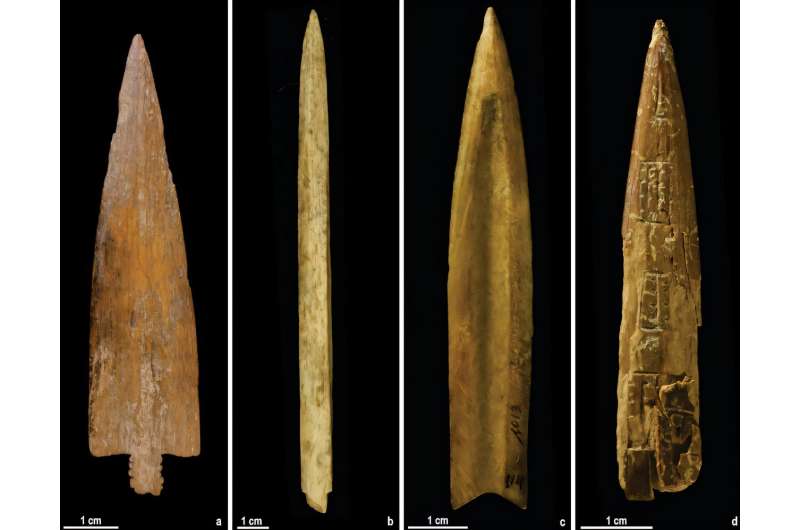
Recent research has uncovered significant insights into the organized craft production of bone arrow points by prehistoric communities in Argentina’s Sierras de Córdoba. A study led by Dr. Matías Medina and his colleagues, Sebastián Pastor and Gisela Sario, published in the International Journal of Osteoarchaeology, fills a long-standing gap in understanding the technological practices of the Late Prehispanic Period, approximately between 1220 to 330 cal BP.
For years, the knowledge surrounding the diverse uses of bone during this era has remained limited. The Late Prehistoric communities in this region practiced a mixed economy that combined hunting, gathering, and agricultural activities. This adaptability allowed them to maintain a nomadic lifestyle, residing in seasonal camps while optimizing their subsistence strategies.
Research Findings on Bone Arrow Points
Dr. Medina’s team conducted a technological analysis of bone arrow points, one of the most prevalent types of bone tools from this period. The research involved examining 117 bone artifacts collected from the Museo Arqueológico Numba Charava, which were gathered non-systematically throughout the 20th century from the southern Punilla Valley. Consequently, many of these items lack precise provenance, creating challenges in determining their origins.
The study revealed that the primary raw material utilized for crafting these arrow points was bone from the guanaco, a species of llama hunted for food. Other animal bones, such as those from pampas deer, were less commonly used. The crafting process typically involved splitting the long bones of the limbs, known as metapodia, to create workable blanks. These blanks were then ground, scraped, and shaped into arrowheads. In some instances, decorative features were added before the points were smoothed and polished, enhancing their performance and aesthetic appeal.
Dr. Medina noted the rarity of decorative elements, stating, “Only three bone arrow points with incised decoration on the blade were reported in the archaeological literature.” The decorations, which included lines and small triangles, were similar to those found on other artifacts in central Argentina. The research suggests that these arrow points were primarily used for warfare rather than hunting, with decorative features serving to express social identity and cultural affiliations.
Implications for Understanding Prehistoric Societies
The implications of this study extend beyond the Sierras de Córdoba, offering insights into the social organization and tool-making practices of ancient communities. The findings indicate that arrowheads were produced locally, each unique in its design, even if few were decorated. The time-intensive yet standardized production process likely involved transmission of skills from parent to child, reinforcing the notion that the nuclear family was a key social unit for both food and tool production during this period.
Dr. Medina emphasized the need for comparative studies with neighboring regions, such as the Low Paraná and Uruguay River floodplains, which are over 500 km away. He noted that the complex bone technology developed in these areas was influenced by the scarcity of stone materials, leading to innovative approaches in crafting tools from available resources, including bones from aquatic species.
The study’s findings represent a significant advancement in understanding the technological capabilities and social structures of prehistoric societies in Argentina. By exploring the nuances of bone tool production, researchers can gain valuable insights into the cultural practices that shaped these communities.
As the field of archaeology continues to evolve, the work of Dr. Medina and his colleagues highlights the importance of examining overlooked aspects of material culture, paving the way for future research that may further illuminate the lives of ancient populations.


Revolutionary Photonic Ski-Jump Could Miniaturize LiDAR Systems

Couples Detox from Plastics in New Netflix Doc: Can It Boost Fertility?

Aventon Launches Affordable Full-Suspension Electric Mountain Bike

Discover Eight Must-Try Restaurants This Spring Season

UC Irvine Team Unveils Innovative Ion Pump for Water Treatment

One-Third of Americans Trim Daily Expenses for Healthcare Needs

Apple Secures First Oscar in Three Years with F1: The Movie

Fourth Graders Celebrate St. Patrick’s Day with Creative Weather Drawings

Kim Kardashian Dazzles at Vanity Fair Oscars Party 2026

Nostradamus’ 2026 Predictions: Star Death and Dark Events Loom

Breakthroughs and Challenges Await Science in 2026

Electric Moto Influencer Surronster Arrested in Tijuana

OpenAI to Implement Age Verification for ChatGPT by December 2025

Discover the Top 10 Calorie Counting Apps of 2025

Recovering a Suspended TikTok Account: A Step-by-Step Guide

Bella Hadid Shares Health Update After Treatment for Lyme Disease

Backpack Drives Equip Students with Supplies for New School Year

Analysts Project Stronger Growth for Apple’s iPhone 17 Lineup
-
 Science8 months ago
Nostradamus’ 2026 Predictions: Star Death and Dark Events Loom
-
 Science8 months ago
Breakthroughs and Challenges Await Science in 2026
-
 Technology11 months ago
Electric Moto Influencer Surronster Arrested in Tijuana
-
 Technology9 months ago
OpenAI to Implement Age Verification for ChatGPT by December 2025
-
 Technology1 year ago
Discover the Top 10 Calorie Counting Apps of 2025
-
 Technology1 year ago
Recovering a Suspended TikTok Account: A Step-by-Step Guide
-
 Health11 months ago
Bella Hadid Shares Health Update After Treatment for Lyme Disease
-
 Education1 year ago
Backpack Drives Equip Students with Supplies for New School Year
-
 Health12 months ago
Analysts Project Stronger Growth for Apple’s iPhone 17 Lineup
-

 Health12 months ago
Japanese Study Finds Rose Oil Can Increase Brain Gray Matter
-

 Technology8 months ago
Top 10 Penny Stocks to Watch in 2026 for Strong Returns
-

 Science10 months ago
Starship V3 Set for 2026 Launch After Successful Final Test of Version 2