
Lifestyle
Revolutionizing Industrial Robot Programming for Greater Efficiency

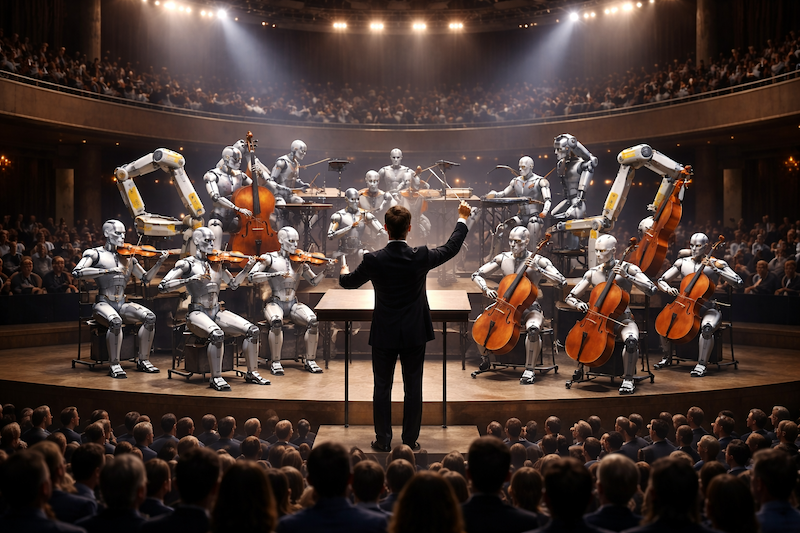
The programming of industrial robots is set to become significantly simpler and more efficient, addressing a critical barrier to automation for manufacturers worldwide. Despite advancements in robotic technology, where modern robot arms demonstrate remarkable speed and precision, the complexity of programming these machines has hindered broader adoption in various industries.
Strong demand for automation continues to drive innovation, pushing companies to seek solutions that streamline the integration of robots into production lines. Many manufacturers find that the sophisticated programming required for these machines remains one of the largest obstacles. Traditional programming methods are often time-consuming and require specialized knowledge, which can deter companies from fully embracing automation.
Advancements in User-Friendly Programming Interfaces
Recent developments focus on creating more intuitive programming interfaces that allow users to operate industrial robots without extensive training. Companies are now exploring visual programming tools and simulation environments that mimic real-world scenarios. This shift not only reduces the time needed to program robots but also enables operators to make adjustments on the fly, enhancing flexibility and responsiveness in manufacturing processes.
For instance, intuitive interfaces can allow a technician to drag and drop commands, effectively programming a robot’s movements without delving into complex coding languages. Such advancements could potentially cut programming time by up to 50%, according to industry experts.
Furthermore, integrating artificial intelligence into these systems is allowing robots to learn from their environments. This capability can lead to increased adaptability, enabling machines to adjust their actions based on the specific tasks at hand. By harnessing the power of AI, companies can ensure that their robots remain efficient and effective even as production demands change.
Impact on Global Manufacturing Processes
As industrial robots evolve and become easier to program, their implementation across various sectors is expected to rise. A report from the International Federation of Robotics indicates that global shipments of industrial robots reached approximately 465,000 units in 2022, reflecting a growing trend towards automation.
With the enhanced programming capabilities, manufacturers can expect increased productivity and reduced labor costs. By simplifying the programming process, businesses can allocate resources more effectively, focusing on innovation and quality improvement rather than struggling with complex machinery.
The implications of these advancements extend beyond individual companies. As manufacturing becomes more efficient, the overall economy may benefit from increased output and competitiveness on a global scale. Companies that adapt quickly to these technological advancements could find themselves leading the market.
In conclusion, the future of industrial robot programming looks promising as innovations make these systems more user-friendly and adaptable. Manufacturers are poised to embrace automation more fully, unlocking new levels of efficiency and productivity that could reshape the landscape of global manufacturing.












Revolutionary Photonic Ski-Jump Could Miniaturize LiDAR Systems

Couples Detox from Plastics in New Netflix Doc: Can It Boost Fertility?

Aventon Launches Affordable Full-Suspension Electric Mountain Bike

Discover Eight Must-Try Restaurants This Spring Season

UC Irvine Team Unveils Innovative Ion Pump for Water Treatment

One-Third of Americans Trim Daily Expenses for Healthcare Needs

Apple Secures First Oscar in Three Years with F1: The Movie

Fourth Graders Celebrate St. Patrick’s Day with Creative Weather Drawings

Kim Kardashian Dazzles at Vanity Fair Oscars Party 2026

Nostradamus’ 2026 Predictions: Star Death and Dark Events Loom

Breakthroughs and Challenges Await Science in 2026

Electric Moto Influencer Surronster Arrested in Tijuana

OpenAI to Implement Age Verification for ChatGPT by December 2025

Discover the Top 10 Calorie Counting Apps of 2025

Recovering a Suspended TikTok Account: A Step-by-Step Guide

Bella Hadid Shares Health Update After Treatment for Lyme Disease

Backpack Drives Equip Students with Supplies for New School Year

Analysts Project Stronger Growth for Apple’s iPhone 17 Lineup
-
 Science7 months ago
Nostradamus’ 2026 Predictions: Star Death and Dark Events Loom
-
 Science7 months ago
Breakthroughs and Challenges Await Science in 2026
-
 Technology10 months ago
Electric Moto Influencer Surronster Arrested in Tijuana
-
 Technology8 months ago
OpenAI to Implement Age Verification for ChatGPT by December 2025
-
 Technology1 year ago
Discover the Top 10 Calorie Counting Apps of 2025
-
 Technology1 year ago
Recovering a Suspended TikTok Account: A Step-by-Step Guide
-
 Health10 months ago
Bella Hadid Shares Health Update After Treatment for Lyme Disease
-
 Education1 year ago
Backpack Drives Equip Students with Supplies for New School Year
-
 Health11 months ago
Analysts Project Stronger Growth for Apple’s iPhone 17 Lineup
-

 Technology7 months ago
Top 10 Penny Stocks to Watch in 2026 for Strong Returns
-

 Health11 months ago
Japanese Study Finds Rose Oil Can Increase Brain Gray Matter
-

 Science10 months ago
Starship V3 Set for 2026 Launch After Successful Final Test of Version 2