
Lifestyle
Revolutionizing Industrial Robot Programming for Enhanced Efficiency

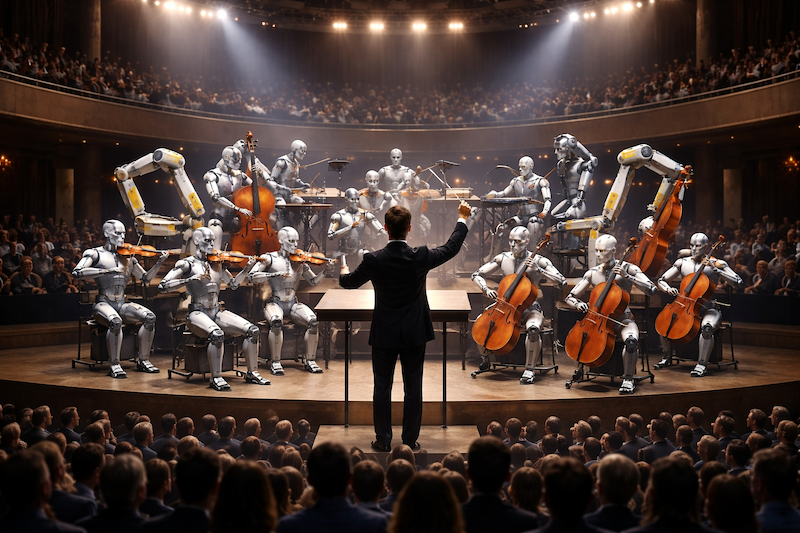
The landscape of industrial robot programming is evolving to become more user-friendly, efficient, and intuitive. As of 2024, advancements in technology are enabling manufacturers to overcome the challenges associated with programming these sophisticated machines. Recent developments highlight the shift towards software that simplifies the programming process, making automation more accessible for companies across various sectors.
For many manufacturers, the complexity of programming has historically been a significant barrier to adopting automation. Despite the impressive capabilities of modern industrial robots—such as executing complex, multi-axis motions with sub-millimetre precision—the programming aspect remains cumbersome. Traditionally, programming these robots required specialized knowledge and extensive training, often leading to increased operational costs and time delays.
Streamlining the Programming Process
Innovative programming software is now at the forefront of addressing these challenges. Companies are increasingly turning to solutions that allow for easier programming through intuitive interfaces. This shift is crucial, as it empowers more employees, regardless of their technical background, to engage with the technology.
Recent reports indicate that European manufacturers are leading the charge in adopting these new programming systems. By 2024, it is expected that a significant percentage of industrial robots will be equipped with user-friendly programming options. This development could drastically reduce the learning curve, allowing companies to deploy robots more rapidly and effectively.
The introduction of graphical programming interfaces allows operators to visualize robot actions, making it simpler to design and modify tasks. With drag-and-drop features, users can create complex sequences without needing to write code. This approach not only enhances productivity but also minimizes the potential for errors during the programming phase.
The Impact on Industry and Workforce
As programming becomes more accessible, the implications for the workforce are profound. Companies can train their employees more quickly, facilitating a smoother transition to automated systems. This adaptability is particularly beneficial in sectors facing labor shortages, as it enables firms to utilize their existing workforce more effectively.
Moreover, the adoption of intuitive programming tools could lead to a broader range of applications for industrial robots. As manufacturers become more comfortable with automation, they may explore new opportunities for productivity enhancements across different processes.
In addition to improving operational efficiency, these advancements in robot programming can also contribute to increased safety in the workplace. By allowing operators to program robots with greater ease, the risk of accidents during setup and operation may decrease significantly.
In conclusion, the future of industrial robot programming is set to become more streamlined and user-friendly. As manufacturers embrace these innovations, the potential for enhanced productivity and safety will likely reshape the landscape of automation in various industries. The evolution of programming tools marks a crucial step toward widespread adoption of robotic systems, paving the way for a more efficient industrial environment.

Revolutionary Photonic Ski-Jump Could Miniaturize LiDAR Systems

Couples Detox from Plastics in New Netflix Doc: Can It Boost Fertility?

Aventon Launches Affordable Full-Suspension Electric Mountain Bike

Discover Eight Must-Try Restaurants This Spring Season

UC Irvine Team Unveils Innovative Ion Pump for Water Treatment

One-Third of Americans Trim Daily Expenses for Healthcare Needs

Apple Secures First Oscar in Three Years with F1: The Movie

Fourth Graders Celebrate St. Patrick’s Day with Creative Weather Drawings

Kim Kardashian Dazzles at Vanity Fair Oscars Party 2026

Nostradamus’ 2026 Predictions: Star Death and Dark Events Loom

Breakthroughs and Challenges Await Science in 2026

Electric Moto Influencer Surronster Arrested in Tijuana

OpenAI to Implement Age Verification for ChatGPT by December 2025

Discover the Top 10 Calorie Counting Apps of 2025

Recovering a Suspended TikTok Account: A Step-by-Step Guide

Bella Hadid Shares Health Update After Treatment for Lyme Disease

Backpack Drives Equip Students with Supplies for New School Year

Analysts Project Stronger Growth for Apple’s iPhone 17 Lineup
-
 Science8 months ago
Nostradamus’ 2026 Predictions: Star Death and Dark Events Loom
-
 Science8 months ago
Breakthroughs and Challenges Await Science in 2026
-
 Technology11 months ago
Electric Moto Influencer Surronster Arrested in Tijuana
-
 Technology9 months ago
OpenAI to Implement Age Verification for ChatGPT by December 2025
-
 Technology1 year ago
Discover the Top 10 Calorie Counting Apps of 2025
-
 Technology1 year ago
Recovering a Suspended TikTok Account: A Step-by-Step Guide
-
 Health11 months ago
Bella Hadid Shares Health Update After Treatment for Lyme Disease
-
 Education1 year ago
Backpack Drives Equip Students with Supplies for New School Year
-
 Health12 months ago
Analysts Project Stronger Growth for Apple’s iPhone 17 Lineup
-

 Health12 months ago
Japanese Study Finds Rose Oil Can Increase Brain Gray Matter
-

 Technology8 months ago
Top 10 Penny Stocks to Watch in 2026 for Strong Returns
-

 Science10 months ago
Starship V3 Set for 2026 Launch After Successful Final Test of Version 2