
Health
Trump Administration Enforces Stricter Work Requirements for Benefits

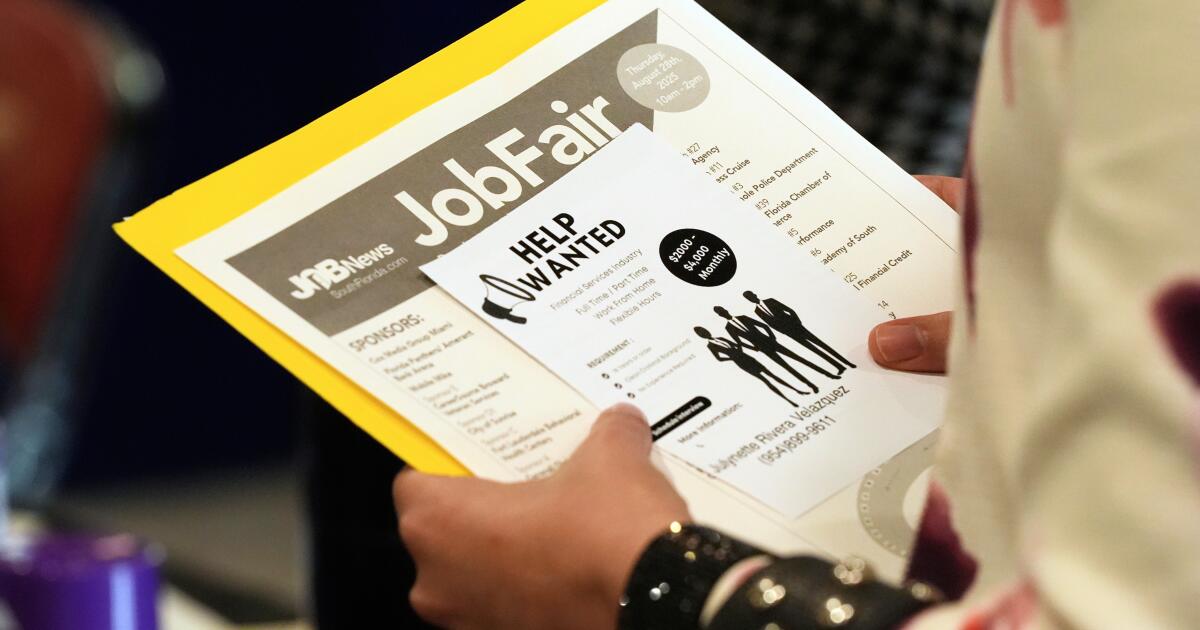
The Trump administration has placed significant emphasis on implementing work requirements for low-income individuals receiving government assistance, a policy initiative that began in 2025. The departments of Health and Human Services, Agriculture, and Housing and Urban Development have collaborated to introduce stricter employment conditions for benefits such as healthcare, food aid, and rental assistance. Proponents argue that these requirements encourage self-sufficiency and stimulate the economy, with Cabinet secretaries stating in a New York Times essay that it “strengthens families and communities as it gives new life to start-ups and growing businesses.”
Despite this assertion, many economists question the effectiveness of these mandates. They express concern that making public assistance contingent on work could hinder existing employment opportunities, impose heavy administrative burdens, and face significant political backlash. The implications of these work requirements are particularly noteworthy for the millions reliant on programs like the Supplemental Nutrition Assistance Program (SNAP), Medicaid, and HUD-subsidized housing.
Impact on SNAP Recipients
In July, President Trump introduced what he referred to as his “Big Beautiful Bill,” which expanded work requirements for SNAP recipients classified as able-bodied adults without dependents. Previously, adults aged over 54 and parents with children under 18 were exempt from the program’s 80-hour monthly work requirement. The new regulations now extend this requirement to adults up to age 64 and parents of children aged 14 to 17, necessitating proof of work, volunteering, or job training for those on SNAP for more than three months.
The legislation has also reduced exemptions for vulnerable populations, including individuals experiencing homelessness, veterans, and youth who have aged out of foster care. According to the Pew Research Center, 61% of adult SNAP recipients had not been employed in 2023, with the average benefit amounting to $188.45 per person or $350.89 per household.
Ismael Cid Martinez, an economist at the Economic Policy Institute, noted that many SNAP recipients work low-wage, unstable jobs, making them particularly vulnerable to economic downturns. He emphasized that restricting benefits may hinder their ability to regain stable employment. “These are some of the matters that tie in together to explain the economy and how the labor market is connected to these benefits,” Martinez stated.
Angela Rachidi, a researcher at the conservative American Enterprise Institute, expressed her expectation that the poverty rate will decline due to these work requirements. However, she cautioned that this shift may not significantly impact the overall labor market.
Changes to Medicaid Eligibility
The recent legislation also implemented new requirements for low-income individuals aged 19 to 64 enrolled in Medicaid through the Affordable Care Act’s expansion or waiver programs. Beginning in 2027, these individuals must complete 80 hours of work, job training, education, or volunteering each month. There are several exemptions, including for caregivers, individuals with disabilities, new ex-offenders, and those who are pregnant or postpartum.
The nonpartisan Congressional Budget Office has predicted that millions may lose their healthcare coverage due to these stringent requirements. Most Medicaid recipients already have jobs, and many experts from a panel at the Cornell Health Policy Center believe the new mandates will not lead to significant increases in employment among current working adults. They also highlighted the likelihood that numerous working individuals may lose their coverage due to administrative difficulties in meeting the new requirements.
Currently, Georgia is the only state implementing work requirements within its Medicaid program, which was initiated by Governor Brian Kemp as an alternative to expanding Medicaid. The program, known as Georgia Pathways, has faced criticism for enrolling fewer individuals than anticipated and incurring considerable administrative costs. Critics argue that many working individuals struggle to navigate the enrollment process and log their hours online, leading to disruptions in coverage due to administrative errors. Recent research from the UK-based BMJ found that Georgia Pathways did not increase employment or improve Medicaid access in comparison to states that did not impose work requirements.
Potential Effects on Housing Assistance
In July, HUD proposed a rule change allowing public housing authorities to implement work requirements and time limits for individuals receiving rental assistance. According to a leaked draft of the proposal, housing authorities can opt to enforce work requirements of up to 40 hours per week for tenants in public housing and recipients of Section 8 vouchers. The draft identified Arkansas and Wisconsin as states potentially poised for implementation based on existing state laws.
The proposal is currently undergoing regulatory review and will be subject to public comments. A HUD spokesperson declined to comment on the leaked documents, which broadly define work-eligible individuals as those up to age 61, with exemptions for caregivers, individuals with disabilities, and students.
A review conducted by researchers at New York University found limited success in programs that have previously trialed work requirements. They noted only one instance in Charlotte, North Carolina, where modest increases in employment were observed, compared to seven other regions that abandoned similar requirements due to their punitive nature and administrative challenges.
As these new policies unfold, the implications for those reliant on government assistance remain uncertain, with many individuals facing the potential loss of vital support systems amid the changing landscape of public benefits.













Revolutionary Photonic Ski-Jump Could Miniaturize LiDAR Systems

Couples Detox from Plastics in New Netflix Doc: Can It Boost Fertility?

Aventon Launches Affordable Full-Suspension Electric Mountain Bike

Discover Eight Must-Try Restaurants This Spring Season

UC Irvine Team Unveils Innovative Ion Pump for Water Treatment

One-Third of Americans Trim Daily Expenses for Healthcare Needs

Apple Secures First Oscar in Three Years with F1: The Movie

Fourth Graders Celebrate St. Patrick’s Day with Creative Weather Drawings

Kim Kardashian Dazzles at Vanity Fair Oscars Party 2026

Nostradamus’ 2026 Predictions: Star Death and Dark Events Loom

Breakthroughs and Challenges Await Science in 2026

Electric Moto Influencer Surronster Arrested in Tijuana

OpenAI to Implement Age Verification for ChatGPT by December 2025

Discover the Top 10 Calorie Counting Apps of 2025

Recovering a Suspended TikTok Account: A Step-by-Step Guide

Bella Hadid Shares Health Update After Treatment for Lyme Disease

Backpack Drives Equip Students with Supplies for New School Year

Analysts Project Stronger Growth for Apple’s iPhone 17 Lineup
-
 Science7 months ago
Nostradamus’ 2026 Predictions: Star Death and Dark Events Loom
-
 Science8 months ago
Breakthroughs and Challenges Await Science in 2026
-
 Technology11 months ago
Electric Moto Influencer Surronster Arrested in Tijuana
-
 Technology8 months ago
OpenAI to Implement Age Verification for ChatGPT by December 2025
-
 Technology1 year ago
Discover the Top 10 Calorie Counting Apps of 2025
-
 Technology1 year ago
Recovering a Suspended TikTok Account: A Step-by-Step Guide
-
 Health11 months ago
Bella Hadid Shares Health Update After Treatment for Lyme Disease
-
 Education1 year ago
Backpack Drives Equip Students with Supplies for New School Year
-
 Health11 months ago
Analysts Project Stronger Growth for Apple’s iPhone 17 Lineup
-

 Technology8 months ago
Top 10 Penny Stocks to Watch in 2026 for Strong Returns
-

 Health11 months ago
Japanese Study Finds Rose Oil Can Increase Brain Gray Matter
-

 Science10 months ago
Starship V3 Set for 2026 Launch After Successful Final Test of Version 2