
Education
New Study Reveals Asymmetry in Early Embryonic Development

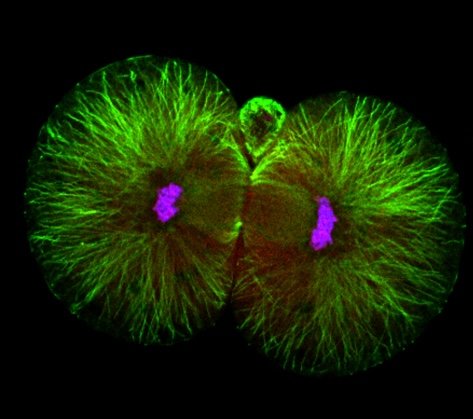
Research into the early stages of embryonic development reveals significant asymmetries in mouse embryos, a finding that could enhance the success of in-vitro fertilization (IVF). According to a study from the California Institute of Technology (Caltech), differences in protein levels between the two cells formed just after the first cellular division may determine their future roles in development. Published on December 3, 2023, in the journal Cell, this research sheds light on the complex biology underlying embryo viability.
The study focuses on mouse embryos at the two-cell stage, a critical point just following fertilization. Traditionally, it has been believed that all cells in an embryo are identical until the embryo reaches 16 cells. This research, led by Magdalena Zernicka-Goetz, Bren Professor of Biology and Biological Engineering, challenges that notion by demonstrating that even early embryonic cells, called blastomeres, exhibit distinct differences. The cell that retains the site of sperm entry after division predominantly contributes to the developing body, while the other is primarily responsible for forming the placenta.
Researchers identified approximately 300 proteins that are unequally distributed between these two blastomeres. Some proteins are overproduced in one cell while being deficient in the other, highlighting a complex interplay crucial for development. These proteins play vital roles in processes that build and degrade cellular components, which is essential as maternal proteins decline and are replaced by those synthesized by the embryo.
Understanding the role of sperm entry in determining cell fate is a significant focus of this investigation. While sperm has long been understood to provide genetic material, this study suggests that the entry point of the sperm may send important signals that influence embryonic development. This could involve contributions from cellular structures or regulatory RNA, although the precise mechanism remains to be elucidated.
Collaboration was key to this research, with contributions from laboratories specializing in proteomics, including those of Tsui-Fen Chou at Caltech and Nicolai Slavov at Northeastern University. The lead authors of the paper are Lisa K. Iwamoto-Stohl from the University of Cambridge and Caltech, and Aleksandra A. Petelski of Northeastern University.
The implications of this research extend beyond mouse models. The team also examined human embryos at the same early stage and found analogous differences between the two cells. This opens new avenues for understanding human embryonic development and improving techniques like IVF, which is becoming increasingly vital as nearly one in six couples face fertility challenges.
Funding for the study was provided by various prestigious organizations, including the Wellcome Trust, the National Institutes of Health, and the Paul G. Allen Frontiers Group. Zernicka-Goetz, who is also affiliated with the Tianqiao and Chrissy Chen Institute for Neuroscience at Caltech, emphasizes the importance of these findings in enhancing our understanding of reproductive biology.
The discoveries made in this research not only deepen our knowledge of embryonic development but also hold the potential to improve reproductive technologies, ultimately benefiting couples navigating fertility issues. Future studies will aim to unravel the mechanisms that govern these early asymmetries and their implications for both animal and human development.











Revolutionary Photonic Ski-Jump Could Miniaturize LiDAR Systems

Couples Detox from Plastics in New Netflix Doc: Can It Boost Fertility?

Aventon Launches Affordable Full-Suspension Electric Mountain Bike

Discover Eight Must-Try Restaurants This Spring Season

UC Irvine Team Unveils Innovative Ion Pump for Water Treatment

One-Third of Americans Trim Daily Expenses for Healthcare Needs

Apple Secures First Oscar in Three Years with F1: The Movie

Fourth Graders Celebrate St. Patrick’s Day with Creative Weather Drawings

Kim Kardashian Dazzles at Vanity Fair Oscars Party 2026

Nostradamus’ 2026 Predictions: Star Death and Dark Events Loom

Breakthroughs and Challenges Await Science in 2026

Electric Moto Influencer Surronster Arrested in Tijuana

OpenAI to Implement Age Verification for ChatGPT by December 2025

Discover the Top 10 Calorie Counting Apps of 2025

Recovering a Suspended TikTok Account: A Step-by-Step Guide

Bella Hadid Shares Health Update After Treatment for Lyme Disease

Backpack Drives Equip Students with Supplies for New School Year

Analysts Project Stronger Growth for Apple’s iPhone 17 Lineup
-
 Science8 months ago
Nostradamus’ 2026 Predictions: Star Death and Dark Events Loom
-
 Science8 months ago
Breakthroughs and Challenges Await Science in 2026
-
 Technology11 months ago
Electric Moto Influencer Surronster Arrested in Tijuana
-
 Technology9 months ago
OpenAI to Implement Age Verification for ChatGPT by December 2025
-
 Technology1 year ago
Discover the Top 10 Calorie Counting Apps of 2025
-
 Technology1 year ago
Recovering a Suspended TikTok Account: A Step-by-Step Guide
-
 Health11 months ago
Bella Hadid Shares Health Update After Treatment for Lyme Disease
-
 Education1 year ago
Backpack Drives Equip Students with Supplies for New School Year
-
 Health12 months ago
Analysts Project Stronger Growth for Apple’s iPhone 17 Lineup
-

 Health12 months ago
Japanese Study Finds Rose Oil Can Increase Brain Gray Matter
-

 Technology8 months ago
Top 10 Penny Stocks to Watch in 2026 for Strong Returns
-

 Science10 months ago
Starship V3 Set for 2026 Launch After Successful Final Test of Version 2