
Top Stories
NASA Gears Up for Artemis II Test Flight with Key Fueling Tests

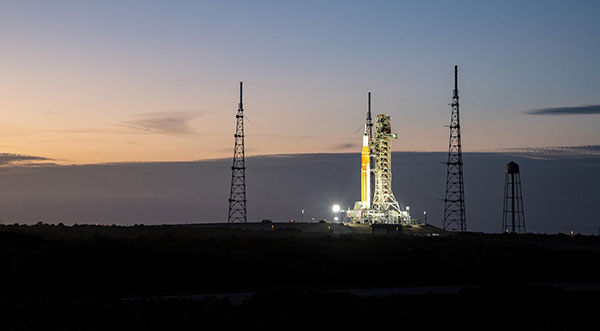
NASA is advancing preparations for the upcoming Artemis II test flight by conducting critical fueling tests at the Kennedy Space Center in Brevard County, Florida. The teams are focused on the Space Launch System (SLS) rocket, the Orion spacecraft, and the ground infrastructure necessary for the mission. Engineers are currently on schedule, with plans to conduct a wet dress rehearsal as early as January 31, 2024.
The wet dress rehearsal is a vital prelaunch test that involves loading over 700,000 gallons of cryogenic propellants into the rocket. During this rehearsal, teams will simulate a launch countdown and practice safely removing the propellant from the rocket, ensuring that the process can be executed without astronauts present in the spacecraft.
The rehearsal will culminate in a simulated launch at 21:00 EST, although it may extend to approximately 01:00 EST if necessary. The first run will commence about 49 hours before the simulated launch, leading to a series of countdowns and holds, ultimately testing the launch team’s ability to manage the final ten minutes of the countdown, known as the terminal count.
In the event that further adjustments are needed after the wet dress rehearsal, NASA may rollback the SLS and Orion to the Vehicle Assembly Building for additional work. Over the weekend, teams successfully serviced the SLS rocket boosters by loading hydrazine into the booster aft skirts, ensuring they are ready for the upcoming mission.
Preparations for the Orion spacecraft are also underway. Technicians are currently stowing items inside the spacecraft and performing necessary work on the launch abort system. This includes checkouts of the core stage’s four RS-25 engines and pressurizing the composite overwrapped pressure vessel, a tank used for fueling in the spacecraft propulsion system.
As cold weather moves through the region, technicians are taking precautions to maintain appropriate conditions for the Orion and SLS elements. This includes ensuring that environmental control systems are functioning optimally despite the lower-than-normal temperatures expected in Florida.
Additionally, NASA engineers are addressing issues identified during the preparation process for crewed flight. An evaluation of the emergency egress system revealed that the baskets used to transport the crew from the mobile launcher fell short of their intended destination. Adjustments have since been made to the system’s brakes to ensure that the baskets descend fully.
In the coming days, technicians will also conduct further testing on Orion’s potable water system, as initial samples indicated higher levels of total organic carbon than anticipated. Ensuring that the crew has access to safe drinking water is a priority.
Currently, the crew members remain in quarantine in Houston, having entered on January 23, 2024, as part of the standard preflight protocol.
NASA’s ongoing preparations for Artemis II mark a significant step in its goal to return humans to the Moon and pave the way for future exploration. As the agency moves closer to the test flight, the focus remains on safety and efficiency to ensure a successful mission.







Revolutionary Photonic Ski-Jump Could Miniaturize LiDAR Systems

Couples Detox from Plastics in New Netflix Doc: Can It Boost Fertility?

Aventon Launches Affordable Full-Suspension Electric Mountain Bike

Discover Eight Must-Try Restaurants This Spring Season

UC Irvine Team Unveils Innovative Ion Pump for Water Treatment

One-Third of Americans Trim Daily Expenses for Healthcare Needs

Apple Secures First Oscar in Three Years with F1: The Movie

Fourth Graders Celebrate St. Patrick’s Day with Creative Weather Drawings

Kim Kardashian Dazzles at Vanity Fair Oscars Party 2026

Nostradamus’ 2026 Predictions: Star Death and Dark Events Loom

Breakthroughs and Challenges Await Science in 2026

Electric Moto Influencer Surronster Arrested in Tijuana

OpenAI to Implement Age Verification for ChatGPT by December 2025

Discover the Top 10 Calorie Counting Apps of 2025

Recovering a Suspended TikTok Account: A Step-by-Step Guide

Bella Hadid Shares Health Update After Treatment for Lyme Disease

Backpack Drives Equip Students with Supplies for New School Year

Analysts Project Stronger Growth for Apple’s iPhone 17 Lineup
-
 Science8 months ago
Nostradamus’ 2026 Predictions: Star Death and Dark Events Loom
-
 Science8 months ago
Breakthroughs and Challenges Await Science in 2026
-
 Technology11 months ago
Electric Moto Influencer Surronster Arrested in Tijuana
-
 Technology9 months ago
OpenAI to Implement Age Verification for ChatGPT by December 2025
-
 Technology1 year ago
Discover the Top 10 Calorie Counting Apps of 2025
-
 Technology1 year ago
Recovering a Suspended TikTok Account: A Step-by-Step Guide
-
 Health11 months ago
Bella Hadid Shares Health Update After Treatment for Lyme Disease
-
 Education1 year ago
Backpack Drives Equip Students with Supplies for New School Year
-
 Health12 months ago
Analysts Project Stronger Growth for Apple’s iPhone 17 Lineup
-

 Health12 months ago
Japanese Study Finds Rose Oil Can Increase Brain Gray Matter
-

 Technology8 months ago
Top 10 Penny Stocks to Watch in 2026 for Strong Returns
-

 Science10 months ago
Starship V3 Set for 2026 Launch After Successful Final Test of Version 2