
Top Stories
Epstein Leveraged Scientific Ties to Enhance His Reputation

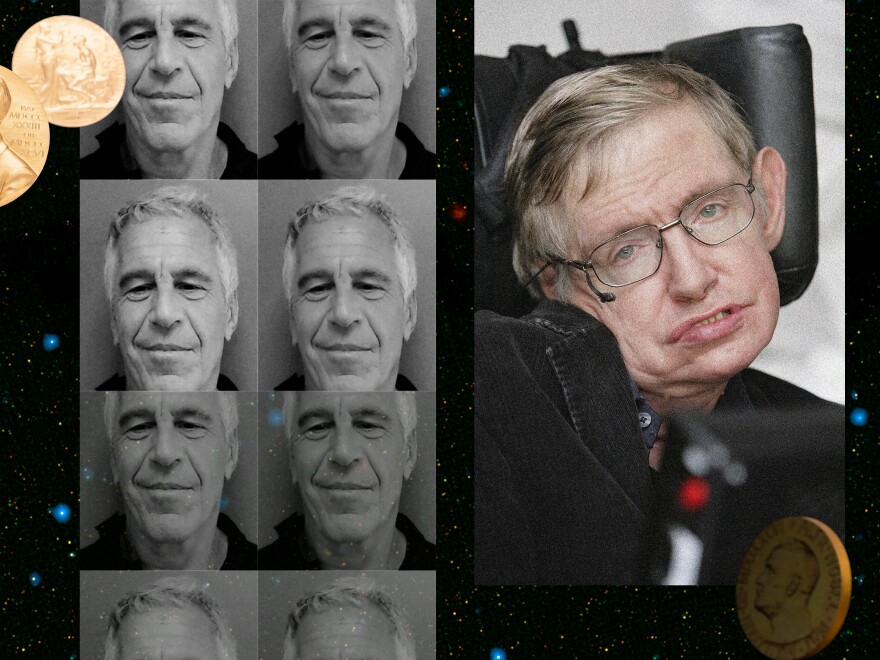
In March 2006, renowned astrophysicist Stephen Hawking enjoyed a unique underwater experience courtesy of Jeffrey Epstein. While aboard a submarine off the coast of the U.S. Virgin Islands, Hawking marveled at coral reefs and marine life. This excursion capped a week-long conference funded by Epstein, which gathered approximately 20 leading physicists, including three Nobel laureates, to discuss fundamental physics and cosmology. The event, titled “Confronting Gravity,” was intended to facilitate dialogue among top scientists while providing a scenic environment.
Organized by Lawrence Krauss, then a professor at Case Western Reserve University, the conference exemplified how Epstein utilized philanthropy to cultivate relationships with prominent scientists and institutions. This connection allowed him to associate with esteemed figures in science while enhancing his public image. Epstein himself described the conference as one of his top five professional achievements.
During the gathering, physicists stayed at the luxurious Ritz-Carlton, St. Thomas, where they engaged in discussions covering advanced topics such as gravitational wave physics. Despite Epstein’s substantial financial backing, many attendees noted his inconspicuous presence during the event. Attendees like Alan Guth, a physicist from the Massachusetts Institute of Technology, recalled that Epstein did not actively participate in discussions.
Epstein’s philanthropic ventures extended beyond this conference. His interests spanned various scientific disciplines, including theoretical physics and evolutionary biology, which he supported through funding for conferences, research programs, and individual scientists. Krauss remarked that Epstein was drawn to “interesting people,” a sentiment echoed by other scientists who participated in Epstein-funded events.
Notably, the conference occurred months before Epstein faced legal troubles for soliciting prostitution. In a plea deal in 2008, he served less than 13 months in jail after pleading guilty to related charges. Despite this, some academics continued to engage with him, illustrating the complex interplay between scientific collaboration and ethical considerations.
Impact on the Scientific Community
Following Epstein’s 2006 conference, several prominent scientists faced scrutiny regarding their associations with him. At Harvard University, notable figures such as George Church, Lisa Randall, and Martin Nowak have drawn attention for their ties to Epstein. While some have since distanced themselves from him, others remained linked to his endeavors for years.
The fallout from Epstein’s activities has had lasting repercussions. After his 2019 arrest on sex-trafficking charges, academic institutions undertook reviews of relationships with Epstein. David Gelernter, a computer science professor at Yale University, was suspended from teaching pending a review of his conduct, highlighting the ongoing consequences of Epstein’s legacy on the scientific community.
Krauss, who maintained a close relationship with Epstein over 15 years, received substantial funding for his Origins Project at Arizona State University. Following allegations of misconduct against Krauss in 2019, he sought advice from Epstein on managing the situation. Despite the serious allegations against Epstein, Krauss expressed a belief that Epstein was genuinely interested in supporting science.
Reputation Management and Philanthropy
The conference at the U.S. Virgin Islands illustrates how Epstein leveraged relationships with scientists to bolster his reputation. Following his legal troubles, he continued to seek connections within the academic community. In 2012, for instance, Epstein was involved in promoting the “Confronting Gravity” conference, seemingly attempting to maintain relevance within the scientific milieu.
Critics argue that Epstein’s philanthropic pursuits were often intertwined with efforts to rehabilitate his image. Peter Woit, a senior lecturer at Columbia University, noted that Epstein exploited his wealth to connect with influential scientists, serving his own interests while offering financial support.
In conclusion, Epstein’s interactions with the scientific community reveal a complicated web of influence and ethical considerations. While some scientists benefited from his financial backing, they also faced the ramifications of association with a figure whose legacy has been tainted by serious criminal allegations. As the scientific community continues to grapple with these issues, the events surrounding the “Confronting Gravity” conference serve as a poignant reminder of the delicate balance between philanthropy and ethical responsibility in academia.











Revolutionary Photonic Ski-Jump Could Miniaturize LiDAR Systems

Couples Detox from Plastics in New Netflix Doc: Can It Boost Fertility?

Aventon Launches Affordable Full-Suspension Electric Mountain Bike

Discover Eight Must-Try Restaurants This Spring Season

UC Irvine Team Unveils Innovative Ion Pump for Water Treatment

One-Third of Americans Trim Daily Expenses for Healthcare Needs

Apple Secures First Oscar in Three Years with F1: The Movie

Fourth Graders Celebrate St. Patrick’s Day with Creative Weather Drawings

Kim Kardashian Dazzles at Vanity Fair Oscars Party 2026

Nostradamus’ 2026 Predictions: Star Death and Dark Events Loom

Breakthroughs and Challenges Await Science in 2026

Electric Moto Influencer Surronster Arrested in Tijuana

OpenAI to Implement Age Verification for ChatGPT by December 2025

Discover the Top 10 Calorie Counting Apps of 2025

Bella Hadid Shares Health Update After Treatment for Lyme Disease

Analysts Project Stronger Growth for Apple’s iPhone 17 Lineup

Japanese Study Finds Rose Oil Can Increase Brain Gray Matter

Top 10 Penny Stocks to Watch in 2026 for Strong Returns
-
 Science4 months ago
Nostradamus’ 2026 Predictions: Star Death and Dark Events Loom
-
 Science4 months ago
Breakthroughs and Challenges Await Science in 2026
-
 Technology7 months ago
Electric Moto Influencer Surronster Arrested in Tijuana
-
 Technology4 months ago
OpenAI to Implement Age Verification for ChatGPT by December 2025
-
 Technology9 months ago
Discover the Top 10 Calorie Counting Apps of 2025
-
 Health7 months ago
Bella Hadid Shares Health Update After Treatment for Lyme Disease
-
 Health7 months ago
Analysts Project Stronger Growth for Apple’s iPhone 17 Lineup
-
 Health7 months ago
Japanese Study Finds Rose Oil Can Increase Brain Gray Matter
-
 Technology4 months ago
Top 10 Penny Stocks to Watch in 2026 for Strong Returns
-

 Science6 months ago
Starship V3 Set for 2026 Launch After Successful Final Test of Version 2
-

 Technology1 month ago
Nvidia GTC 2026: Major Announcements Expected for AI and Hardware
-

 Education7 months ago
Harvard Secures Court Victory Over Federal Funding Cuts