
Top Stories
Archaeologists Uncover Early Arctic Seafarers’ Impact on Ecosystems

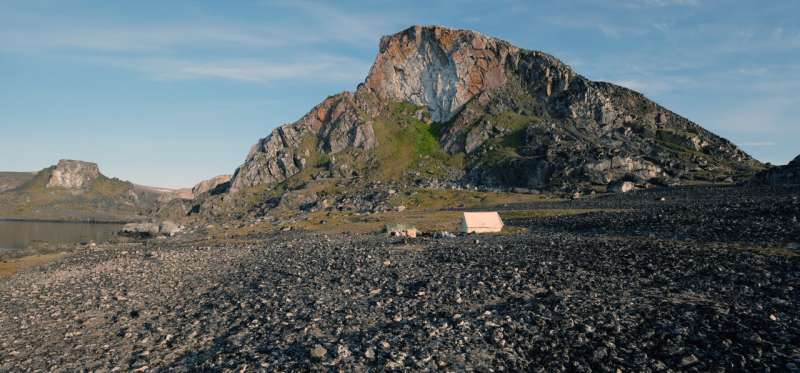
Archaeologists have revealed significant evidence of prehistoric human occupation in the remote island cluster of Kitsissut, located north of Greenland. This discovery suggests that the first inhabitants of the High Arctic were skilled seafarers who played a crucial role in shaping early Arctic environments. These findings shed light on the lifestyle and ecological impact of the first people in Kalaallit Nunaat approximately 4,500 years ago, following the retreat of glacial ice.
The research, led by Dr. Matthew Walls from the University of Calgary, indicates that these early settlers were adept at navigating challenging maritime routes. While previous archaeological evidence confirmed their use of watercraft, the extent of their influence on local ecosystems remained largely unknown. Dr. Walls stated, “While rare fragments confirmed they possessed watercraft, the full extent of their reach across different ecological systems—and particularly their ability to use these boats to interact with marine species—remained unclear.”
To investigate this further, researchers from the University of Calgary and Ilisimatusarfik/University of Greenland conducted an extensive archaeological survey in the Kitsissut cluster. The team documented nearly 300 archaeological features, including Early Paleo-Inuit tent rings and hearths, demonstrating that people frequented these islands as far back as 4,500 years ago. Their findings, published in the journal Antiquity, highlight the significance of this area, which is situated in the unique polynya environment of Pikialasorsuaq.
Polynyas are regions of the Arctic ocean that remain ice-free even during winter, making travel to these islands particularly challenging. To reach Kitsissut, early communities had to navigate a perilous 50 km open-water crossing. Dr. Walls emphasized the danger of these journeys, noting, “That’s an extraordinary voyage in small skin-on-frame watercraft. It would have required facing erratic weather, strong crosswinds, powerful currents, and very high risk of being swept into the expanse of Baffin Bay.”
The regularity with which these early communities undertook such journeys, transporting families and supplies to access seasonal resources like seabird colonies, illustrates their remarkable maritime skills. This adaptability indicates that the Paleo-Inuit were not confined to land or near-shore activities; rather, they effectively bridged terrestrial and marine ecosystems at a formative stage of ecological development following glacial retreat.
Dr. Walls remarked, “Our findings enhance the Indigenous story of High Arctic environments. Reaching Kitsissut required skills that would have been a defining part of social life, passed down and refined as each generation re-learned by going out into the sea to travel and hunt.” The early Paleo-Inuit were evidently integrated into the ecology of Pikialasorsuaq, allowing them to access marine mammals and seabirds well beyond the shoreline.
The impact of these early navigators shaped the development of Inuit lands into the present day. Dr. Walls concluded, “By hunting, harvesting, and moving marine nutrients onto the land, these first navigators likely acted as ‘ecological engineers’ alongside species like seabirds. This reveals a deep, ancient entanglement with Arctic ecosystems, showing us that these environments have always been defined by Indigenous presence and stewardship.”
This research not only provides insight into the maritime capabilities of the first Arctic inhabitants but also emphasizes their enduring connection to the region’s ecological intricacies. The study presents a compelling narrative of adaptation and resilience, enriching our understanding of the role Indigenous peoples have played in shaping Arctic landscapes throughout history.




Revolutionary Photonic Ski-Jump Could Miniaturize LiDAR Systems

Couples Detox from Plastics in New Netflix Doc: Can It Boost Fertility?

Aventon Launches Affordable Full-Suspension Electric Mountain Bike

Discover Eight Must-Try Restaurants This Spring Season

UC Irvine Team Unveils Innovative Ion Pump for Water Treatment

One-Third of Americans Trim Daily Expenses for Healthcare Needs

Apple Secures First Oscar in Three Years with F1: The Movie

Fourth Graders Celebrate St. Patrick’s Day with Creative Weather Drawings

Kim Kardashian Dazzles at Vanity Fair Oscars Party 2026

Nostradamus’ 2026 Predictions: Star Death and Dark Events Loom

Breakthroughs and Challenges Await Science in 2026

Electric Moto Influencer Surronster Arrested in Tijuana

OpenAI to Implement Age Verification for ChatGPT by December 2025

Discover the Top 10 Calorie Counting Apps of 2025

Bella Hadid Shares Health Update After Treatment for Lyme Disease

Analysts Project Stronger Growth for Apple’s iPhone 17 Lineup

Japanese Study Finds Rose Oil Can Increase Brain Gray Matter

Top 10 Penny Stocks to Watch in 2026 for Strong Returns
-
 Science3 months ago
Nostradamus’ 2026 Predictions: Star Death and Dark Events Loom
-
 Science4 months ago
Breakthroughs and Challenges Await Science in 2026
-
 Technology7 months ago
Electric Moto Influencer Surronster Arrested in Tijuana
-
 Technology4 months ago
OpenAI to Implement Age Verification for ChatGPT by December 2025
-
 Technology9 months ago
Discover the Top 10 Calorie Counting Apps of 2025
-
 Health7 months ago
Bella Hadid Shares Health Update After Treatment for Lyme Disease
-
 Health7 months ago
Analysts Project Stronger Growth for Apple’s iPhone 17 Lineup
-
 Health7 months ago
Japanese Study Finds Rose Oil Can Increase Brain Gray Matter
-
 Technology4 months ago
Top 10 Penny Stocks to Watch in 2026 for Strong Returns
-

 Science6 months ago
Starship V3 Set for 2026 Launch After Successful Final Test of Version 2
-

 Technology1 month ago
Nvidia GTC 2026: Major Announcements Expected for AI and Hardware
-

 Education7 months ago
Harvard Secures Court Victory Over Federal Funding Cuts