
Technology
Strengthening Supply Chain Resilience with CNC Machining Partners

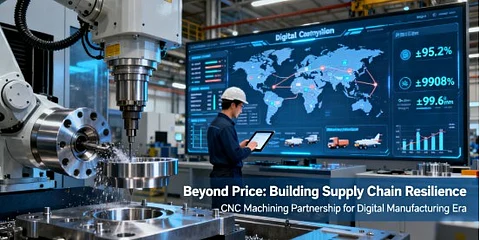
The manufacturing sector is undergoing a significant transformation as businesses increasingly embrace digital technologies. However, many companies still face challenges with CNC machining suppliers, including low-price competition, delivery delays, and quality inconsistencies. These issues pose serious threats to supply chain resilience and hinder the pace of innovation. The primary concern stems from traditional supplier selection criteria, which often prioritize initial price over essential factors such as technical compatibility, quality systems, and long-term collaboration. This article outlines a strategic framework for evaluating CNC machining partners, emphasizing the importance of these elements in supporting digital transformation and ensuring supply chain security.
Identifying Key Technical Capabilities in CNC Machining Suppliers
A world-class CNC machining supplier demonstrates its core technical capabilities through advanced equipment and stringent maintenance protocols. According to research by the National Institute of Standards and Technology (NIST), suppliers employing five-axis simultaneous CNC machines and comprehensive precision maintenance can consistently maintain tolerances within ±0.01mm. In high-stakes applications such as machining aerospace engine blades, achieving micron-level accuracy is critical. This capability relies on advanced equipment that features dynamic compensation and environmental temperature controls.
Moreover, suppliers should have a fully equipped metrology lab featuring Coordinate Measuring Machines (CMM) and laser trackers. These tools are essential for ensuring the traceability and verification of every part’s dimensional data. The integration of advanced CAM software and process databases further enhances CNC machining efficiency. Intelligent toolpath optimization can reduce non-cutting movements by up to 30% while extending tool life.
Digital transformation in manufacturing takes these capabilities to the next level. By enabling real-time optimization and sharing of machining parameters via cloud platforms, production flexibility and response times can see marked improvements. For instance, suppliers must be adept in machining new materials such as high-temperature alloys, composites, and ceramics. Machining IN718 high-temperature alloy, for example, requires specialized coated tools and high-pressure cooling technologies to mitigate deformation caused by cutting heat. Suppliers should be prepared to provide material certification reports and metallographic analysis data that demonstrate their processes do not introduce internal defects.
Quality Certifications and Their Impact on Project Success
Quality certifications such as AS9100D and IATF 16949 are foundational to establishing a robust quality system. Standards like ISO 9001:2015 offer a systematic framework for quality control and standardization. For instance, AS9100D mandates that suppliers implement a First Article Inspection (FAI) process to ensure that all dimensions conform to design specifications prior to mass production. This requirement necessitates strict batch traceability for raw materials and thorough documentation of every processing step.
The true value of a certification system lies in its ability to ensure full-process traceability. In aerospace projects, for example, all data—from raw material certificates to final heat treatment reports—must be archived for a minimum of ten years. This traceability enables rapid identification of problematic links when quality anomalies arise, such as analyzing tool usage records to pinpoint wear trends.
Different industries emphasize unique quality requirements. A supplier that holds both ISO 13485 and AS9100D certifications demonstrates the capability to meet compliance needs across multiple sectors. Therefore, when selecting CNC machining services, it is crucial to request certification scopes and the latest audit reports to confirm ongoing system effectiveness.
Evaluating Total Cost of Ownership and Value in CNC Machining Services
When assessing CNC machining suppliers, a common pitfall is focusing solely on the initial quote. Low quotes may conceal significant deficiencies, such as the use of non-standard tools that could incur high replacement costs later on. Experience shows that quotes lacking Design for Manufacturability (DFM) feedback often overlook optimization opportunities, such as reducing setups through symmetrical design. High-quality suppliers provide a process analysis report at the quotation stage, identifying features that can be optimized to manage costs effectively from the outset.
Calculating the Total Cost of Ownership (TCO) is essential. TCO encompasses direct machining costs, quality costs, and time costs. For instance, optimizing tolerances can decrease inspection times, while standardized fixtures can lower tooling investments. Data indicates that applying a scientific TCO model can yield overall savings of 15% to 25%, particularly beneficial in high-complexity batches. Suppliers should be prepared to offer detailed TCO breakdowns to facilitate comparisons of long-term benefits among different options.
The concept of value-driven partnerships can lead to synergistic benefits. Strategic collaboration enables the joint development of specialized tooling for mixed-model production. For example, a project involving automotive components saw a supplier’s modular design suggestion reduce part variants from 20 to 5 base types, significantly lowering mold investments and inventory costs. This approach transforms one-time transactions into ongoing value creation.
The Role of Digital Integration in Enhancing Supply Chain Resilience
Modern CNC machining service platforms should offer functionalities like real-time quoting, project dashboards, and remote monitoring. Integrating with a client’s ERP system through APIs facilitates automatic order status synchronization. Some advanced platforms even provide machining simulation capabilities, allowing clients to verify toolpaths online and prevent design conflicts. These features exemplify the digital transformation in manufacturing, shifting traditional sequential processes into collaborative efforts.
Top-tier suppliers are also expected to establish multi-tier supply chain maps and set safety stock alerts for critical raw materials. For example, utilizing blockchain technology can ensure the traceability of materials such as aluminum, recording their source and heat treatment history. Research by NIST emphasizes that data standardization is vital for cross-system interoperability, directly bolstering supply chain resilience.
Sustainable manufacturing practices play a crucial role in this transformation. Compliance with ISO 14001 requires systematic management of energy consumption and waste, leading to reduced hazardous waste discharge and a lower carbon footprint. These practices not only address environmental, social, and governance (ESG) requirements but also improve operational costs through energy-efficient measures, creating a beneficial cycle.
In conclusion, selecting a CNC machining supplier in today’s ever-evolving manufacturing landscape is a strategic endeavor. A comprehensive evaluation framework that encompasses core technology, systematic quality, total value analysis, and digital collaboration is essential for ensuring long-term project success. This approach is critical for building resilience and competitiveness in the manufacturing sector.
Q1: What is often overlooked when comparing CNC machining suppliers?
A: Proactive engineering support is frequently underestimated. Superior suppliers provide DFM analysis, suggesting adjustments that can yield significant cost savings.
Q2: How do international quality standards like ISO 9001 benefit projects?
A: These standards standardize processes, preventing errors such as batch deviations that could halt production lines, particularly crucial for long-cycle projects.
Q3: Can a single supplier effectively manage both prototyping and high-volume production?
A: Yes, but it is essential to verify their capacity allocation. Excellent suppliers maintain dedicated prototype units and automated mass production lines to ensure seamless knowledge transfer.
Q4: What information is necessary for an accurate CNC machining quote?
A: Beyond 3D models, specifying material standards, post-processing requirements, and the operational environment is critical for influencing process selection.
Q5: How does digital transformation enhance the CNC machining supplier experience?
A: Digitalization fosters full-process transparency, allowing real-time tracking of progress and enhancing communication efficiency, thus nurturing a collaborative partnership.



Revolutionary Photonic Ski-Jump Could Miniaturize LiDAR Systems

Couples Detox from Plastics in New Netflix Doc: Can It Boost Fertility?

Aventon Launches Affordable Full-Suspension Electric Mountain Bike

Discover Eight Must-Try Restaurants This Spring Season

UC Irvine Team Unveils Innovative Ion Pump for Water Treatment

One-Third of Americans Trim Daily Expenses for Healthcare Needs

Apple Secures First Oscar in Three Years with F1: The Movie

Fourth Graders Celebrate St. Patrick’s Day with Creative Weather Drawings

Kim Kardashian Dazzles at Vanity Fair Oscars Party 2026

Nostradamus’ 2026 Predictions: Star Death and Dark Events Loom

Breakthroughs and Challenges Await Science in 2026

Electric Moto Influencer Surronster Arrested in Tijuana

OpenAI to Implement Age Verification for ChatGPT by December 2025

Discover the Top 10 Calorie Counting Apps of 2025

Recovering a Suspended TikTok Account: A Step-by-Step Guide

Bella Hadid Shares Health Update After Treatment for Lyme Disease

Backpack Drives Equip Students with Supplies for New School Year

Analysts Project Stronger Growth for Apple’s iPhone 17 Lineup
-
 Science8 months ago
Nostradamus’ 2026 Predictions: Star Death and Dark Events Loom
-
 Science8 months ago
Breakthroughs and Challenges Await Science in 2026
-
 Technology11 months ago
Electric Moto Influencer Surronster Arrested in Tijuana
-
 Technology9 months ago
OpenAI to Implement Age Verification for ChatGPT by December 2025
-
 Technology1 year ago
Discover the Top 10 Calorie Counting Apps of 2025
-
 Technology1 year ago
Recovering a Suspended TikTok Account: A Step-by-Step Guide
-
 Health11 months ago
Bella Hadid Shares Health Update After Treatment for Lyme Disease
-
 Education1 year ago
Backpack Drives Equip Students with Supplies for New School Year
-
 Health12 months ago
Analysts Project Stronger Growth for Apple’s iPhone 17 Lineup
-

 Health12 months ago
Japanese Study Finds Rose Oil Can Increase Brain Gray Matter
-

 Technology8 months ago
Top 10 Penny Stocks to Watch in 2026 for Strong Returns
-

 Science10 months ago
Starship V3 Set for 2026 Launch After Successful Final Test of Version 2