
Science
Trump Orders Marijuana Reclassification, Impacting Medical Research

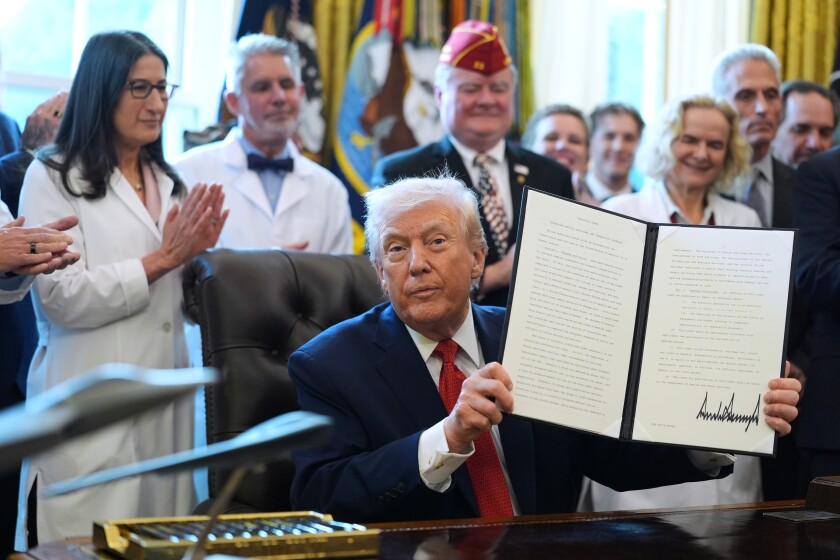
President Donald Trump has ordered the reclassification of marijuana, moving it from Schedule I to Schedule III under the Controlled Substances Act. This change, announced last week, is significant as it repositions marijuana alongside prescription drugs such as ketamine and Tylenol with codeine. The reclassification marks a shift in federal policy that acknowledges both the potential medical benefits of marijuana and the inaccuracies in its previous classification.
Nearly four decades ago, Francis Young, then chief administrative law judge at the Drug Enforcement Administration (DEA), argued against marijuana’s placement in Schedule I, which reserves that category for substances deemed to have high abuse potential and no accepted medical use. Although Young’s conclusion was overruled by DEA Administrator John Lawn, recent developments have validated his perspective.
The change follows a review by the U.S. Department of Health and Human Services (HHS), which was ordered by President Joe Biden. The review found “credible scientific support” for marijuana’s effectiveness in treating conditions such as pain and nausea. HHS determined that the evidence, along with the practices of clinicians in states where marijuana is legal, justified its reclassification. They concluded that the dangers associated with marijuana do not warrant its status as a Schedule I drug.
In May 2024, then Attorney General Merrick Garland proposed the new rule based on HHS’s recommendations. Trump stated that this reclassification would benefit “American patients suffering from extreme pain, incurable diseases, aggressive cancers, seizure disorders, neurological problems and more.” While the reclassification does not legalize marijuana, it significantly eases the path for medical research. By moving marijuana to Schedule III, researchers will no longer face the stringent regulatory hurdles associated with Schedule I substances.
It is important to note that while marijuana’s new classification will facilitate research, it does not legalize medical use in itself. The Food and Drug Administration (FDA) must still approve specific cannabis-based products as prescription medications. Additionally, marijuana businesses operating under state laws will remain illegal at the federal level, although they may experience somewhat reduced penalties.
Despite the lack of full legalization, the reclassification presents advantages for state-licensed marijuana businesses. By allowing these businesses to claim standard deductions on their income tax returns, it alleviates some of the financial burdens they face, which often result in extremely high effective tax rates. This aspect was not highlighted by Trump in his announcement, which is noteworthy given his previous support for recreational legalization in Florida and efforts to improve the cannabis industry’s access to financial services.
Since Young’s initial ruling on marijuana, 40 states have legalized the substance for medical use, with 24 states also allowing recreational use. This shift has created a conflict with federal prohibition, a stance that many Americans oppose. Although Trump emphasized that his order does not legalize marijuana, the implications of this reclassification are significant in terms of research and medical application.
In conclusion, while Trump’s executive order does not equate to full legalization, it signals a pivotal moment in the ongoing conversation about marijuana policy in the United States. This reclassification may serve to reshape perceptions and regulations surrounding marijuana, paving the way for further developments in both medical research and state-level practices.











Revolutionary Photonic Ski-Jump Could Miniaturize LiDAR Systems

Couples Detox from Plastics in New Netflix Doc: Can It Boost Fertility?

Aventon Launches Affordable Full-Suspension Electric Mountain Bike

Discover Eight Must-Try Restaurants This Spring Season

UC Irvine Team Unveils Innovative Ion Pump for Water Treatment

One-Third of Americans Trim Daily Expenses for Healthcare Needs

Apple Secures First Oscar in Three Years with F1: The Movie

Fourth Graders Celebrate St. Patrick’s Day with Creative Weather Drawings

Kim Kardashian Dazzles at Vanity Fair Oscars Party 2026

Nostradamus’ 2026 Predictions: Star Death and Dark Events Loom

Breakthroughs and Challenges Await Science in 2026

Electric Moto Influencer Surronster Arrested in Tijuana

OpenAI to Implement Age Verification for ChatGPT by December 2025

Discover the Top 10 Calorie Counting Apps of 2025

Bella Hadid Shares Health Update After Treatment for Lyme Disease

Analysts Project Stronger Growth for Apple’s iPhone 17 Lineup

Japanese Study Finds Rose Oil Can Increase Brain Gray Matter

Top 10 Penny Stocks to Watch in 2026 for Strong Returns
-
 Science4 months ago
Nostradamus’ 2026 Predictions: Star Death and Dark Events Loom
-
 Science4 months ago
Breakthroughs and Challenges Await Science in 2026
-
 Technology7 months ago
Electric Moto Influencer Surronster Arrested in Tijuana
-
 Technology4 months ago
OpenAI to Implement Age Verification for ChatGPT by December 2025
-
 Technology9 months ago
Discover the Top 10 Calorie Counting Apps of 2025
-
 Health7 months ago
Bella Hadid Shares Health Update After Treatment for Lyme Disease
-
 Health7 months ago
Analysts Project Stronger Growth for Apple’s iPhone 17 Lineup
-
 Health7 months ago
Japanese Study Finds Rose Oil Can Increase Brain Gray Matter
-
 Technology4 months ago
Top 10 Penny Stocks to Watch in 2026 for Strong Returns
-

 Science6 months ago
Starship V3 Set for 2026 Launch After Successful Final Test of Version 2
-

 Technology1 month ago
Nvidia GTC 2026: Major Announcements Expected for AI and Hardware
-

 Education7 months ago
Harvard Secures Court Victory Over Federal Funding Cuts