
Science
Study Reveals Links Between Star Variability and Exoplanet Habitability

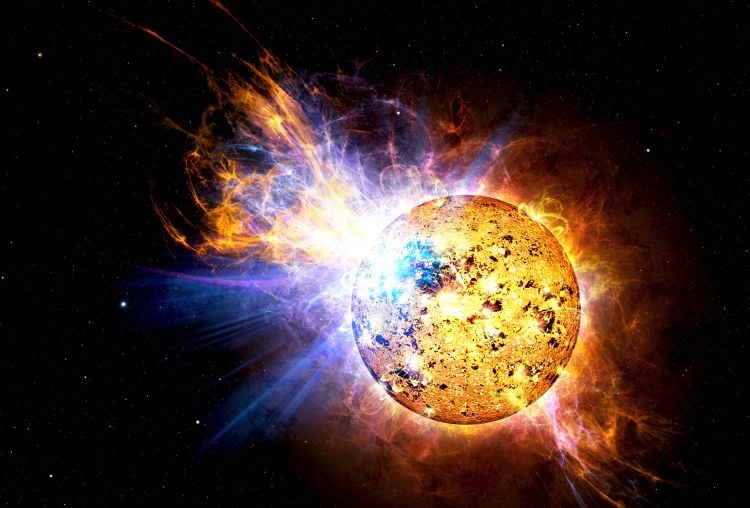
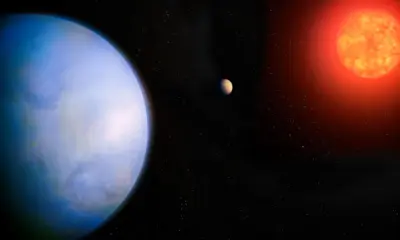
A recent study accepted to The Astronomical Journal explores how star variability affects the habitability of exoplanets. Researchers examined the interaction between stellar activity and the atmospheres of nine exoplanets orbiting different stars, aiming to enhance the understanding of which celestial bodies could support life. This research is particularly significant as it focuses on stars that differ from our Sun, shedding light on the diverse conditions that could allow for habitability.
The team analyzed data from nine exoplanets, each orbiting one of nine separate stars located within the habitable zone. The selected stars exhibit varying levels of brightness and activity, which can influence the equilibrium temperatures of their orbiting planets. Notable exoplanets included TOI-1227 b (328 light-years), HD 142415 b (116 light-years), and HD 147513 b (42 light-years). Researchers sought to determine how the stars’ variability affects the potential for these planets to retain water, a crucial factor for habitability.
The study revealed that the nine stars had minimal impact on the equilibrium temperatures of their associated exoplanets. Moreover, the findings indicate that exoplanets located at the inner edge of their stars’ habitable zones can retain water, regardless of the stars’ variability. This suggests that conditions for potential life may be more favorable than previously thought, even in systems with highly active stars.
Significance of Stellar Types
The research examined stars ranging from 0.17 to 1.25 solar masses, including M-, K-, G-, and F-type stars. M-type stars, the smallest category, are particularly interesting due to their abundance and longevity, with lifetimes estimated to span up to trillions of years. In contrast, our Sun, a G-type star, has a lifespan of approximately 10-12 billion years.
M-type stars are characterized by significant variability, including fluctuations in brightness due to sunspots and flares. Such activity raises questions about the habitability of their orbiting exoplanets. For instance, stars like Proxima Centauri and TRAPPIST-1, located about 4.24 and 39.5 light-years from Earth respectively, have been observed to exhibit extreme activity. Proxima Centauri presents a particularly harsh environment for its single known rocky exoplanet, while TRAPPIST-1 hosts seven rocky planets, one of which may be habitable despite the star’s variable emissions.
The implications of this study are vast, highlighting the need for further exploration into the habitability of planets around various types of stars. As astronomers continue to observe M-type stars, this research provides a foundation for identifying potentially habitable environments beyond our solar system.
As the scientific community delves deeper into the intricacies of star variability and exoplanet habitability, the pursuit of knowledge remains vital. Future studies will likely yield new insights, expanding our understanding of where life might exist in the cosmos.








Revolutionary Photonic Ski-Jump Could Miniaturize LiDAR Systems

Couples Detox from Plastics in New Netflix Doc: Can It Boost Fertility?

Aventon Launches Affordable Full-Suspension Electric Mountain Bike

Discover Eight Must-Try Restaurants This Spring Season

UC Irvine Team Unveils Innovative Ion Pump for Water Treatment

One-Third of Americans Trim Daily Expenses for Healthcare Needs

Apple Secures First Oscar in Three Years with F1: The Movie

Fourth Graders Celebrate St. Patrick’s Day with Creative Weather Drawings

Kim Kardashian Dazzles at Vanity Fair Oscars Party 2026

Nostradamus’ 2026 Predictions: Star Death and Dark Events Loom

Breakthroughs and Challenges Await Science in 2026

Electric Moto Influencer Surronster Arrested in Tijuana

OpenAI to Implement Age Verification for ChatGPT by December 2025

Discover the Top 10 Calorie Counting Apps of 2025

Bella Hadid Shares Health Update After Treatment for Lyme Disease

Analysts Project Stronger Growth for Apple’s iPhone 17 Lineup

Japanese Study Finds Rose Oil Can Increase Brain Gray Matter

Top 10 Penny Stocks to Watch in 2026 for Strong Returns
-
 Science4 months ago
Nostradamus’ 2026 Predictions: Star Death and Dark Events Loom
-
 Science4 months ago
Breakthroughs and Challenges Await Science in 2026
-
 Technology7 months ago
Electric Moto Influencer Surronster Arrested in Tijuana
-
 Technology4 months ago
OpenAI to Implement Age Verification for ChatGPT by December 2025
-
 Technology9 months ago
Discover the Top 10 Calorie Counting Apps of 2025
-
 Health7 months ago
Bella Hadid Shares Health Update After Treatment for Lyme Disease
-
 Health7 months ago
Analysts Project Stronger Growth for Apple’s iPhone 17 Lineup
-
 Health7 months ago
Japanese Study Finds Rose Oil Can Increase Brain Gray Matter
-
 Technology4 months ago
Top 10 Penny Stocks to Watch in 2026 for Strong Returns
-

 Science6 months ago
Starship V3 Set for 2026 Launch After Successful Final Test of Version 2
-

 Technology1 month ago
Nvidia GTC 2026: Major Announcements Expected for AI and Hardware
-

 Education7 months ago
Harvard Secures Court Victory Over Federal Funding Cuts