
Science
SpaceX Launches Dragon to ISS, Supporting 50 Science Projects

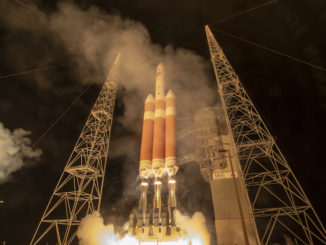
A SpaceX Falcon 9 rocket successfully launched from Cape Canaveral Space Force Station in the early hours of Sunday, August 25, 2025, marking the start of the company’s 33rd Commercial Resupply Services (CRS-33) mission to the International Space Station (ISS). The launch carried over 5,000 pounds of cargo, including supplies for astronauts and new propulsion systems for orbital maneuvers.
The Dragon spacecraft, designated C211, is expected to dock with the ISS at the forward port of the Harmony module on Monday at 07:30 EDT (11:30 UTC). This mission signifies a milestone as it represents the 50th Dragon vehicle to reach the ISS since the program’s inception.
“These missions have flown well over 300,000 pounds of cargo and supplies to the orbiting lab, contributing to more than 1,000 science and research projects,” said Sarah Walker, director of Dragon Mission Management at SpaceX. She emphasized the importance of ongoing research that benefits life on Earth and enhances our understanding of living and working in space.
Inside the Dragon, equipment for over 50 science experiments and technology demonstrations has been loaded, covering a range of fields from 3D metal printing to investigations into bone loss. This mission aligns with NASA’s ongoing commitment to scientific exploration and innovation.
Celebrating 25 years of continuous human presence in low Earth orbit, the ISS has hosted over 280 residents and facilitated more than 4,000 scientific experiments conducted by researchers from over 110 countries, as noted by Heidi Parris, associate program scientist for NASA’s ISS Program Research Office.
During its time docked, the Dragon spacecraft will conduct a series of burns to assist in maintaining the ISS’s altitude, utilizing an independent propellant system and two Draco engines located in the spacecraft’s modified trunk. This capability will reduce the reliance on Russian Progress vehicles and the station’s thrusters as NASA, Roscosmos, and other international partners prepare for the ISS’s eventual decommissioning around 2030.
“This mission is an exciting opportunity for us to become an even more integrated part of the ISS operations ecosystem,” Walker added.
In addition to the CRS-33 mission, SpaceX is under contract with NASA to develop the U.S. Deorbit Vehicle, scheduled for delivery between 2028 and 2029. This vehicle will play a crucial role in the final stages of the ISS’s operational life, ensuring a smooth transition as the space station approaches its end of service.
As the CRS-33 mission unfolds, the collaboration between SpaceX and NASA continues to demonstrate the significant advancements in space exploration and research. The ongoing commitment to science and technology promises to yield valuable insights for both space and Earth-based applications.










Revolutionary Photonic Ski-Jump Could Miniaturize LiDAR Systems

Couples Detox from Plastics in New Netflix Doc: Can It Boost Fertility?

Aventon Launches Affordable Full-Suspension Electric Mountain Bike

Discover Eight Must-Try Restaurants This Spring Season

UC Irvine Team Unveils Innovative Ion Pump for Water Treatment

One-Third of Americans Trim Daily Expenses for Healthcare Needs

Apple Secures First Oscar in Three Years with F1: The Movie

Fourth Graders Celebrate St. Patrick’s Day with Creative Weather Drawings

Kim Kardashian Dazzles at Vanity Fair Oscars Party 2026

Nostradamus’ 2026 Predictions: Star Death and Dark Events Loom

Breakthroughs and Challenges Await Science in 2026

Electric Moto Influencer Surronster Arrested in Tijuana

OpenAI to Implement Age Verification for ChatGPT by December 2025

Discover the Top 10 Calorie Counting Apps of 2025

Recovering a Suspended TikTok Account: A Step-by-Step Guide

Bella Hadid Shares Health Update After Treatment for Lyme Disease

Backpack Drives Equip Students with Supplies for New School Year

Analysts Project Stronger Growth for Apple’s iPhone 17 Lineup
-
 Science8 months ago
Nostradamus’ 2026 Predictions: Star Death and Dark Events Loom
-
 Science8 months ago
Breakthroughs and Challenges Await Science in 2026
-
 Technology11 months ago
Electric Moto Influencer Surronster Arrested in Tijuana
-
 Technology9 months ago
OpenAI to Implement Age Verification for ChatGPT by December 2025
-
 Technology1 year ago
Discover the Top 10 Calorie Counting Apps of 2025
-
 Technology1 year ago
Recovering a Suspended TikTok Account: A Step-by-Step Guide
-
 Health11 months ago
Bella Hadid Shares Health Update After Treatment for Lyme Disease
-
 Education1 year ago
Backpack Drives Equip Students with Supplies for New School Year
-
 Health12 months ago
Analysts Project Stronger Growth for Apple’s iPhone 17 Lineup
-

 Health12 months ago
Japanese Study Finds Rose Oil Can Increase Brain Gray Matter
-

 Technology8 months ago
Top 10 Penny Stocks to Watch in 2026 for Strong Returns
-

 Science10 months ago
Starship V3 Set for 2026 Launch After Successful Final Test of Version 2