
Science
South Korea Unveils Top 100 R&D Achievements for 2025

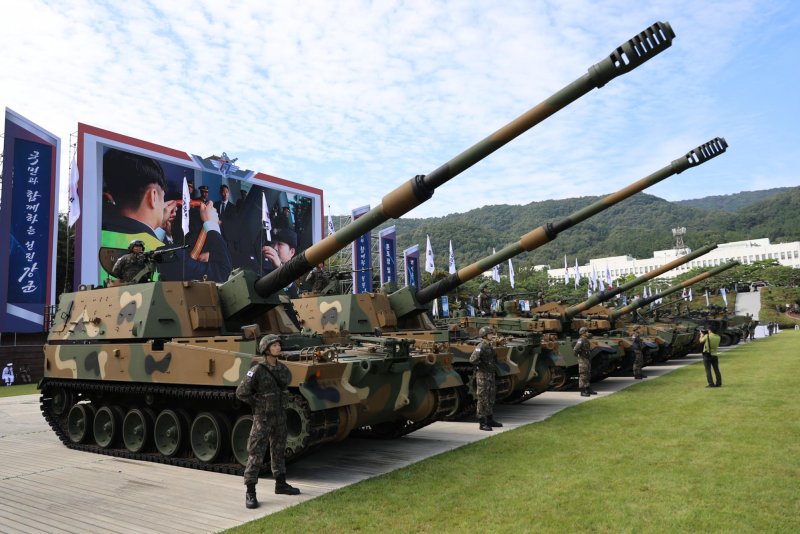
South Korea’s Ministry of Science and ICT announced on December 22, 2023, the selection of its “Top 100 National R&D Achievements” for 2025, showcasing significant advancements in various fields. Among the highlights is a domestically produced 1,000-horsepower engine for the K9 self-propelled howitzer, developed by STX Engine, along with a high-performance vanadium flow battery stack.
Celebrating its 20th anniversary, the program was launched in 2006 to enhance public awareness of national research and development while recognizing the contributions of scientists and engineers. The Ministry received 970 candidate projects from government bodies, which were evaluated by a selection committee of 105 experts from industry, academia, and research institutes. Following a public verification process, the final 100 projects were categorized into six key areas: machinery and materials, life and marine, energy and environment, information and electronics, basic science, and infrastructure and convergence.
The development of the K9 engine is particularly noteworthy as it localizes a system and core components that were previously reliant on foreign imports. This achievement has facilitated export approval processes and supported market expansion, including the K9’s export to Egypt, equipped with engines manufactured in South Korea.
In the realm of life sciences, IM Biologics gained recognition for its innovative treatments targeting autoimmune diseases such as rheumatoid arthritis. The company has successfully transferred related technology to U.S.-based Navigator Medicine and China’s Huadong Pharmaceutical, with these deals valued at approximately 1.7 trillion won (about $1.3 billion).
The energy sector also saw notable advancements, with H2 being acknowledged for developing low-cost, high-power-density stack technology for vanadium flow batteries. This technology is essential for energy storage solutions connected to solar and wind power generation. Notably, it contributed to South Korea’s first export of this technology to Germany.
Recognition and Future Support
Additional projects recognized include the Electronics and Telecommunications Research Institute’s demonstration of 6G wireless transmission technology and research from the Institute for Basic Science focused on real-time observation of molecular ion formation and structural transitions.
Selected projects will receive certificates and plaques presented by Bae Kyung-hoon, Deputy Prime Minister and Minister of Science and ICT. These projects and the institutions behind them may also benefit from evaluation advantages under relevant regulations, and researchers could be recommended for national R&D awards.
Starting in 2024, the ministry plans to introduce follow-up support to enhance technology maturity and commercialization. Each recognized project will be eligible for funding of approximately 1.3 billion won (around $1.0 million) over the next three years.
Park In-gyu, head of the Science and Technology Innovation Headquarters, emphasized that these projects reflect ongoing challenges and innovation from universities, research institutes, and companies. He pledged to expand support in collaboration with other ministries to further drive technological advancement in South Korea.










Revolutionary Photonic Ski-Jump Could Miniaturize LiDAR Systems

Couples Detox from Plastics in New Netflix Doc: Can It Boost Fertility?

Aventon Launches Affordable Full-Suspension Electric Mountain Bike

Discover Eight Must-Try Restaurants This Spring Season

UC Irvine Team Unveils Innovative Ion Pump for Water Treatment

One-Third of Americans Trim Daily Expenses for Healthcare Needs

Apple Secures First Oscar in Three Years with F1: The Movie

Fourth Graders Celebrate St. Patrick’s Day with Creative Weather Drawings

Kim Kardashian Dazzles at Vanity Fair Oscars Party 2026

Nostradamus’ 2026 Predictions: Star Death and Dark Events Loom

Breakthroughs and Challenges Await Science in 2026

Electric Moto Influencer Surronster Arrested in Tijuana

OpenAI to Implement Age Verification for ChatGPT by December 2025

Discover the Top 10 Calorie Counting Apps of 2025

Recovering a Suspended TikTok Account: A Step-by-Step Guide

Bella Hadid Shares Health Update After Treatment for Lyme Disease

Backpack Drives Equip Students with Supplies for New School Year

Analysts Project Stronger Growth for Apple’s iPhone 17 Lineup
-
 Science8 months ago
Nostradamus’ 2026 Predictions: Star Death and Dark Events Loom
-
 Science8 months ago
Breakthroughs and Challenges Await Science in 2026
-
 Technology11 months ago
Electric Moto Influencer Surronster Arrested in Tijuana
-
 Technology9 months ago
OpenAI to Implement Age Verification for ChatGPT by December 2025
-
 Technology1 year ago
Discover the Top 10 Calorie Counting Apps of 2025
-
 Technology1 year ago
Recovering a Suspended TikTok Account: A Step-by-Step Guide
-
 Health11 months ago
Bella Hadid Shares Health Update After Treatment for Lyme Disease
-
 Education1 year ago
Backpack Drives Equip Students with Supplies for New School Year
-
 Health12 months ago
Analysts Project Stronger Growth for Apple’s iPhone 17 Lineup
-

 Health12 months ago
Japanese Study Finds Rose Oil Can Increase Brain Gray Matter
-

 Technology8 months ago
Top 10 Penny Stocks to Watch in 2026 for Strong Returns
-

 Science10 months ago
Starship V3 Set for 2026 Launch After Successful Final Test of Version 2