
Science
Scientists Discover RNA Component on Asteroid, Paving Way for Life Studies

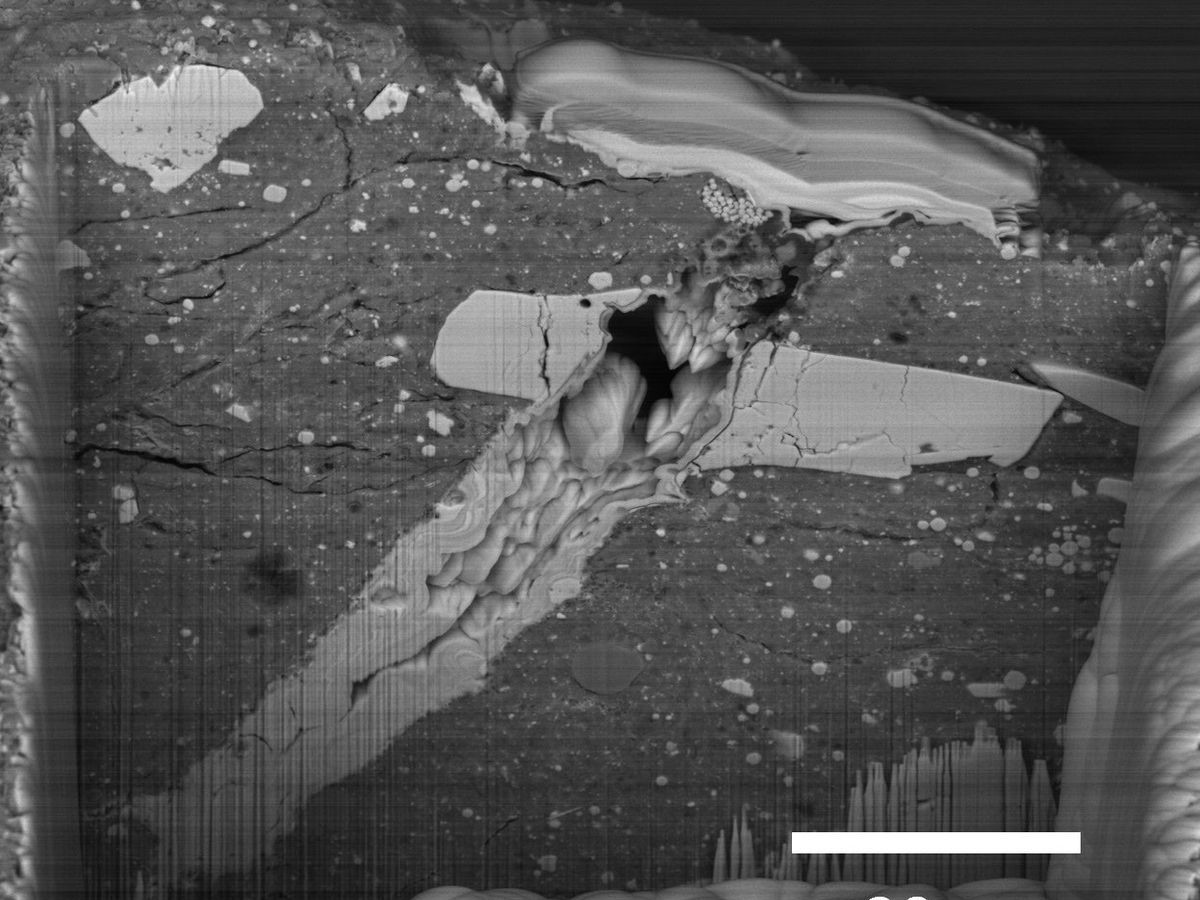
Scientists have made a groundbreaking discovery by identifying a key RNA component on an asteroid for the first time. This significant finding was reported by a team of researchers from NASA and the Japanese Aerospace Exploration Agency (JAXA) after analyzing samples collected from the asteroid Ryugu during the Hayabusa2 mission.
The research, published in the journal Nature, reveals that the RNA component found is a crucial building block for life as we know it. The asteroid Ryugu, estimated to be around 4.6 billion years old, is believed to hold clues about the early solar system and the origins of life on Earth. The samples were returned to Earth in December 2020 and have since been the subject of intense study.
Revolutionary Implications for Astrobiology
The presence of RNA on Ryugu opens new avenues for understanding how life could form in extraterrestrial environments. RNA, which plays a vital role in the coding, decoding, regulation, and expression of genes, is a critical component that could indicate the potential for life-supporting conditions elsewhere in the universe.
Lead researcher Yoshio Watanabe of JAXA expressed excitement about the findings, stating, “The discovery of RNA-related compounds on Ryugu suggests that the building blocks of life may be widespread throughout the cosmos.” This revelation enhances the field of astrobiology, shifting the focus toward the potential for similar compounds existing on other celestial bodies.
The Hayabusa2 mission, which successfully returned samples from Ryugu, has been hailed as a monumental achievement in space exploration. The mission has provided a wealth of data that could reshape our understanding of planetary formation and the chemical precursors to life.
Future Research Directions
Following this discovery, scientists plan to conduct further analyses to explore the conditions under which these RNA components can form. This could entail examining how they interact with other organic molecules found in space. The implications of this research extend beyond astrobiology, potentially influencing fields such as chemistry and molecular biology.
According to NASA, this research is part of a broader effort to investigate the origins of life on Earth and the conditions that foster it. Understanding the composition of asteroids like Ryugu could provide insight into how life could arise in similar environments across the universe.
The findings from this research remind humanity of the vast potential lying beyond our home planet. As space exploration continues to evolve, scientists are optimistic that future missions will yield even more discoveries that deepen our understanding of life’s fundamental components and their distribution in the cosmos.
This groundbreaking discovery of RNA on an asteroid marks a pivotal moment in both astrobiology and planetary science, encouraging future exploration and study of our solar system’s many mysteries.







Revolutionary Photonic Ski-Jump Could Miniaturize LiDAR Systems

Couples Detox from Plastics in New Netflix Doc: Can It Boost Fertility?

Aventon Launches Affordable Full-Suspension Electric Mountain Bike

Discover Eight Must-Try Restaurants This Spring Season

UC Irvine Team Unveils Innovative Ion Pump for Water Treatment

One-Third of Americans Trim Daily Expenses for Healthcare Needs

Apple Secures First Oscar in Three Years with F1: The Movie

Fourth Graders Celebrate St. Patrick’s Day with Creative Weather Drawings

Kim Kardashian Dazzles at Vanity Fair Oscars Party 2026

Nostradamus’ 2026 Predictions: Star Death and Dark Events Loom

Breakthroughs and Challenges Await Science in 2026

Electric Moto Influencer Surronster Arrested in Tijuana

OpenAI to Implement Age Verification for ChatGPT by December 2025

Discover the Top 10 Calorie Counting Apps of 2025

Recovering a Suspended TikTok Account: A Step-by-Step Guide

Bella Hadid Shares Health Update After Treatment for Lyme Disease

Backpack Drives Equip Students with Supplies for New School Year

Analysts Project Stronger Growth for Apple’s iPhone 17 Lineup
-
 Science7 months ago
Nostradamus’ 2026 Predictions: Star Death and Dark Events Loom
-
 Science7 months ago
Breakthroughs and Challenges Await Science in 2026
-
 Technology10 months ago
Electric Moto Influencer Surronster Arrested in Tijuana
-
 Technology8 months ago
OpenAI to Implement Age Verification for ChatGPT by December 2025
-
 Technology1 year ago
Discover the Top 10 Calorie Counting Apps of 2025
-
 Technology1 year ago
Recovering a Suspended TikTok Account: A Step-by-Step Guide
-
 Health10 months ago
Bella Hadid Shares Health Update After Treatment for Lyme Disease
-
 Education12 months ago
Backpack Drives Equip Students with Supplies for New School Year
-
 Health10 months ago
Analysts Project Stronger Growth for Apple’s iPhone 17 Lineup
-

 Technology7 months ago
Top 10 Penny Stocks to Watch in 2026 for Strong Returns
-

 Health11 months ago
Japanese Study Finds Rose Oil Can Increase Brain Gray Matter
-

 Science9 months ago
Starship V3 Set for 2026 Launch After Successful Final Test of Version 2