
Science
Scientists Discover Massive Spider Colony in Sulfur Cave

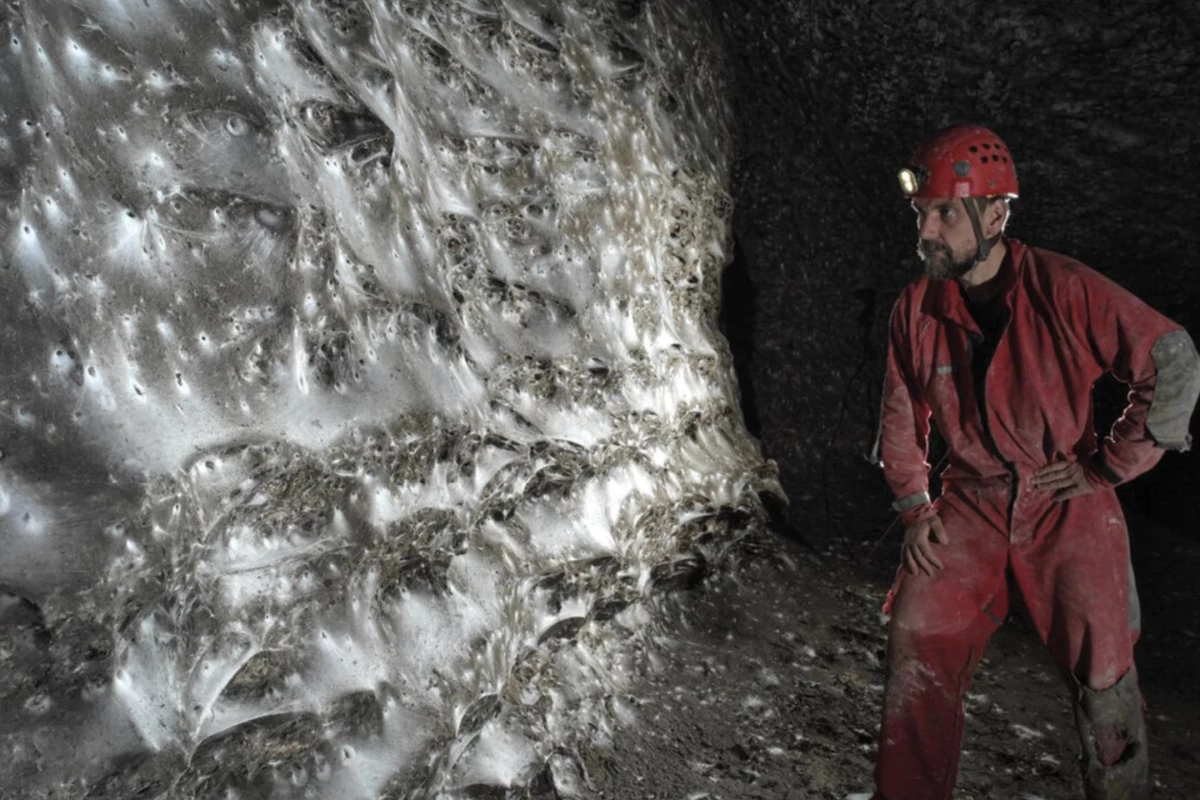
Deep within the Sulfur Cave, located on the border of Albania and Greece, scientists have uncovered a remarkable phenomenon: a giant spider web encompassing more than 100 square meters (over 1,000 sq ft) and hosting approximately 110,000 spiders. This extraordinary discovery was made by a team from the Czech Speleological Society during a wildlife survey conducted in 2022. The web is not just a marvel in size but also in composition, featuring around 69,000 Tegenaria domestica and 42,000 Prinerigone vagans spiders coexisting in an unprecedented communal living arrangement.
The Sulfur Cave is unique due to its chemoautotrophic ecosystem, where life is sustained not by sunlight but through the process of chemosynthesis. In this dark environment, sulfur-oxidizing bacteria thrive on wet rock and sediment, forming thick white biofilms. These microorganisms serve as the base of the food chain, consumed by small invertebrates like midge larvae and isopods, which are then preyed upon by larger insects, including the spiders.
Researchers were surprised to observe that the common house spider, typically a solitary hunter, has adapted to form a multilayered web in this cave, merging its funnel webs into a vast structure draped across the cave walls. The researchers noted the absence of the usual cannibalistic behavior typically exhibited by T. domestica, leading to greater speculation about the factors that allow such a large number of spiders to thrive together.
The ecosystem in the Sulfur Cave provides an abundance of food. Close to the warm stream that runs through the cave, the air is dense with Tanytarsus albisutus midges, with a density of about 45,000 per square meter (approximately 4,180 per sq ft). The spiders benefit from this high food availability, eradicating typical competition for resources.
Further analysis of the spider populations revealed unique genetic traits not found in their above-ground counterparts. There was a notable difference in reproductive behavior; the cave-dwelling T. domestica laid significantly fewer eggs than those in typical environments. Researchers propose that this may be a response to the cave’s low-oxygen conditions and the lack of natural predators, allowing the spiders to maintain a stable population without the need for increased reproduction.
The findings, published in the journal Subterranean Biology, highlight a fascinating case of communal living in an extreme environment. According to the researchers, this discovery sheds light on how species can adapt their behavior and biology in response to their surroundings.
In a broader context, the research reflects on how life can flourish in challenging environments. Similar adaptations have been observed in other organisms, such as microbes residing on cheese, indicating the rapidity with which life can evolve when faced with new conditions.
While Sulfur Cave may not become a popular tourist destination due to its pungent odor and the sheer number of spiders, the insights gained from this study are invaluable to the field of entomology and our understanding of ecological interactions in isolated habitats.













Revolutionary Photonic Ski-Jump Could Miniaturize LiDAR Systems

Couples Detox from Plastics in New Netflix Doc: Can It Boost Fertility?

Aventon Launches Affordable Full-Suspension Electric Mountain Bike

Discover Eight Must-Try Restaurants This Spring Season

UC Irvine Team Unveils Innovative Ion Pump for Water Treatment

One-Third of Americans Trim Daily Expenses for Healthcare Needs

Apple Secures First Oscar in Three Years with F1: The Movie

Fourth Graders Celebrate St. Patrick’s Day with Creative Weather Drawings

Kim Kardashian Dazzles at Vanity Fair Oscars Party 2026

Nostradamus’ 2026 Predictions: Star Death and Dark Events Loom

Breakthroughs and Challenges Await Science in 2026

Electric Moto Influencer Surronster Arrested in Tijuana

OpenAI to Implement Age Verification for ChatGPT by December 2025

Discover the Top 10 Calorie Counting Apps of 2025

Recovering a Suspended TikTok Account: A Step-by-Step Guide

Bella Hadid Shares Health Update After Treatment for Lyme Disease

Backpack Drives Equip Students with Supplies for New School Year

Analysts Project Stronger Growth for Apple’s iPhone 17 Lineup
-
 Science8 months ago
Nostradamus’ 2026 Predictions: Star Death and Dark Events Loom
-
 Science8 months ago
Breakthroughs and Challenges Await Science in 2026
-
 Technology11 months ago
Electric Moto Influencer Surronster Arrested in Tijuana
-
 Technology9 months ago
OpenAI to Implement Age Verification for ChatGPT by December 2025
-
 Technology1 year ago
Discover the Top 10 Calorie Counting Apps of 2025
-
 Technology1 year ago
Recovering a Suspended TikTok Account: A Step-by-Step Guide
-
 Health11 months ago
Bella Hadid Shares Health Update After Treatment for Lyme Disease
-
 Education1 year ago
Backpack Drives Equip Students with Supplies for New School Year
-
 Health11 months ago
Analysts Project Stronger Growth for Apple’s iPhone 17 Lineup
-

 Health12 months ago
Japanese Study Finds Rose Oil Can Increase Brain Gray Matter
-

 Technology8 months ago
Top 10 Penny Stocks to Watch in 2026 for Strong Returns
-

 Science10 months ago
Starship V3 Set for 2026 Launch After Successful Final Test of Version 2