
Science
Copernicus Sentinel-1D Satellite Launches Successfully into Orbit

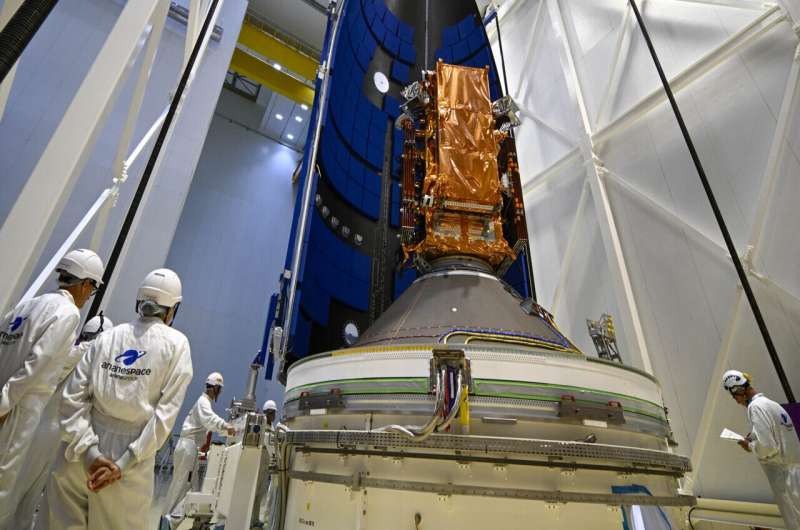
The launch of the Copernicus Sentinel-1D satellite marks a significant milestone for the European Space Agency (ESA). The satellite successfully entered orbit on November 4, 2025, at 22:03 CET (18:03 local time), aboard an Ariane 6 rocket from Europe’s Spaceport in French Guiana. This addition enhances the capabilities of the Sentinel-1 mission, which provides vital radar imagery of Earth’s surface.
The Sentinel-1 mission plays a crucial role in various sectors including disaster response, environmental monitoring, maritime safety, and climate science. It offers high-resolution radar images regardless of weather conditions or time of day, making it an indispensable resource for agencies that rely on timely data updates.
Enhanced Global Coverage and Data Collection
The Sentinel-1D satellite will operate alongside its twin, Sentinel-1C, in the same orbit but positioned 180° apart. This strategic arrangement is designed to optimize global coverage and improve data delivery, ensuring that users receive more frequent updates. Both satellites are equipped with a C-band synthetic aperture radar (SAR) instrument, which captures detailed imagery of the Earth’s surface.
Additionally, the satellites feature Automatic Identification System (AIS) instruments, enhancing their capability to detect and track maritime vessels. Once fully operational, Sentinel-1D will facilitate more frequent AIS observations, providing critical data on vessel identity, location, and direction. This advancement will enable precise tracking of maritime activities, further supporting environmental and safety initiatives.
The launch of Sentinel-1D aboard the Ariane 6 rocket, designated flight VA265, underscores ESA’s commitment to advancing Earth observation technology. The mission not only supports scientific research but also aids in real-time disaster response efforts, making it a vital asset for global monitoring initiatives.
The successful deployment of this satellite reinforces the importance of continuous investment in space technology, particularly in addressing challenges related to climate change and natural disasters. As the Sentinel-1 mission continues to expand, it promises to deliver invaluable insights that will benefit a wide range of stakeholders worldwide.













Revolutionary Photonic Ski-Jump Could Miniaturize LiDAR Systems

Couples Detox from Plastics in New Netflix Doc: Can It Boost Fertility?

Aventon Launches Affordable Full-Suspension Electric Mountain Bike

Discover Eight Must-Try Restaurants This Spring Season

UC Irvine Team Unveils Innovative Ion Pump for Water Treatment

One-Third of Americans Trim Daily Expenses for Healthcare Needs

Apple Secures First Oscar in Three Years with F1: The Movie

Fourth Graders Celebrate St. Patrick’s Day with Creative Weather Drawings

Kim Kardashian Dazzles at Vanity Fair Oscars Party 2026

Nostradamus’ 2026 Predictions: Star Death and Dark Events Loom

Breakthroughs and Challenges Await Science in 2026

Electric Moto Influencer Surronster Arrested in Tijuana

OpenAI to Implement Age Verification for ChatGPT by December 2025

Discover the Top 10 Calorie Counting Apps of 2025

Bella Hadid Shares Health Update After Treatment for Lyme Disease

Analysts Project Stronger Growth for Apple’s iPhone 17 Lineup

Japanese Study Finds Rose Oil Can Increase Brain Gray Matter

Top 10 Penny Stocks to Watch in 2026 for Strong Returns
-
 Science7 months ago
Nostradamus’ 2026 Predictions: Star Death and Dark Events Loom
-
 Science7 months ago
Breakthroughs and Challenges Await Science in 2026
-
 Technology10 months ago
Electric Moto Influencer Surronster Arrested in Tijuana
-
 Technology7 months ago
OpenAI to Implement Age Verification for ChatGPT by December 2025
-
 Technology12 months ago
Discover the Top 10 Calorie Counting Apps of 2025
-
 Health10 months ago
Bella Hadid Shares Health Update After Treatment for Lyme Disease
-
 Health10 months ago
Analysts Project Stronger Growth for Apple’s iPhone 17 Lineup
-
 Health11 months ago
Japanese Study Finds Rose Oil Can Increase Brain Gray Matter
-
 Technology7 months ago
Top 10 Penny Stocks to Watch in 2026 for Strong Returns
-

 Science9 months ago
Starship V3 Set for 2026 Launch After Successful Final Test of Version 2
-

 Technology9 months ago
InMotion Unveils P6 Electric Unicycle with 93 MPH Top Speed
-

 Technology5 months ago
Nvidia GTC 2026: Major Announcements Expected for AI and Hardware