
Science
Researchers Unveil Detailed Milky Way Simulation with AI Breakthrough

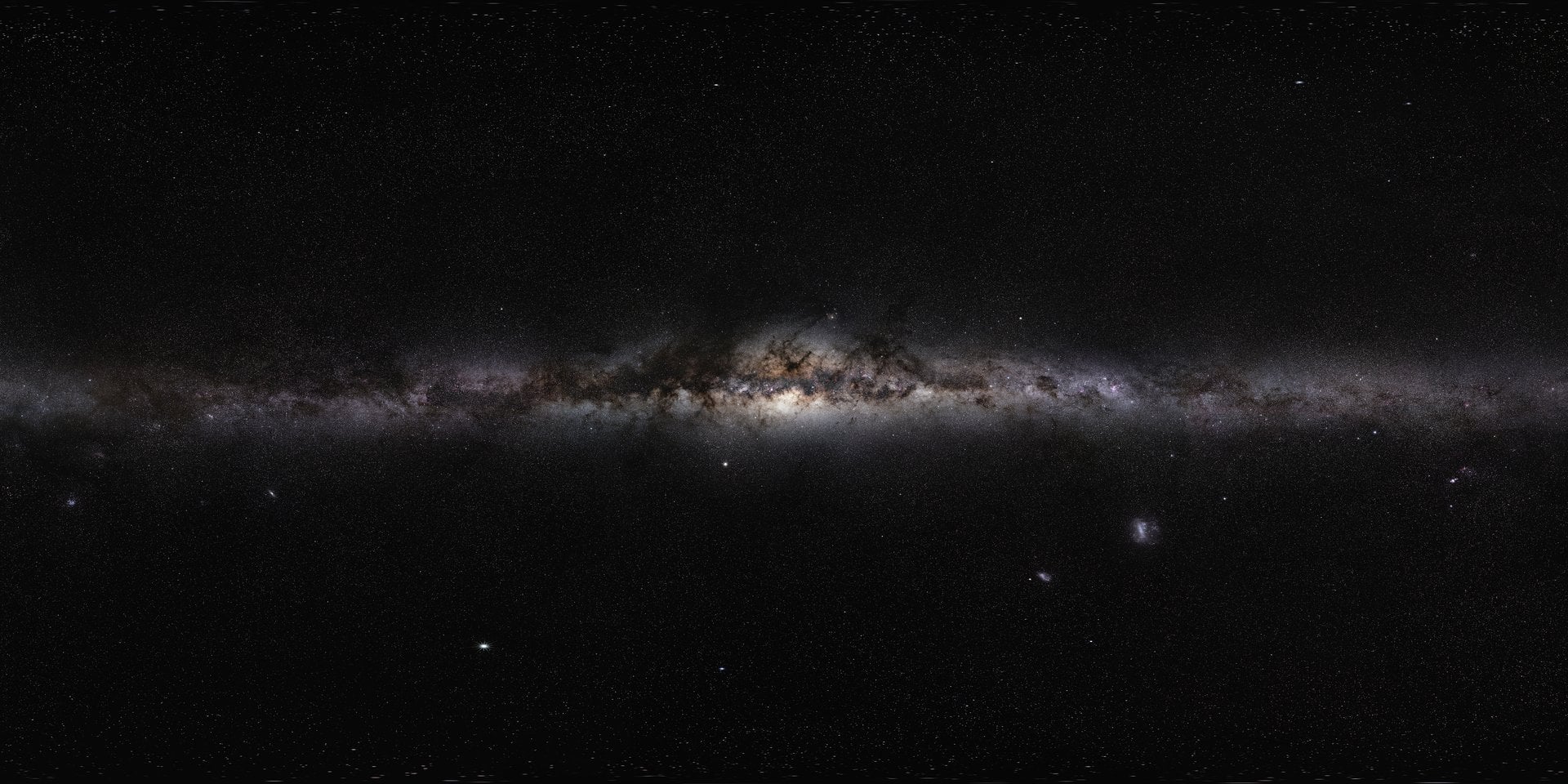
Researchers at the RIKEN Center for Interdisciplinary Theoretical and Mathematical Sciences (iTHEMS) in Japan have achieved a groundbreaking milestone in astrophysics by creating the first hyper-realistic simulation of the Milky Way. Collaborating with colleagues from the University of Tokyo and the Universitat de Barcelona, this initiative represents an unprecedented model that accurately simulates over 100 billion stars over a span of 10,000 years.
This simulation is remarkable not only for its scale but also for its speed. It processes data one hundred times faster than previous models, thanks to the integration of 7 million CPU cores, advanced machine learning algorithms, and sophisticated numerical simulations. The team’s findings were shared in a paper titled “The First Star-by-star N-body/Hydrodynamics Simulation of Our Galaxy Coupling with a Surrogate Model,” published in the *Proceedings of the International Conference for High Performance Computing, Networking, Storage and Analysis* (SC ’25).
Advancements in Astrophysical Simulations
Simulations of this kind are vital for testing theories related to galactic formation, structure, and evolution. They allow astronomers to compare computational models with real astronomical observations. Historically, scientists faced significant challenges in capturing the intricate forces influencing galaxies, including gravity, fluid dynamics, supernovae, and the effects of supermassive black holes (SMBHs). Until now, computational limits restricted simulations to a fraction of the Milky Way’s stellar content, with a mass limit of around one billion solar masses—less than 1% of its total stars.
To illustrate the limitations, state-of-the-art supercomputers would require approximately 315 hours (over 13 days) to simulate just 1 million years of galactic evolution, which is a mere 0.00007% of the Milky Way’s age of 13.61 billion years. This constraint meant that only significant events could be accurately modeled, and merely increasing the number of supercomputer cores did not effectively solve the problem due to issues of energy consumption and efficiency.
AI Surrogate Model Revolutionizes Efficiency
To overcome these barriers, Hirashima and his team implemented an innovative machine learning surrogate model. This AI-driven approach, trained on detailed simulations of supernovae, allows the model to predict the impact of these explosive events on surrounding gas and dust up to 100,000 years post-explosion. By merging this predictive capability with physical simulations, the researchers could effectively analyze both the large-scale dynamics of a Milky Way-sized galaxy and the small-scale phenomena of individual stars simultaneously.
Verification of the simulation’s performance was conducted on the Fugaku and Miyabi Supercomputer Systems, demonstrating the method’s capability to resolve individual stars within galaxies of over 100 billion stars. Remarkably, the simulation can now model 1 million years of galactic evolution in just 2.78 hours. This efficiency means that simulating 1 billion years of history could be accomplished in approximately 115 days.
These advancements not only enhance our understanding of galactic evolution but also showcase the potential for AI models to improve complex simulations across various fields. The methodology could find applications beyond astrophysics, including in meteorology, ocean dynamics, and climate science.
The research represents a significant leap forward, providing astronomers with a powerful tool to investigate the mysteries of the universe and further refine our understanding of how galaxies evolve over time.






Revolutionary Photonic Ski-Jump Could Miniaturize LiDAR Systems

Couples Detox from Plastics in New Netflix Doc: Can It Boost Fertility?

Aventon Launches Affordable Full-Suspension Electric Mountain Bike

Discover Eight Must-Try Restaurants This Spring Season

UC Irvine Team Unveils Innovative Ion Pump for Water Treatment

One-Third of Americans Trim Daily Expenses for Healthcare Needs

Apple Secures First Oscar in Three Years with F1: The Movie

Fourth Graders Celebrate St. Patrick’s Day with Creative Weather Drawings

Kim Kardashian Dazzles at Vanity Fair Oscars Party 2026

Nostradamus’ 2026 Predictions: Star Death and Dark Events Loom

Breakthroughs and Challenges Await Science in 2026

OpenAI to Implement Age Verification for ChatGPT by December 2025

Electric Moto Influencer Surronster Arrested in Tijuana

Discover the Top 10 Calorie Counting Apps of 2025

Bella Hadid Shares Health Update After Treatment for Lyme Disease

Analysts Project Stronger Growth for Apple’s iPhone 17 Lineup

Top 10 Penny Stocks to Watch in 2026 for Strong Returns

Japanese Study Finds Rose Oil Can Increase Brain Gray Matter
-
 Science3 months ago
Nostradamus’ 2026 Predictions: Star Death and Dark Events Loom
-
 Science3 months ago
Breakthroughs and Challenges Await Science in 2026
-
 Technology4 months ago
OpenAI to Implement Age Verification for ChatGPT by December 2025
-
 Technology6 months ago
Electric Moto Influencer Surronster Arrested in Tijuana
-
 Technology8 months ago
Discover the Top 10 Calorie Counting Apps of 2025
-
 Health6 months ago
Bella Hadid Shares Health Update After Treatment for Lyme Disease
-
 Health7 months ago
Analysts Project Stronger Growth for Apple’s iPhone 17 Lineup
-
 Technology3 months ago
Top 10 Penny Stocks to Watch in 2026 for Strong Returns
-
 Health7 months ago
Japanese Study Finds Rose Oil Can Increase Brain Gray Matter
-

 Science5 months ago
Starship V3 Set for 2026 Launch After Successful Final Test of Version 2
-

 Technology4 weeks ago
Nvidia GTC 2026: Major Announcements Expected for AI and Hardware
-

 Education7 months ago
Harvard Secures Court Victory Over Federal Funding Cuts