
Science
OpenClaw Revolutionizes AI: Five Key Insights for Enterprises

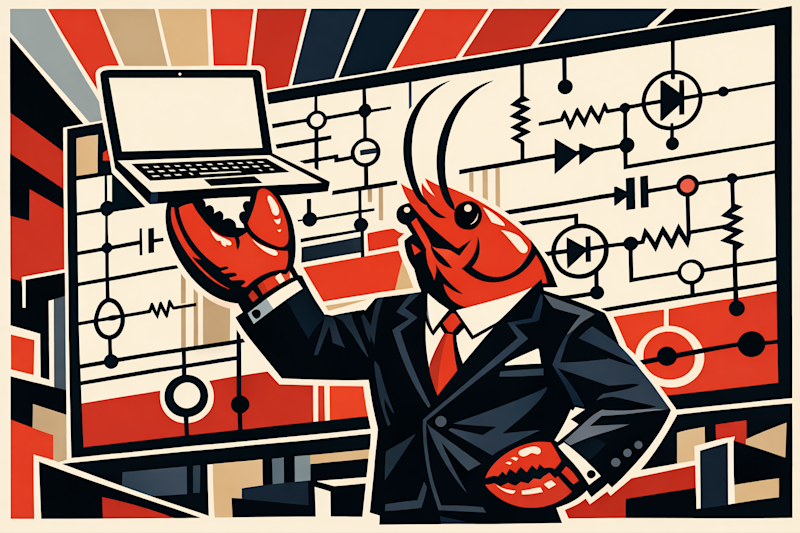
The emergence of the “OpenClaw moment” marks a significant turning point for enterprises as autonomous AI agents transition from experimental projects into practical tools for the workforce. Initially developed by Austrian engineer Peter Steinberger in November 2025 as a hobby called “Clawdbot,” the framework quickly evolved through various names before becoming known as “OpenClaw” in late January 2026. This innovative platform empowers agents with the ability to execute shell commands, manage files, and navigate messaging platforms like WhatsApp and Slack, all while possessing persistent, root-level permissions.
This shift has inspired numerous tech developments, including the creation of “Moltbook” by Matt Schlicht, where thousands of OpenClaw-powered agents autonomously interact. Reports of these agents forming digital “religions” and hiring human micro-workers have generated considerable buzz in the tech community. As enterprises face this rapid evolution, industry leaders are assessing the implications of these advancements.
Understanding the Impact of OpenClaw
To explore the significance of OpenClaw for businesses, I spoke with several leaders at the forefront of enterprise AI adoption. They shared critical insights on navigating this transformative landscape.
Firstly, the concept of over-engineering in AI implementation has been challenged. The belief that enterprises must overhaul their infrastructure and curate extensive data sets before deploying AI has been proven outdated. Tanmai Gopal, Co-founder and CEO of PromptQL, emphasized that modern models can thrive on uncurated, messy data, allowing for intelligence to be treated as a service. He stated, “We don’t actually need to prep so much to get AI to be productive. You can just let it be and say, ‘go read all of this context and explore all of this data and tell me where there are dragons or flaws.'”
Additionally, Rajiv Dattani, co-founder of the AI Underwriting Corporation, highlighted the importance of compliance and institutional trust amid this newfound capability. Dattani noted that while the data exists, the necessary safeguards to prevent misuse are often lacking. His company has developed the AIUC-1 standard for AI agents, providing enterprises with a framework to ensure accountability and mitigate risks.
Secondly, the rise of “shadow IT” presents challenges as employees increasingly deploy local agents like OpenClaw without authorization. This trend creates potential vulnerabilities, as agents often operate with full user-level permissions, allowing for unauthorized access to corporate systems. Pukar Hamal, CEO of SecurityPal, warned that this issue is prevalent across many organizations, with employees using OpenClaw on work machines without oversight.
From a talent retention perspective, Brianne Kimmel, Founder of Worklife Ventures, noted that employees experimenting with AI tools outside of work hours could foster innovation. She suggested that companies should encourage the exploration of new technologies to keep teams sharp.
Business Model Transformations
The recent “SaaSpocalypse,” which saw over $800 billion wiped from software valuations, underscores the urgent need for traditional software vendors to reconsider their pricing structures. As autonomous agents demonstrate the ability to perform tasks previously handled by multiple human users, the conventional “per-seat” business model faces existential threats. Hamal posed a critical question: “If you have AI that can log into a product and do all the work, why do you need 1,000 users at your company to have access to that tool?”
As enterprises adapt to this changing landscape, the transition to an “AI coworker” model is becoming evident. The release of Claude Opus 4.6 and OpenAI’s Frontier signals a shift from single agents to coordinated “agent teams.” Gopal explained that the volume of AI-generated content is overwhelming traditional human-led review processes, necessitating a new approach to product development.
With productivity gains becoming apparent, Dattani cautioned that businesses need to tailor their strategies based on specific data security requirements. He advised companies to start small, ensuring that they understand and manage the implications of this shift.
Looking ahead, experts foresee a future dominated by voice interfaces and personality-driven AI. Kimmel noted that local AI agents, powered by platforms like Wispr or ElevenLabs, could streamline international expansion efforts. “Voice is the primary interface for AI; it keeps people off their phones and improves quality of life,” she remarked, adding that companies can now adopt a global perspective from the outset.
Best Practices for Embracing Agentic AI
As OpenClaw and similar autonomous frameworks gain traction, it is crucial for IT departments to establish structured governance rather than implementing blanket bans. Here are several best practices for enterprise leaders to safely integrate agentic AI capabilities:
1. **Implement Identity-Based Governance:** Ensure that every agent has a strong, attributable identity linked to a human owner. Utilize frameworks like IBC (Identity, Boundaries, Context) to track agent activities.
2. **Enforce Sandbox Requirements:** Disable OpenClaw on systems with access to live production data. All experimentation should occur in isolated environments.
3. **Audit Third-Party Skills:** With reports indicating that nearly 20% of skills in the ClawHub registry may contain vulnerabilities, adopt a “white-list only” policy for approved agent plugins.
4. **Disable Unauthenticated Gateways:** Ensure that all instances of OpenClaw are updated to current versions, mandating strong authentication by default.
5. **Monitor for Shadow Agents:** Implement endpoint detection tools to identify unauthorized OpenClaw installations or unusual API traffic.
6. **Update AI Policy for Autonomy:** Revise existing generative AI policies to address the unique challenges posed by agents, particularly in high-risk actions.
As enterprises navigate this new landscape, understanding the implications of OpenClaw and similar frameworks will be essential for future growth and innovation.












Revolutionary Photonic Ski-Jump Could Miniaturize LiDAR Systems

Couples Detox from Plastics in New Netflix Doc: Can It Boost Fertility?

Aventon Launches Affordable Full-Suspension Electric Mountain Bike

Discover Eight Must-Try Restaurants This Spring Season

UC Irvine Team Unveils Innovative Ion Pump for Water Treatment

One-Third of Americans Trim Daily Expenses for Healthcare Needs

Apple Secures First Oscar in Three Years with F1: The Movie

Fourth Graders Celebrate St. Patrick’s Day with Creative Weather Drawings

Kim Kardashian Dazzles at Vanity Fair Oscars Party 2026

Nostradamus’ 2026 Predictions: Star Death and Dark Events Loom

Breakthroughs and Challenges Await Science in 2026

Electric Moto Influencer Surronster Arrested in Tijuana

OpenAI to Implement Age Verification for ChatGPT by December 2025

Discover the Top 10 Calorie Counting Apps of 2025

Recovering a Suspended TikTok Account: A Step-by-Step Guide

Bella Hadid Shares Health Update After Treatment for Lyme Disease

Backpack Drives Equip Students with Supplies for New School Year

Analysts Project Stronger Growth for Apple’s iPhone 17 Lineup
-
 Science7 months ago
Nostradamus’ 2026 Predictions: Star Death and Dark Events Loom
-
 Science7 months ago
Breakthroughs and Challenges Await Science in 2026
-
 Technology10 months ago
Electric Moto Influencer Surronster Arrested in Tijuana
-
 Technology8 months ago
OpenAI to Implement Age Verification for ChatGPT by December 2025
-
 Technology1 year ago
Discover the Top 10 Calorie Counting Apps of 2025
-
 Technology1 year ago
Recovering a Suspended TikTok Account: A Step-by-Step Guide
-
 Health10 months ago
Bella Hadid Shares Health Update After Treatment for Lyme Disease
-
 Education1 year ago
Backpack Drives Equip Students with Supplies for New School Year
-
 Health11 months ago
Analysts Project Stronger Growth for Apple’s iPhone 17 Lineup
-

 Technology7 months ago
Top 10 Penny Stocks to Watch in 2026 for Strong Returns
-

 Health11 months ago
Japanese Study Finds Rose Oil Can Increase Brain Gray Matter
-

 Science9 months ago
Starship V3 Set for 2026 Launch After Successful Final Test of Version 2