
Science
NUS Researchers Innovate Sustainable Nitrogen Insertion Method


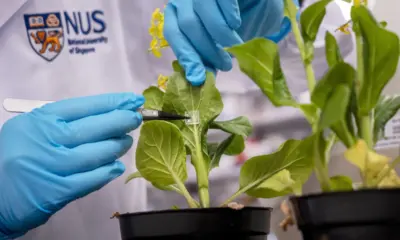
Researchers at the National University of Singapore (NUS) have unveiled a groundbreaking electrochemical reaction system that facilitates the efficient insertion of nitrogen atoms into saturated carbocycles. This innovative method paves the way for the synthesis of functionalized quinolines and N-alkylated saturated nitrogen heterocycles, both of which are vital frameworks in synthetic chemistry and pharmaceutical applications.
The research team has developed a manifold that optimizes the electrochemical process, enabling more sustainable practices in chemical synthesis. Traditional methods of nitrogen insertion often rely on hazardous reagents and high energy inputs, making this new approach significantly more environmentally friendly. By using electricity to drive the reaction, the NUS team has reduced the reliance on toxic materials typically involved in the synthesis of nitrogen-containing compounds.
Emerging details reveal that this novel reaction not only enhances the efficiency of nitrogen insertion but also expands the versatility of the resulting compounds. Quinolines, for instance, are essential in the development of various pharmaceuticals, including treatments for malaria and other diseases. The ability to functionalize these compounds opens new avenues for medicinal chemistry.
The significance of this advancement is underscored by its potential applications. The method could contribute to more efficient drug development processes, aligning with the growing demand for sustainable practices in the pharmaceutical industry. The ability to produce complex nitrogen-containing structures in a more environmentally conscious manner could facilitate breakthroughs in the development of new therapies.
This work represents a significant step forward in the field of synthetic chemistry, highlighting the importance of integrating sustainability into chemical processes. The findings from this research are expected to spur further studies and innovations aimed at improving the efficiency and safety of chemical synthesis on a global scale.
The research was published in a reputable scientific journal, emphasizing the credibility and impact of the findings. As the world increasingly prioritizes sustainability, the implications of this research resonate across various sectors, particularly in healthcare and pharmaceuticals. The NUS team’s dedication to advancing eco-friendly methodologies in chemistry reflects a broader trend towards responsible scientific practices.
In conclusion, the development of this electrochemical reaction manifold for nitrogen insertion marks a pivotal moment in synthetic chemistry, with far-reaching implications for the pharmaceutical industry and beyond. The NUS researchers have not only contributed to scientific knowledge but also set a benchmark for future innovations that prioritize environmental sustainability.








Revolutionary Photonic Ski-Jump Could Miniaturize LiDAR Systems

Couples Detox from Plastics in New Netflix Doc: Can It Boost Fertility?

Aventon Launches Affordable Full-Suspension Electric Mountain Bike

Discover Eight Must-Try Restaurants This Spring Season

UC Irvine Team Unveils Innovative Ion Pump for Water Treatment

One-Third of Americans Trim Daily Expenses for Healthcare Needs

Apple Secures First Oscar in Three Years with F1: The Movie

Fourth Graders Celebrate St. Patrick’s Day with Creative Weather Drawings

Kim Kardashian Dazzles at Vanity Fair Oscars Party 2026

Nostradamus’ 2026 Predictions: Star Death and Dark Events Loom

Breakthroughs and Challenges Await Science in 2026

Electric Moto Influencer Surronster Arrested in Tijuana

OpenAI to Implement Age Verification for ChatGPT by December 2025

Discover the Top 10 Calorie Counting Apps of 2025

Recovering a Suspended TikTok Account: A Step-by-Step Guide

Bella Hadid Shares Health Update After Treatment for Lyme Disease

Backpack Drives Equip Students with Supplies for New School Year

Analysts Project Stronger Growth for Apple’s iPhone 17 Lineup
-
 Science7 months ago
Nostradamus’ 2026 Predictions: Star Death and Dark Events Loom
-
 Science7 months ago
Breakthroughs and Challenges Await Science in 2026
-
 Technology11 months ago
Electric Moto Influencer Surronster Arrested in Tijuana
-
 Technology8 months ago
OpenAI to Implement Age Verification for ChatGPT by December 2025
-
 Technology1 year ago
Discover the Top 10 Calorie Counting Apps of 2025
-
 Technology1 year ago
Recovering a Suspended TikTok Account: A Step-by-Step Guide
-
 Health11 months ago
Bella Hadid Shares Health Update After Treatment for Lyme Disease
-
 Education1 year ago
Backpack Drives Equip Students with Supplies for New School Year
-
 Health11 months ago
Analysts Project Stronger Growth for Apple’s iPhone 17 Lineup
-

 Technology7 months ago
Top 10 Penny Stocks to Watch in 2026 for Strong Returns
-

 Health11 months ago
Japanese Study Finds Rose Oil Can Increase Brain Gray Matter
-

 Science10 months ago
Starship V3 Set for 2026 Launch After Successful Final Test of Version 2