
Science
New Single-Spin Qubits Pave the Way for Advanced Quantum Processors

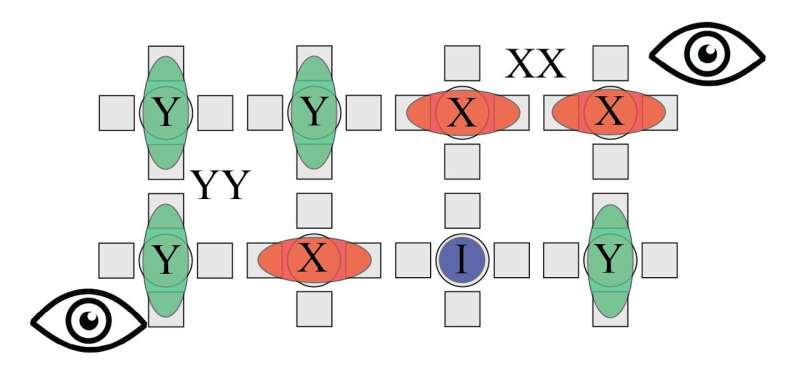
Researchers from QuTech and Delft University of Technology have developed a groundbreaking type of qubit that could enhance the scalability of quantum processors. This innovation, detailed in a paper published in Physical Review Letters on November 20, 2025, focuses on individual hole spins confined in semiconductor nanostructures, allowing for manipulation using baseband electrical signals.
Quantum computing harnesses the principles of quantum mechanics, enabling the resolution of complex computational tasks beyond the reach of classical computers. Unlike classical bits, which exist in binary states, qubits can occupy multiple states simultaneously, thanks to their capability to exist in superpositions. Traditional quantum processors often rely on semiconductor quantum dots, which can trap individual charge carriers, but the manipulation of these qubits using high-frequency electrical signals has posed significant challenges.
One of the main issues with high-frequency signals is that they can introduce interference effects, known as crosstalk, resulting in unintended interactions between nearby qubits. This complication, along with the heat generated during operations, complicates the scaling process of quantum processors.
To address these challenges, the team led by Maximilian Rimbach-Russ has designed a new qubit, termed GS2, that simplifies operations significantly. Rimbach-Russ explains, “The goal of our study was to make quantum computing hardware simpler and more practical from an engineering point of view.” The GS2 qubit eliminates the need for fast, synchronized control signals typically required to manage the energy differences between qubit states. Instead, it maintains stability by keeping its two states nearly identical in energy, effectively “freezing” the motion of the qubit until an operation is initiated.
This breakthrough means that operations can be executed simply through short electrical pulses, without the need for complex microwave signals or precise timing mechanisms. According to Rimbach-Russ, “Simple and short electric pulses are sufficient to universally control a quantum processor made of such qubits.” This advancement significantly accelerates the operational speed of quantum processors and provides an ideal foundation for scaling.
Importantly, the GS2 qubits are based on semiconductors, which means they can be fabricated using existing electronics manufacturing processes. As the team progresses towards developing a full-scale quantum processor utilizing this new architecture, Rimbach-Russ acknowledges the ongoing challenges, particularly concerning the variability inherent in semiconductor materials.
“My team and I are constantly developing and improving designs and operational techniques, while our colleagues enhance the material and device quality,” he notes. Although the qubits have yet to be experimentally demonstrated, their potential for revolutionizing quantum computing is substantial.
The work of Rimbach-Russ and his colleagues marks a significant step in making quantum computing technology more accessible and practical, paving the way for advancements that could redefine computational capabilities in the future. As they continue their research, the implications of this work could have far-reaching effects on fields reliant on complex computations, from cryptography to materials science.






Revolutionary Photonic Ski-Jump Could Miniaturize LiDAR Systems

Couples Detox from Plastics in New Netflix Doc: Can It Boost Fertility?

Aventon Launches Affordable Full-Suspension Electric Mountain Bike

Discover Eight Must-Try Restaurants This Spring Season

UC Irvine Team Unveils Innovative Ion Pump for Water Treatment

One-Third of Americans Trim Daily Expenses for Healthcare Needs

Apple Secures First Oscar in Three Years with F1: The Movie

Fourth Graders Celebrate St. Patrick’s Day with Creative Weather Drawings

Kim Kardashian Dazzles at Vanity Fair Oscars Party 2026

Nostradamus’ 2026 Predictions: Star Death and Dark Events Loom

Breakthroughs and Challenges Await Science in 2026

Electric Moto Influencer Surronster Arrested in Tijuana

OpenAI to Implement Age Verification for ChatGPT by December 2025

Discover the Top 10 Calorie Counting Apps of 2025

Recovering a Suspended TikTok Account: A Step-by-Step Guide

Bella Hadid Shares Health Update After Treatment for Lyme Disease

Backpack Drives Equip Students with Supplies for New School Year

Analysts Project Stronger Growth for Apple’s iPhone 17 Lineup
-
 Science8 months ago
Nostradamus’ 2026 Predictions: Star Death and Dark Events Loom
-
 Science8 months ago
Breakthroughs and Challenges Await Science in 2026
-
 Technology11 months ago
Electric Moto Influencer Surronster Arrested in Tijuana
-
 Technology9 months ago
OpenAI to Implement Age Verification for ChatGPT by December 2025
-
 Technology1 year ago
Discover the Top 10 Calorie Counting Apps of 2025
-
 Technology1 year ago
Recovering a Suspended TikTok Account: A Step-by-Step Guide
-
 Health11 months ago
Bella Hadid Shares Health Update After Treatment for Lyme Disease
-
 Education1 year ago
Backpack Drives Equip Students with Supplies for New School Year
-
 Health12 months ago
Analysts Project Stronger Growth for Apple’s iPhone 17 Lineup
-

 Health12 months ago
Japanese Study Finds Rose Oil Can Increase Brain Gray Matter
-

 Technology8 months ago
Top 10 Penny Stocks to Watch in 2026 for Strong Returns
-

 Science10 months ago
Starship V3 Set for 2026 Launch After Successful Final Test of Version 2