
Science
NASA’s Perseverance Rover Uncovers Promising Signs of Life on Mars

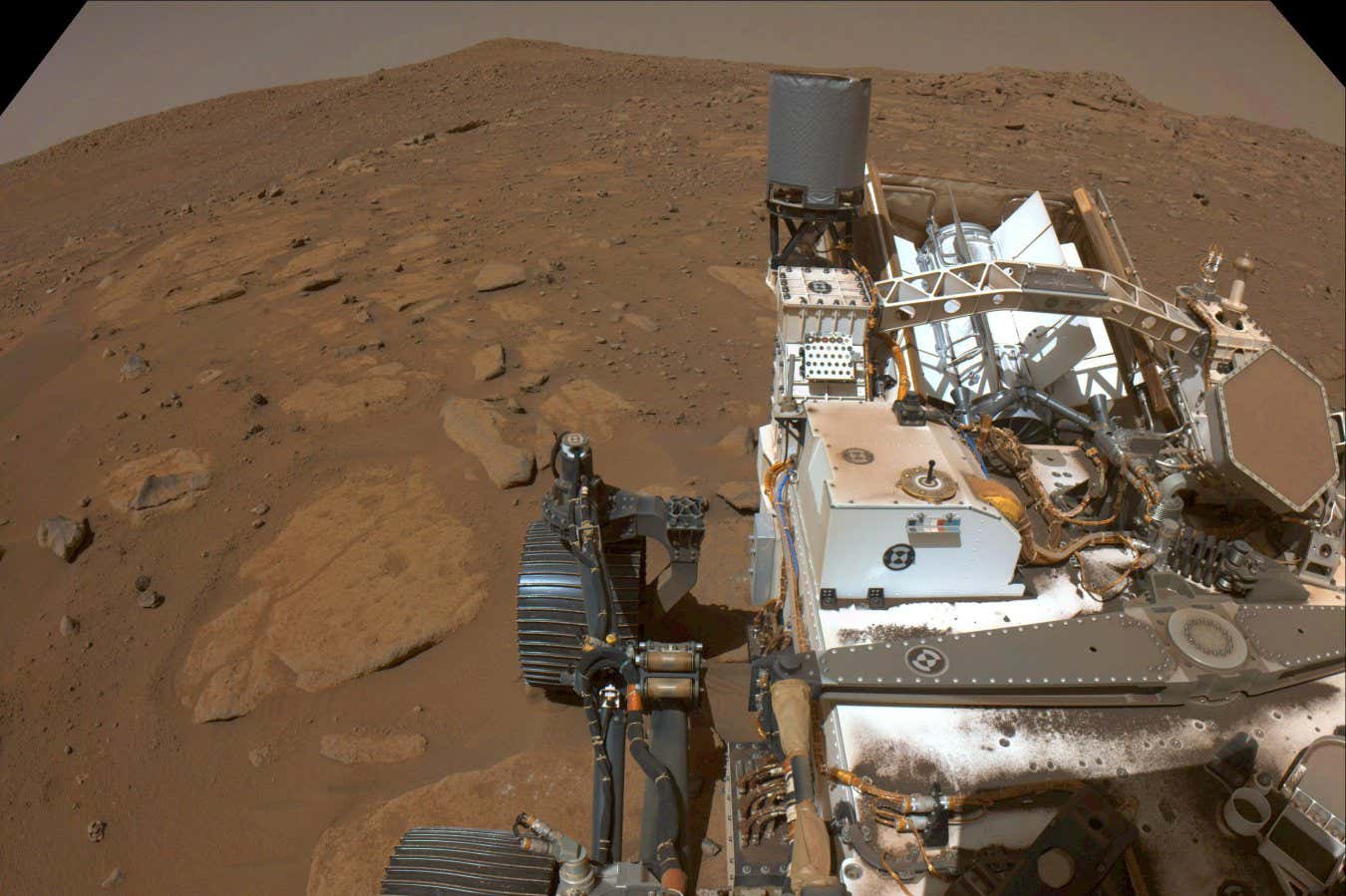
NASA’s Perseverance rover has revealed potential signs of past microbial life on Mars, igniting excitement in the scientific community. In 2025, detailed analyses of Martian rock samples indicated the presence of distinctive features, known as “leopard spots,” which may suggest that life existed on the planet millions of years ago.
The Perseverance rover, which began its mission to collect and cache Martian rock and regolith, discovered these intriguing splotches on the surface of Mars. Each spot measures just a few millimeters across and is surrounded by a dark ring of material. Researchers have noted that these formations resemble features found on Earth associated with fossilized microbes. According to Joel Hurowitz from Stony Brook University, further analysis revealed forms of iron and sulfur indicative of chemical processes linked to microbial activity.
Hanna Sizemore from the Planetary Science Institute expressed her enthusiasm for these findings, stating, “I find it much more promising [an indication of life] than anything I’ve seen in the last 20 years.” Previous evidence hinting at life on Mars included methane level fluctuations and fossil-like structures within Martian meteorites. Sizemore believes the leopard spots are particularly significant, as they are the right size to potentially be caused by microbial life.
In addition to the leopard spots, Perseverance has uncovered tiny greenish nodules of minerals. These nodules, too, are typically associated with microbial life on Earth. Andrew Steele from Carnegie Science emphasized that signs of life on Mars will likely be subtle, necessitating advanced scientific instruments for detection. “It was always obvious that life there isn’t obvious,” he noted, underscoring the challenges of identifying potential biosignatures.
While the rover is equipped with sophisticated instruments to analyze these samples, definitive proof of past life on Mars will require returning the samples to Earth for in-depth laboratory examination. The mission plan included caching these samples for a future mission to retrieve them. Steele remarked, “These samples represent the best chance that we have of a next step in the analysis of whether there is [or has been] life on Mars – we just have to bring them back.”
Unfortunately, the future of the Mars Sample Return project is uncertain. The proposed NASA budget for 2026 by the Trump administration includes plans for its cancellation. If this budget is approved, there could be no future mission to collect the carefully gathered samples from Perseverance. As Sizemore pointed out, “We keep making so much progress, but our big picture of Martian habitability keeps not moving. We’re right on the edge – we cannot dismiss it and we cannot prove it.”
The discoveries made by the Perseverance rover represent a pivotal moment in the quest for understanding life beyond Earth. As scientists continue to analyze data from Mars, the possibility of confirming past microbial life remains tantalizing but elusive. The ongoing exploration of Mars underscores the importance of continued investment in space research and the potential for groundbreaking discoveries in the years to come.






Revolutionary Photonic Ski-Jump Could Miniaturize LiDAR Systems

Couples Detox from Plastics in New Netflix Doc: Can It Boost Fertility?

Aventon Launches Affordable Full-Suspension Electric Mountain Bike

Discover Eight Must-Try Restaurants This Spring Season

UC Irvine Team Unveils Innovative Ion Pump for Water Treatment

One-Third of Americans Trim Daily Expenses for Healthcare Needs

Apple Secures First Oscar in Three Years with F1: The Movie

Fourth Graders Celebrate St. Patrick’s Day with Creative Weather Drawings

Kim Kardashian Dazzles at Vanity Fair Oscars Party 2026

Nostradamus’ 2026 Predictions: Star Death and Dark Events Loom

Breakthroughs and Challenges Await Science in 2026

Electric Moto Influencer Surronster Arrested in Tijuana

OpenAI to Implement Age Verification for ChatGPT by December 2025

Discover the Top 10 Calorie Counting Apps of 2025

Recovering a Suspended TikTok Account: A Step-by-Step Guide

Bella Hadid Shares Health Update After Treatment for Lyme Disease

Backpack Drives Equip Students with Supplies for New School Year

Analysts Project Stronger Growth for Apple’s iPhone 17 Lineup
-
 Science8 months ago
Nostradamus’ 2026 Predictions: Star Death and Dark Events Loom
-
 Science8 months ago
Breakthroughs and Challenges Await Science in 2026
-
 Technology11 months ago
Electric Moto Influencer Surronster Arrested in Tijuana
-
 Technology9 months ago
OpenAI to Implement Age Verification for ChatGPT by December 2025
-
 Technology1 year ago
Discover the Top 10 Calorie Counting Apps of 2025
-
 Technology1 year ago
Recovering a Suspended TikTok Account: A Step-by-Step Guide
-
 Health11 months ago
Bella Hadid Shares Health Update After Treatment for Lyme Disease
-
 Education1 year ago
Backpack Drives Equip Students with Supplies for New School Year
-
 Health11 months ago
Analysts Project Stronger Growth for Apple’s iPhone 17 Lineup
-

 Health12 months ago
Japanese Study Finds Rose Oil Can Increase Brain Gray Matter
-

 Technology8 months ago
Top 10 Penny Stocks to Watch in 2026 for Strong Returns
-

 Science10 months ago
Starship V3 Set for 2026 Launch After Successful Final Test of Version 2