
Science
NASA’s OSIRIS-REx Reveals Prebiotic Compounds in Asteroid Bennu

NASA’s OSIRIS-REx mission has made significant strides in understanding the origins of life by analyzing samples from the asteroid Bennu. The mission successfully returned pristine samples of Bennu’s regolith to Earth, allowing scientists to study this ancient, carbon-rich material in detail.
Recent findings indicate that the samples contain a variety of prebiotic organic compounds, shedding light on the conditions present in the early Solar System. These analyses reveal critical insights into the abiotic formation of organic materials that may have played a role in the emergence of life on Earth.
Exploring Organic Compounds
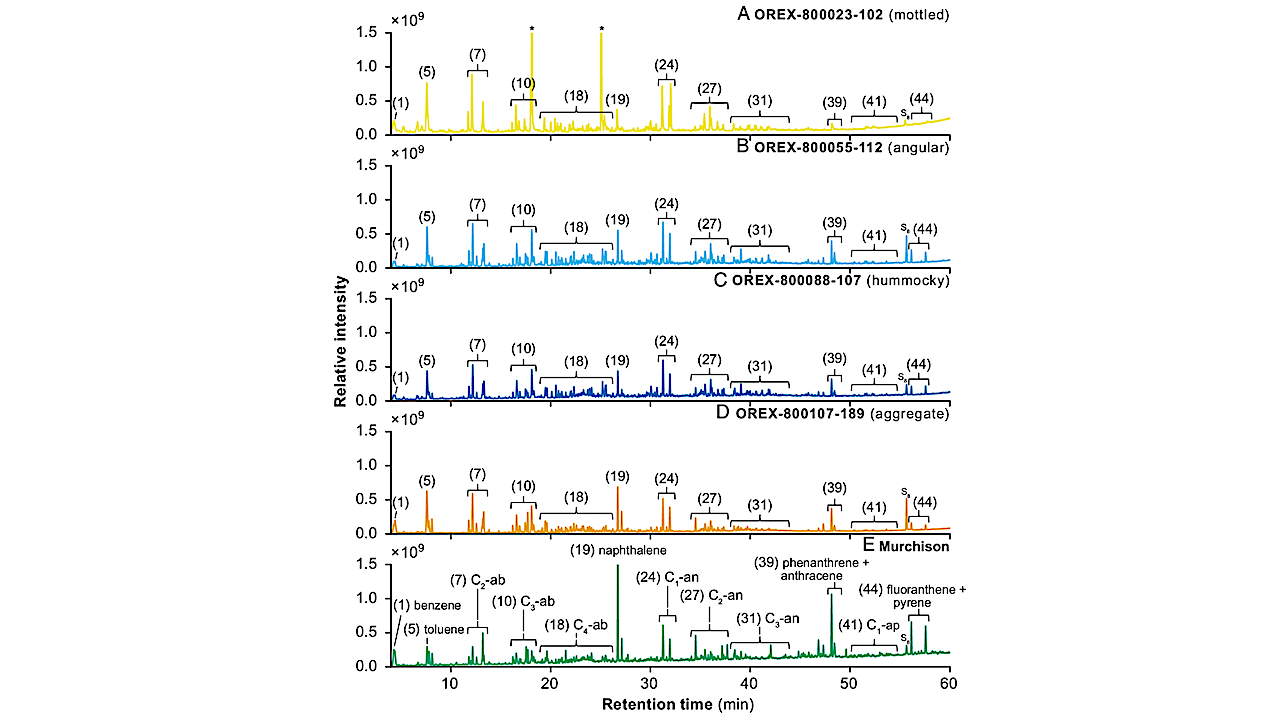
Using advanced pyrolysis and wet-chemistry techniques, researchers examined both aggregate material and three distinct stones from the asteroid, which likely correspond to different boulder types observed by the OSIRIS-REx spacecraft. The results from the aggregate analysis aligned with previous studies, which identified five canonical nucleobases alongside 14 of the 20 α-amino acids necessary for protein synthesis in living organisms.
Notably, the analysis also indicated the tentative presence of tryptophan, a fifteenth α-amino acid not previously detected in extraterrestrial samples. This discovery suggests a more complex organic inventory on Bennu than previously understood, highlighting the asteroid’s potential to contribute to our knowledge of life’s building blocks.
Further investigation showed differences in the distribution of soluble and insoluble organics among the various stone types. This variability points to heterogeneous geological processing within Bennu’s parent body, suggesting that the conditions that formed these compounds were not uniform across the asteroid.
Implications for the Origins of Life
The distributions of alkylated polycyclic aromatic hydrocarbons found in the samples resemble those in aqueously altered carbonaceous chondrites. This consistency supports the theory that these compounds originated through abiotic processes involving aqueous reactions.
These findings expand the understanding of how prebiotic organic molecules could form within primitive planetary bodies. Such compounds may have been delivered to Earth and other bodies in the Solar System through impacts, potentially playing a crucial role in the origins of life.
The results of this research are detailed in a study published in the Proceedings of the National Academy of Sciences (PNAS), furthering the discourse on astrobiology and the conditions that led to life on Earth. As scientists continue to analyze the samples from Bennu, the implications of this research could reshape our understanding of life’s beginnings in the cosmos.





Revolutionary Photonic Ski-Jump Could Miniaturize LiDAR Systems

Couples Detox from Plastics in New Netflix Doc: Can It Boost Fertility?

Aventon Launches Affordable Full-Suspension Electric Mountain Bike

Discover Eight Must-Try Restaurants This Spring Season

UC Irvine Team Unveils Innovative Ion Pump for Water Treatment

One-Third of Americans Trim Daily Expenses for Healthcare Needs

Apple Secures First Oscar in Three Years with F1: The Movie

Fourth Graders Celebrate St. Patrick’s Day with Creative Weather Drawings

Kim Kardashian Dazzles at Vanity Fair Oscars Party 2026

Nostradamus’ 2026 Predictions: Star Death and Dark Events Loom

Breakthroughs and Challenges Await Science in 2026

Electric Moto Influencer Surronster Arrested in Tijuana

OpenAI to Implement Age Verification for ChatGPT by December 2025

Discover the Top 10 Calorie Counting Apps of 2025

Recovering a Suspended TikTok Account: A Step-by-Step Guide

Bella Hadid Shares Health Update After Treatment for Lyme Disease

Backpack Drives Equip Students with Supplies for New School Year

Analysts Project Stronger Growth for Apple’s iPhone 17 Lineup
-
 Science8 months ago
Nostradamus’ 2026 Predictions: Star Death and Dark Events Loom
-
 Science8 months ago
Breakthroughs and Challenges Await Science in 2026
-
 Technology11 months ago
Electric Moto Influencer Surronster Arrested in Tijuana
-
 Technology9 months ago
OpenAI to Implement Age Verification for ChatGPT by December 2025
-
 Technology1 year ago
Discover the Top 10 Calorie Counting Apps of 2025
-
 Technology1 year ago
Recovering a Suspended TikTok Account: A Step-by-Step Guide
-
 Health11 months ago
Bella Hadid Shares Health Update After Treatment for Lyme Disease
-
 Education1 year ago
Backpack Drives Equip Students with Supplies for New School Year
-
 Health12 months ago
Analysts Project Stronger Growth for Apple’s iPhone 17 Lineup
-

 Health12 months ago
Japanese Study Finds Rose Oil Can Increase Brain Gray Matter
-

 Technology8 months ago
Top 10 Penny Stocks to Watch in 2026 for Strong Returns
-

 Science10 months ago
Starship V3 Set for 2026 Launch After Successful Final Test of Version 2