
Science
NASA’s Artemis II Mission Prepares for Historic Lunar Flyby

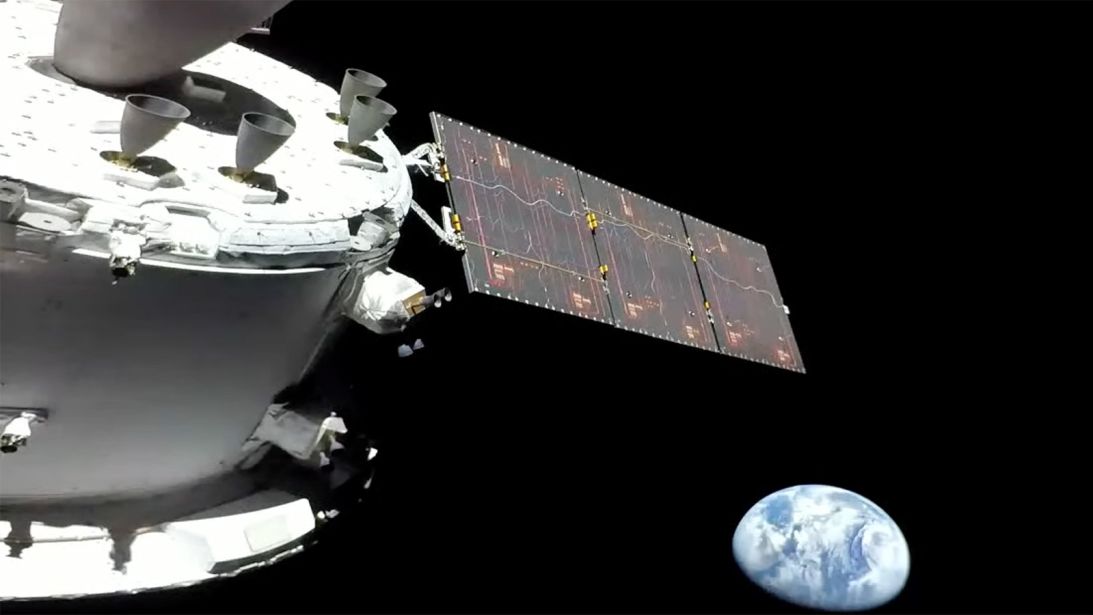
NASA is set to launch the Artemis II mission, which will mark a significant milestone in human space exploration. Scheduled for liftoff as early as February 6, 2024, this mission will carry four astronauts on a journey to the vicinity of the Moon, although it will not involve a lunar landing. The crew includes NASA astronauts Reid Wiseman, Victor Glover, Christina Koch, and Jeremy Hansen from the Canadian Space Agency.
The spacecraft, comprising NASA’s Space Launch System (SLS) rocket and the Orion capsule, will make a short journey from the agency’s Vehicle Assembly Building to its launchpad at Kennedy Space Center in Florida on Saturday. This event, known as rollout, is the first step toward a mission that aims to push the boundaries of human spaceflight, with the crew potentially setting a new record for the farthest distance from Earth traveled by humans.
Mission Overview and Objectives
The 10-day mission will take the crew beyond the far side of the Moon, an area not explored by humans since Apollo 17 in 1972. The mission aims to test various onboard systems, including navigation and propulsion, while ensuring the safety and health of the crew. According to Patty Casas Horn, deputy lead for Mission Analysis and Integrated Assessments at NASA, “The short answer [for not landing] is because it doesn’t have the capability. This is not a lunar lander.”
NASA’s Artemis program is designed to gradually develop the capabilities needed for lunar exploration. The upcoming Artemis II mission follows the uncrewed Artemis I mission, which successfully orbited the Moon in November 2022. This time, the Orion capsule will carry astronauts, focusing heavily on ensuring their comfort and safety during the flight.
Crew members will need to manage various onboard needs, including food, water, and sanitation. Additionally, the mission will include exercise devices to ensure the crew remains healthy during their time in space.
Historical Context and Future Plans
Artemis II shares similarities with Apollo 8, which launched in 1968 and was the first crewed mission to the Moon’s vicinity. Like Artemis II, Apollo 8 did not land but provided crucial experience for future missions. “Apollo 8 actually went into lunar orbit, did 10 revolutions and then came home,” said Horn. In contrast, Artemis II will undertake a “free return” trajectory, allowing the crew to circle the Moon without the need for complex maneuvers to enter lunar orbit.
The Artemis program plans to utilize a lunar lander, known as the Starship Human Landing System, developed by SpaceX. The first planned lunar landing is scheduled for Artemis III, set to launch by 2028. During that mission, astronauts will dock with the Starship HLS in lunar orbit before embarking on their descent to the Moon’s surface.
As NASA prepares for Artemis II, questions remain about the timeline for the Starship development, which might necessitate alternative contracting options. “The value of incorporating other mission objectives like rendezvous, flying a trajectory involving a lunar orbit, and landing would have been assessed against the risk of first-time flight,” Horn explained.
The current record for the farthest distance traveled by humans is 248,655 miles (400,171 kilometers), set by Apollo 13 in 1970. Artemis II has the potential to break this record, depending on the mission’s trajectory and timing. NASA is exploring possible launch windows from February 6 to April 30, 2024.
As humanity gears up for a new era of lunar exploration, Artemis II stands as a pivotal moment that could inspire a new generation. According to James W. Head, a professor of Earth, environmental and planetary sciences at Brown University, “Artemis II will be that same kind of awakening moment — we’re going back to the moon.”
With this mission, NASA continues its legacy of rigorous testing and careful planning, ensuring that each component is validated before deployment. This meticulous approach not only safeguards human life but also enhances the likelihood of mission success, reinforcing NASA’s commitment to safe and effective space exploration.





Revolutionary Photonic Ski-Jump Could Miniaturize LiDAR Systems

Couples Detox from Plastics in New Netflix Doc: Can It Boost Fertility?

Aventon Launches Affordable Full-Suspension Electric Mountain Bike

Discover Eight Must-Try Restaurants This Spring Season

UC Irvine Team Unveils Innovative Ion Pump for Water Treatment

One-Third of Americans Trim Daily Expenses for Healthcare Needs

Apple Secures First Oscar in Three Years with F1: The Movie

Fourth Graders Celebrate St. Patrick’s Day with Creative Weather Drawings

Kim Kardashian Dazzles at Vanity Fair Oscars Party 2026

Nostradamus’ 2026 Predictions: Star Death and Dark Events Loom

Breakthroughs and Challenges Await Science in 2026

Electric Moto Influencer Surronster Arrested in Tijuana

OpenAI to Implement Age Verification for ChatGPT by December 2025

Discover the Top 10 Calorie Counting Apps of 2025

Bella Hadid Shares Health Update After Treatment for Lyme Disease

Analysts Project Stronger Growth for Apple’s iPhone 17 Lineup

Japanese Study Finds Rose Oil Can Increase Brain Gray Matter

Top 10 Penny Stocks to Watch in 2026 for Strong Returns
-
 Science3 months ago
Nostradamus’ 2026 Predictions: Star Death and Dark Events Loom
-
 Science3 months ago
Breakthroughs and Challenges Await Science in 2026
-
 Technology7 months ago
Electric Moto Influencer Surronster Arrested in Tijuana
-
 Technology4 months ago
OpenAI to Implement Age Verification for ChatGPT by December 2025
-
 Technology9 months ago
Discover the Top 10 Calorie Counting Apps of 2025
-
 Health7 months ago
Bella Hadid Shares Health Update After Treatment for Lyme Disease
-
 Health7 months ago
Analysts Project Stronger Growth for Apple’s iPhone 17 Lineup
-
 Health7 months ago
Japanese Study Finds Rose Oil Can Increase Brain Gray Matter
-
 Technology4 months ago
Top 10 Penny Stocks to Watch in 2026 for Strong Returns
-

 Science6 months ago
Starship V3 Set for 2026 Launch After Successful Final Test of Version 2
-

 Technology1 month ago
Nvidia GTC 2026: Major Announcements Expected for AI and Hardware
-

 Education7 months ago
Harvard Secures Court Victory Over Federal Funding Cuts