
Science
NASA Warns of Hubble’s Vulnerability to Starlink Satellite Swarm

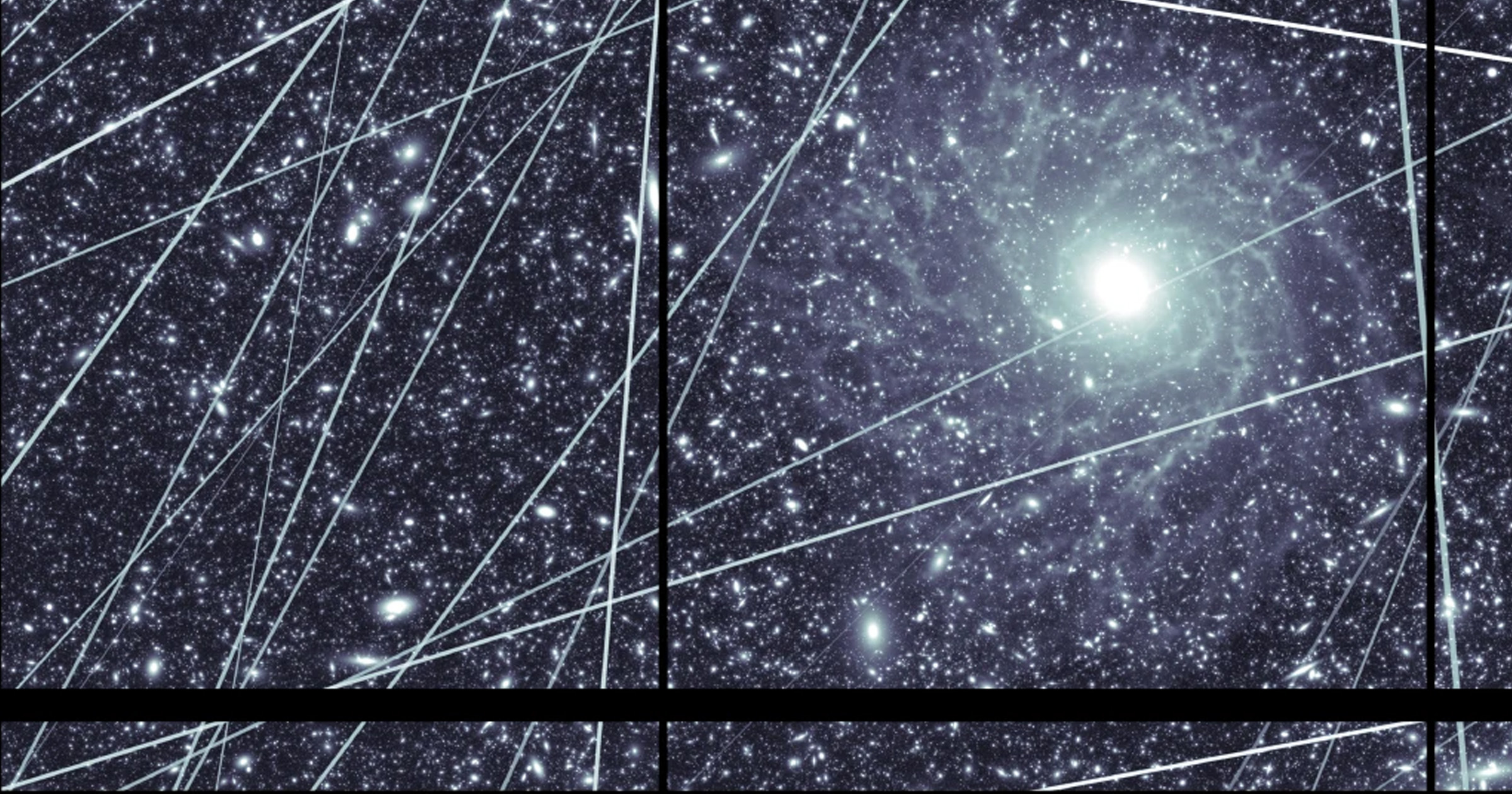
Concerns are mounting over the impact of SpaceX’s expanding fleet of Starlink satellites on astronomical observations, with NASA issuing a stark warning about the potential effects on the iconic Hubble Space Telescope. A recent study led by Spanish astrophysicist Alejandro Serrano Borlaff highlights that the growing number of satellites in Low Earth Orbit (LEO) could significantly disrupt scientific imaging, with implications for future space telescopes.
The research indicates that if the satellite projects planned for the next decade materialize, approximately one out of every three images captured by the Hubble Space Telescope could be contaminated by light pollution. Currently, SpaceX has received approval from the Federal Communications Commission to deploy up to 12,000 satellites into LEO, with plans to add an additional 30,000 in the coming years. Overall, the study estimates that current satellite constellations could be joined by as many as 500,000 more satellites within the next ten years.
The Impacts on Future Observations
Borlaff’s study represents a critical examination of the effects of light pollution on space telescopes, specifically considering the ambitious plans laid out by private companies. He noted, “This is the first scientific study whose main objective is to investigate the effects of light pollution on space telescopes, taking into account these plans announced by the industry,” in an interview with El Pais.
The implications of these findings extend beyond Hubble. Future astronomical missions, such as the European Space Agency’s ARRAKIHS, which is expected to launch in the 2030s, could see bright streaks of light appearing in up to 96 percent of its images. Similarly, NASA’s recently launched SPHEREx mission could experience light pollution contamination in more than 99 percent of its data.
Call for Regulatory Action
The escalating situation poses a significant challenge for the astronomical community, which relies on clear skies for precise observations. As the number of satellites increases, the potential for interference grows, raising urgent questions about the sustainability of space exploration and the preservation of scientific integrity.
Efforts to mitigate these challenges will require global cooperation among spacefaring nations. Currently, there appears to be little inclination from countries like the United States to establish international regulations that would limit commercial activities in LEO. Without such measures, the future of astronomical research could be at serious risk.
As the debate continues, the need for action becomes increasingly clear. The astronomical community is looking for solutions that balance commercial interests with the imperative of maintaining the night sky as a resource for scientific inquiry. The time for decisive international action is now, as the consequences of inaction could reshape the field of astronomy for generations to come.




Revolutionary Photonic Ski-Jump Could Miniaturize LiDAR Systems

Couples Detox from Plastics in New Netflix Doc: Can It Boost Fertility?

Aventon Launches Affordable Full-Suspension Electric Mountain Bike

Discover Eight Must-Try Restaurants This Spring Season

UC Irvine Team Unveils Innovative Ion Pump for Water Treatment

One-Third of Americans Trim Daily Expenses for Healthcare Needs

Apple Secures First Oscar in Three Years with F1: The Movie

Fourth Graders Celebrate St. Patrick’s Day with Creative Weather Drawings

Kim Kardashian Dazzles at Vanity Fair Oscars Party 2026

Nostradamus’ 2026 Predictions: Star Death and Dark Events Loom

Breakthroughs and Challenges Await Science in 2026

Electric Moto Influencer Surronster Arrested in Tijuana

OpenAI to Implement Age Verification for ChatGPT by December 2025

Discover the Top 10 Calorie Counting Apps of 2025

Recovering a Suspended TikTok Account: A Step-by-Step Guide

Bella Hadid Shares Health Update After Treatment for Lyme Disease

Backpack Drives Equip Students with Supplies for New School Year

Analysts Project Stronger Growth for Apple’s iPhone 17 Lineup
-
 Science8 months ago
Nostradamus’ 2026 Predictions: Star Death and Dark Events Loom
-
 Science8 months ago
Breakthroughs and Challenges Await Science in 2026
-
 Technology11 months ago
Electric Moto Influencer Surronster Arrested in Tijuana
-
 Technology9 months ago
OpenAI to Implement Age Verification for ChatGPT by December 2025
-
 Technology1 year ago
Discover the Top 10 Calorie Counting Apps of 2025
-
 Technology1 year ago
Recovering a Suspended TikTok Account: A Step-by-Step Guide
-
 Health11 months ago
Bella Hadid Shares Health Update After Treatment for Lyme Disease
-
 Education1 year ago
Backpack Drives Equip Students with Supplies for New School Year
-
 Health11 months ago
Analysts Project Stronger Growth for Apple’s iPhone 17 Lineup
-

 Health12 months ago
Japanese Study Finds Rose Oil Can Increase Brain Gray Matter
-

 Technology8 months ago
Top 10 Penny Stocks to Watch in 2026 for Strong Returns
-

 Science10 months ago
Starship V3 Set for 2026 Launch After Successful Final Test of Version 2